GLP-1 Growth Is Changing How Weight-Management Programs Operate
The market for glucagon-like peptide-1 (GLP-1) medications has expanded rapidly as their use has grown beyond diabetes care into weight management. Treatment is now delivered through telehealth clinics, in-person and hybrid weight-management clinics, pharmacy-led programs, and some employer-supported programs.
Many of these providers operate longitudinal programs in which patients complete recurring check-ins over weeks or months of treatment. As treatment volumes and program duration increase, consistent documentation becomes more important at intake, between visits, and during ongoing review.
Short answer. GLP-1 market growth is increasing the operational requirements associated with recurring patient support. Programs need consistent methods for documenting progress across check-ins, including context beyond a single scale-weight value.
Scope note. This market and workflow resource provides general information. Clinical eligibility, diagnosis, dosing, and treatment decisions remain subject to qualified professional review and each program’s protocols.
GLP-1 Market Size and Growth Trajectory
Market forecasts, patient adoption estimates, and employer benefit data describe different aspects of the GLP-1 market. Together, they indicate continued expansion alongside growing operational and spending considerations.
| Market indicator | Current figure | What it indicates |
| 2030 global market forecast | Approximately $200 billion for the global incretin market, including GLP-1 medications and related therapies | J.P. Morgan expects substantial market expansion, although the forecast covers a broader category than GLP-1 receptor agonists alone. |
| Projected US adoption | Approximately 25 million people will be using these medications by 2030 | Higher patient numbers could increase the volume of intake, recurring reviews, and longitudinal documentation. |
| Employer coverage | 43% of firms with 5,000 or more workers provided coverage in 2025, compared with 28% in 2024 | Coverage became more common among the very large employers included in the survey. |
| Utilization and spending | 59% reported higher-than-expected use, and 66% reported a significant effect on prescription-drug spending | Utilization and spending effects created additional considerations for the surveyed firms that provided coverage. |
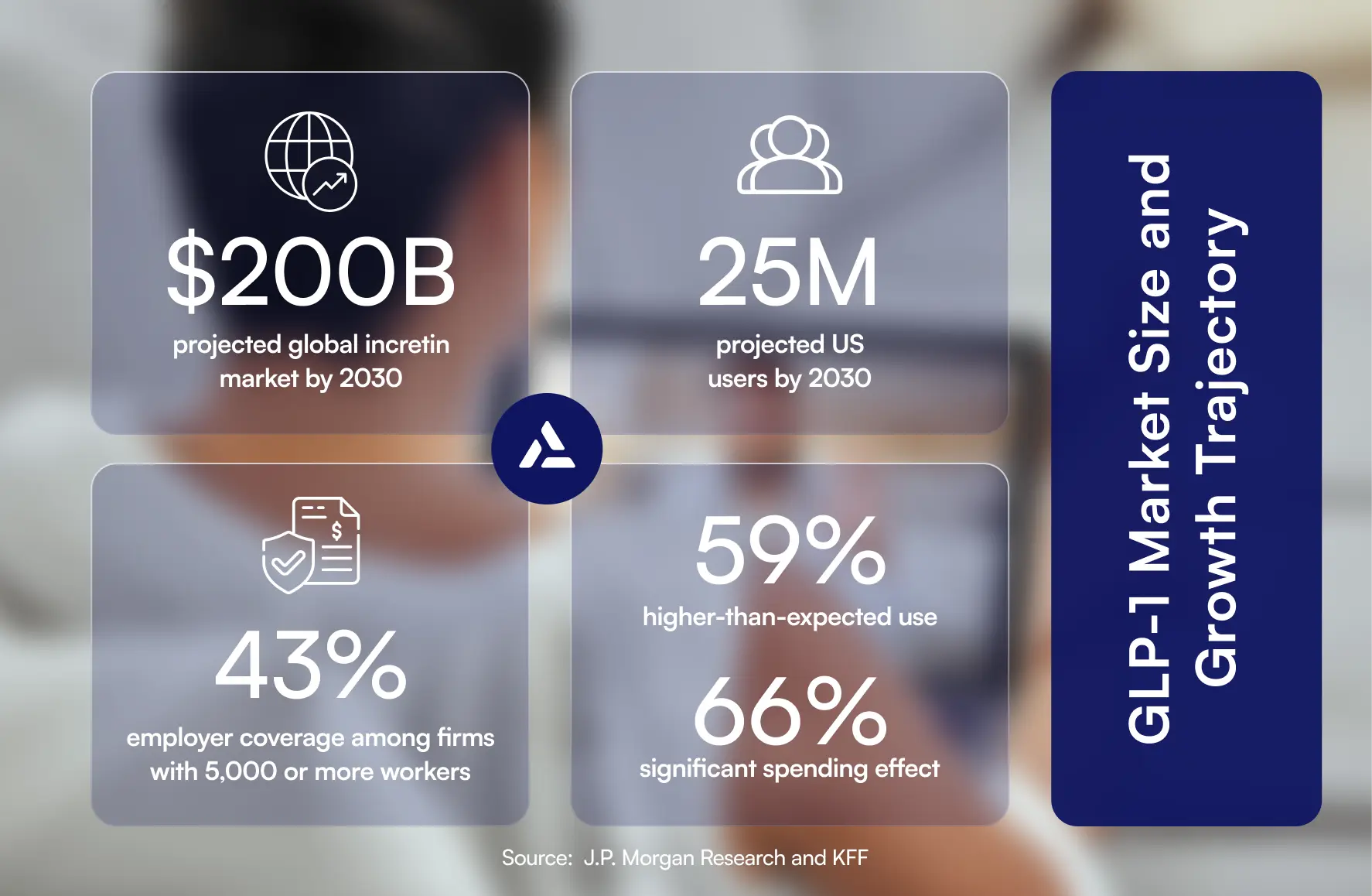
Market forecasts vary according to the drug classes, indications, pricing assumptions, and patient populations included in each analysis. The KFF findings apply to the surveyed firms and the benefit designs represented in the study.
How the GLP-1 Market Structure Is Changing
Novo Nordisk and Eli Lilly remain central to the obesity-drug market, with established injectable products and expanding oral portfolios. Reuters reported in August 2026 that competition between the companies was becoming more segmented as pills and future medications increased the range of available treatment formats.
Competition is also extending beyond current single-receptor and injectable products. An IQVIA outlook for 2026 to 2030 identifies oral GLP-1 medications and combination therapies as important parts of the developing market. Changes in delivery format, pricing, coverage, and patient adoption may affect program volume and workflow design. The information required for progress tracking continues to depend on each program’s protocol and intended use.
What Is Driving Market Expansion
Several related developments are contributing to wider use and a broader range of delivery models.
Use has expanded into dedicated weight management. GLP-1 therapies were first established in diabetes care and now have approved indications for weight management. This expansion has increased the number and range of programs focused on ongoing treatment and support.
Employer coverage has become more common among very large firms. The KFF findings indicate that more firms with 5,000 or more workers included coverage for GLP-1 agonists used primarily for weight loss in 2025. Coverage policies and participation requirements continue to vary by employer and health plan.
Virtual and hybrid programs provide additional routes to treatment. Remote consultations and between-visit check-ins allow parts of a treatment program to take place outside a clinic. The applicable workflow depends on the provider’s clinical model, jurisdiction, and regulatory requirements.
Longitudinal operations extend beyond medication access. Many programs include recurring reviews, lifestyle support, documentation, and progress tracking throughout treatment. The required infrastructure depends on patient volume, program duration, and the information clinical and program teams need to review.
Higher-than-expected utilization and reported spending effects may contribute to greater interest in consistent program-level reporting. Reporting requirements vary by program structure, contractual arrangements, and the roles of the employer, health plan, provider, and platform.
How the GLP-1 Care Ecosystem Is Evolving
The progress-tracking methods available to a program depend partly on whether care is delivered remotely, in person, or through a hybrid workflow.
Telehealth programs conduct intake and recurring reviews remotely. In fully remote workflows, patients provide the information required for review without attending an in-person measurement appointment. The capture method, therefore, needs to work outside a clinic and provide records that authorized care teams can access.
In-person and hybrid clinics combine scheduled office visits with remote intervals. These programs may use professional measurements during clinic visits and an appropriate remote method between appointments.
Pharmacy-led programs may combine intake, eligibility-related documentation, and recurring remote reviews. Requirements vary by jurisdiction and pharmacy model. The regulated workflow at the point of prescription is addressed separately in the Online Pharmacy BMI Verification compliance guide.
Employer-supported programs may deliver weight-management services through a provider, a health plan, a benefits platform, or a combination of these organizations. Data access and reporting requirements depend on the program structure, contractual roles, and applicable privacy requirements.
Across these models, recurring progress tracking requires a consistent capture process, longitudinal records, and appropriate access for the teams responsible for patient or program review.

The Infrastructure Challenge Created by Market Growth
GLP-1 programs may rely on scale weight, patient-reported information, and manually captured progress photos for recurring check-ins. Each input can contribute useful information, but collection methods and comparability vary.
Self-reported measurements may vary because of differences in technique, equipment, timing, and data entry. Progress photos may also vary in lighting, pose, distance, clothing, and camera angle. These differences can make records harder to compare across check-ins.
Scale weight provides a single consistent value when an appropriate scale is available, but it does not distinguish changes in fat mass, lean mass, and fluid balance. Free-text notes can add context, although the recorded fields and level of detail may differ across patients and staff members.
As caseloads and treatment duration increase, inconsistently collected information becomes more difficult to organize and review. Structured records can provide clinical and program teams with a more consistent basis for comparison across individual patients and the wider caseload.
Progress views may also provide patients with additional context between appointments. The relationship between visible progress, engagement, and retention is examined in Visual Progress Tracking for GLP-1.
Why Scale Weight Alone Provides an Incomplete Progress Record
Scale weight and BMI can support treatment and operational workflows, but each represents a limited part of the progress record. Neither separates changes in fat mass, lean mass, and fluid balance.
A 2024 review of changes in lean body mass during GLP-1-based treatment found substantial variation across clinical studies. The authors also explain that lean mass and muscle mass are related but distinct concepts, as lean mass includes organs, bone, fluids, and water in adipose tissue, as well as muscle.
Body-composition estimates can provide additional context alongside scale weight, clinical information, and other program data. When collected through a consistent method, estimates of body fat percentage, fat mass, and lean mass can support longitudinal comparison. Their interpretation depends on the capture method, the program’s intended use, and the applicable clinical protocol.
Beyond BMI examines the operational uses and limitations of BMI in greater detail.
What Scalable GLP-1 Progress Tracking Requires
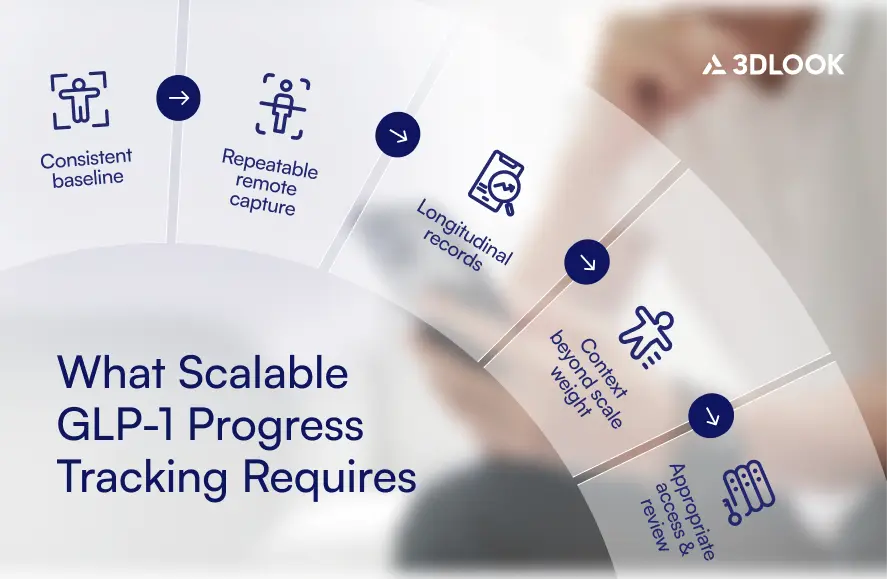
Progress-tracking workflows differ across delivery models, but five requirements matter when programs collect information across recurring check-ins.
A consistent baseline. The initial record should use the same defined capture process that will be applied during later check-ins. This provides a stable reference for longitudinal comparison.
Repeatable remote capture. Remote workflows need clear guidance for pose, image collection, timing, and other relevant conditions. Consistency in these factors reduces avoidable variation between sessions.
Longitudinal records. Results should be stored in a format that supports comparison across dates. The level of repeatability required depends on the magnitude and type of change the program intends to review.
Context beyond scale weight. Body measurements and software-derived body composition estimates can provide additional information alongside scale weight, patient-reported data, and clinical assessments.
Appropriate access and review. Structured records should be available to the authorized clinical or program teams responsible for review. Access controls, retention periods, and reporting permissions depend on the deployment and the organizations involved.
Implementation varies by delivery model. A telehealth program may use remote capture throughout the workflow. A hybrid clinic may combine remote records with measurements collected during office visits. A pharmacy-led program may apply separate processes for eligibility documentation and longitudinal progress tracking. Employer-supported programs may require aggregate reporting based on the contractual and privacy framework.
Where FitXpress Fits
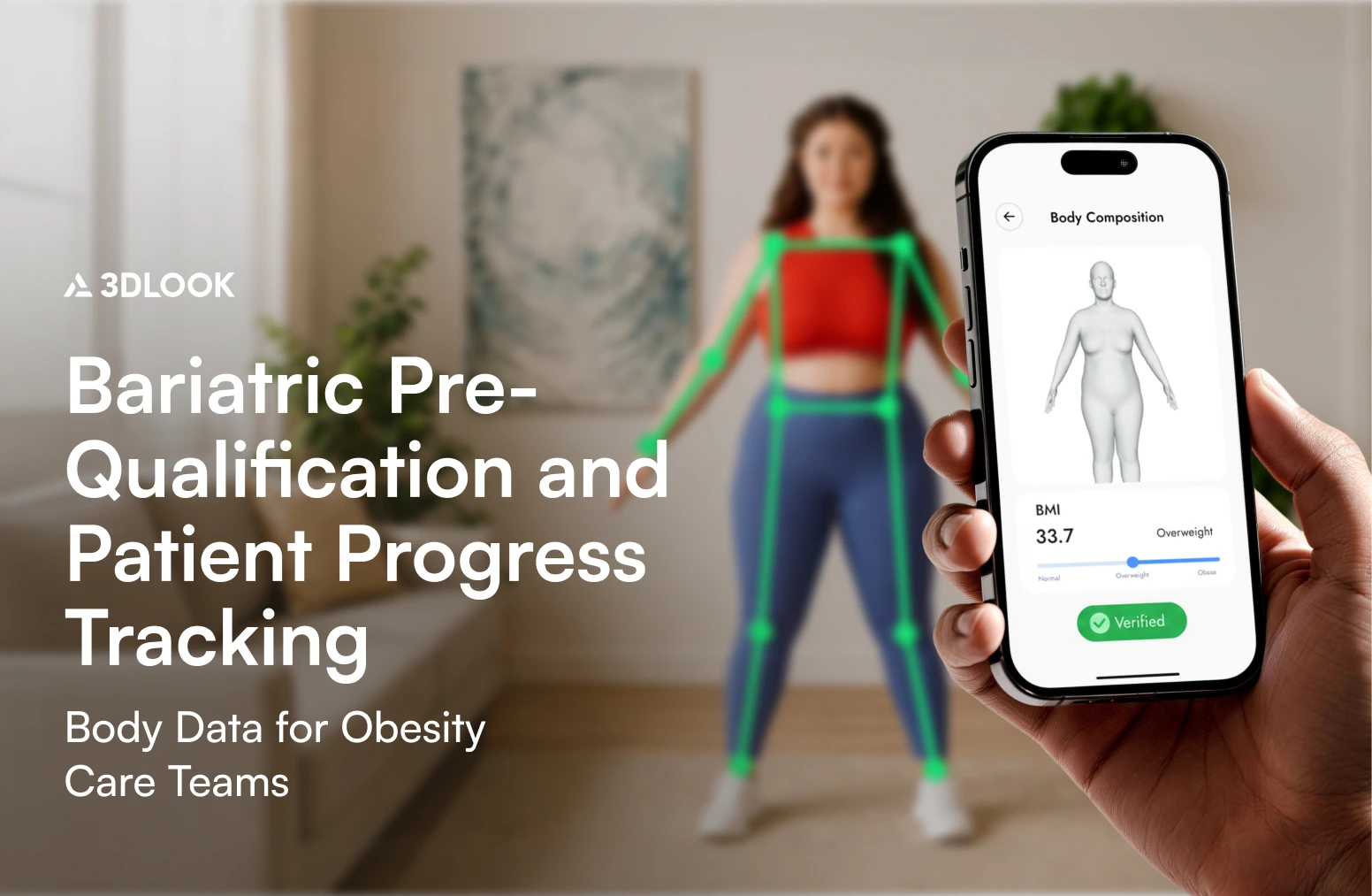
FitXpress adds structured body-data capture to intake and recurring check-ins. A guided scan uses two photos, front and side, and typically produces results in approximately 30 to 45 seconds without specialized scanning hardware. Software-derived outputs include more than 80 body measurements, as well as estimates of body fat percentage, lean mass, and fat mass.
For most evaluated measurements, repeated scans showed typical scan-to-scan differences of less than 1 cm. Consistent capture conditions help programs compare results more reliably over time. The mobile body-scanning accuracy framework explains how to evaluate measurement accuracy and repeatability.
FitXpress is delivered through a white-label application programming interface (API) and software development kit (SDK), enabling programs to integrate guided capture into their patient experience. Photos are deleted after processing within production workflows, while structured outputs are retained in accordance with the applicable deployment and agreement.
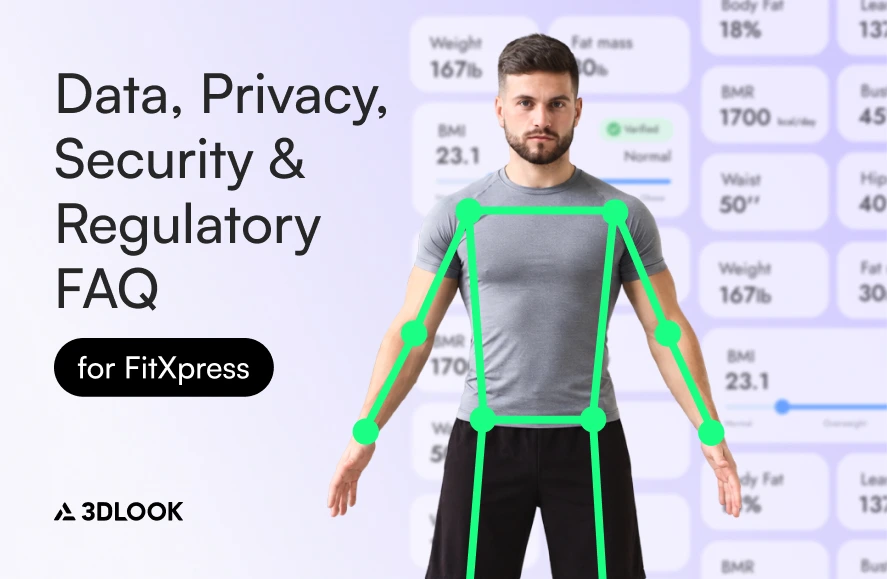
In most enterprise deployments, the customer acts as the controller, and 3DLOOK acts as the processor under the General Data Protection Regulation (GDPR). For deployments regulated by the Health Insurance Portability and Accountability Act (HIPAA), 3DLOOK can act as a business associate under an executed business associate agreement. The Data, Privacy, Security & Regulatory provides the applicable details.
Role and Limitations of Mobile Body Scanning
FitXpress supports structured body-data capture, comparison, and documentation. It is not a medical device and does not diagnose conditions, make clinical decisions, prescribe treatment, or determine treatment eligibility. The appropriate measurement method for each workflow depends on the program’s protocol, intended use, and applicable requirements. FitXpress can complement dual-energy X-ray absorptiometry (DXA), bioelectrical impedance analysis (BIA), and calibrated scales when remote, structured body data capture is appropriate.
Applications of structured body data across remote-health workflows are covered in AI Body Data for Health.
FAQ
J.P. Morgan Research projects that the global incretin market, including GLP-1 medications and related therapies, could reach approximately $200 billion by 2030. This is a forecast, and estimates vary depending on the category definition and the underlying pricing and utilization assumptions.
Growth reflects wider use in weight management, expanding coverage among some employers and health plans, additional virtual and hybrid delivery routes, and the development of programs that support recurring reviews over time. The 2025 KFF Employer Health Benefits Survey documents increased coverage and higher-than-expected utilization among many surveyed firms with 5,000 or more workers that covered GLP-1 agonists primarily for weight loss.
Many treatment programs continue over weeks or months and include recurring reviews. A consistent progress-tracking process can provide comparable records across check-ins and make relevant information easier for authorized clinical and program teams to review.
The appropriate data depends on the program’s clinical model and protocol. Relevant inputs may include body measurements, software-derived estimates of fat mass and lean mass, patient-reported information, laboratory results, medication information, and professional assessments. Each input should be interpreted according to its measurement method and intended use.