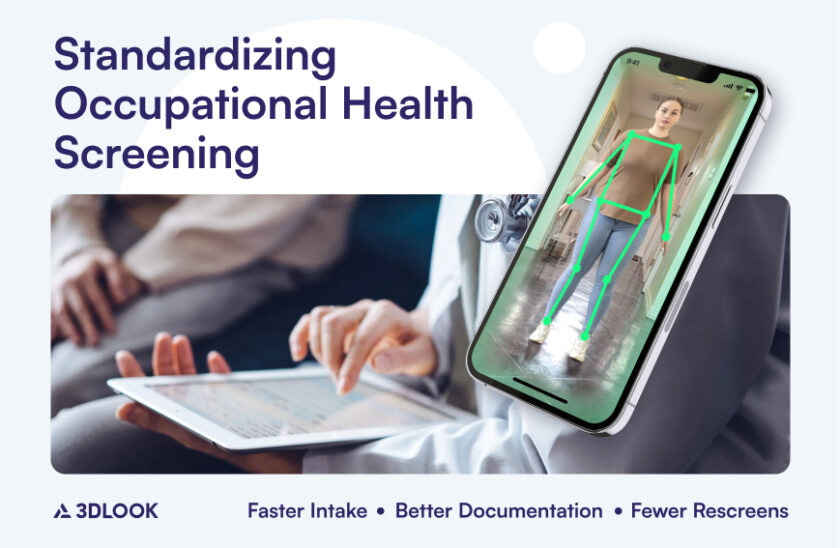
Use Case Summary
| Industry | Occupational health providers, workforce screening vendors, workers’ compensation administrators, multi-site employers |
| Problem | Manual intake and inconsistent body measurements slow occupational health screening throughput, and cause rescreens, rework, and delayed candidate clearance |
| Solution | Guided mobile body scan from two smartphone photos, completed remotely before the appointment |
| Outputs | Structured, time-stamped body measurements and BMI/body composition estimates as intake documentation |
| Role | Intake and documentation layer that supports clinician review — not a fitness-for-duty assessment, clearance decision tool, or basis for hiring decisions |
| Business value | Faster pre-appointment intake, fewer rescreens, more consistent multi-site documentation, audit-ready records |
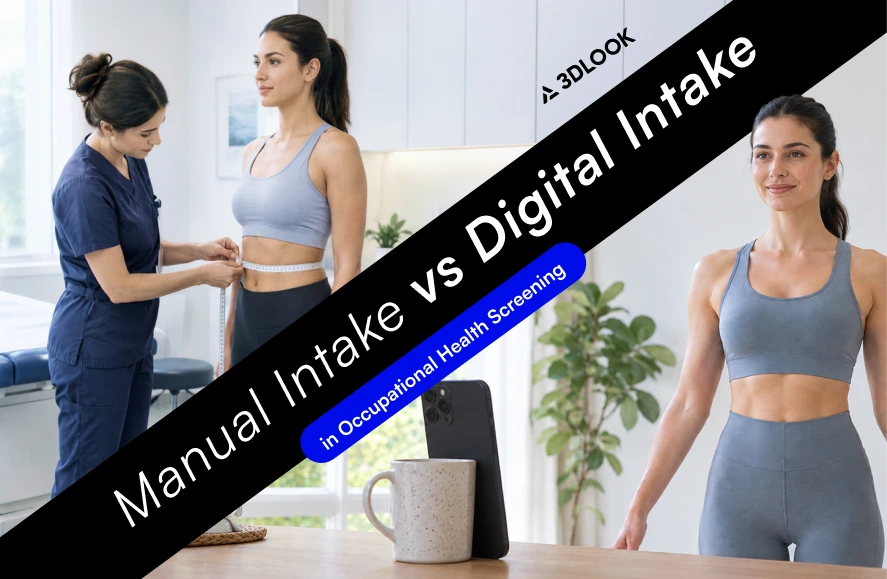
High-volume occupational health screening still runs on manual intake. Candidates and employees fill out paper questionnaires in the waiting room; medical assistants record body measurements with tape at the appointment; and the same data flows into the clearance workflow through fragmented documentation. The bottleneck is no longer the medical examination — it is the unstructured intake process that surrounds it.
The operational consequence is visible at scale. Occupational health providers face capacity-constrained appointment slots; multi-site employer programs face documentation inconsistency across locations; workers’ compensation and absence management programs face delayed return-to-work timelines when intake records are incomplete. None of those problems is solved by adding more clinic capacity.
This guide is for occupational health providers, workforce screening vendors, workers’ compensation administrators, and multi-site employers evaluating how digital intake supports pre-employment screening, return-to-work clearance, and fit-for-duty workflows. It walks through where FitXpress fits, the two primary use cases, the documentation and compliance posture, and the operational outcomes a digital intake layer can deliver.
Disclaimer. FitXpress and the mobile body scanning workflow described in this article support intake and documentation steps in occupational health screening programs. They do not perform medical examinations, make fitness-for-duty or clearance determinations, or replace clinician review or employer policies. FitXpress is positioned as an intake and documentation tool, not as a diagnostic product, medical examination tool, or standalone medical decisioning system. Its regulatory classification should be evaluated based on the intended use, deployment context, and applicable jurisdiction. Body measurement and composition outputs are intake data points within the documentation workflow; they are not designed for, and should not be used as, the basis of hiring or employment decisions.
The problem: occupational health screening still slowed by manual intake
Most occupational health screening programs still rely on manual intake steps performed at the appointment. The applicant or returning employee arrives at the clinic, completes a written health questionnaire, has body measurements taken by a medical assistant with a tape measure, and waits. At the same time, the paper records are transferred into the screening file.
That sequencing produces three predictable failure modes. Measurements vary by site, staff member, vendor, or process — tape measurements at clinic A and clinic B are not directly comparable, and neither is comparable to self-reported numbers from an employer intake form. Missing or inconsistent information triggers rescreens — when the file lands on the reviewer’s desk with a missing field or unmatched measurement, the candidate is asked back for a second appointment. High-volume employee screening makes small inefficiencies expensive — multi-site programs that screen thousands of candidates per quarter feel every minute of manual intake added to each appointment.
For programs running across distributed locations and multiple vendors, the cumulative cost is operational rather than clinical. The clearance workflow itself is not broken — the intake feeding it is.
What causes rescreens in occupational health screening?
Rescreens often occur when required intake data is missing, body measurements are inconsistent across sites or staff, candidate records do not meet provider documentation requirements, or measurement data cannot be verified against other file inputs.
Why this matters now: employers need faster screening without adding clinic capacity
Several pressures are widening the operational gap. Employer hiring volume in workforce-intensive sectors continues to draw on a fixed supply of occupational health appointment slots, and clinic capacity has not expanded proportionately. Workforce screening vendors absorbing multi-employer contracts need repeatable workflows that hold across locations. Workers’ compensation and absence administrators face documentation expectations that have moved upstream — review teams now expect structured data rather than paper notes.
The volume of return-to-work cases defines the problem’s scale. According to the U.S. Bureau of Labor Statistics’ Survey of Occupational Injuries and Illnesses for 2024, private industry employers reported 2.5 million nonfatal workplace injuries and illnesses, with an incidence rate of 2.3 cases per 100 full-time-equivalent workers. Many recordable injuries and illnesses can create downstream documentation, restriction, absence management, or return-to-work workflows. When those workflows require additional intake, missing measurements, or separate follow-up steps, delays can compound. The point is not to replace occupational health providers. It is to remove repetitive intake steps before the appointment, so clinical and administrative teams can focus on review, clearance workflows, and exception handling rather than measurement collection.
What is occupational health screening intake?
Occupational health screening intake is the process of collecting candidate or employee information before a pre-employment, pre-placement, return-to-work, or fit-for-duty assessment. It may include identity details, job role information, health questionnaires, body measurements, BMI-related data, and documentation needed to support screening workflows.
The boundary between intake and clearance matters. Intake is the data collection — gathering the information clinicians and program reviewers need before making a decision. Clearance is the determination made by a licensed occupational health provider against employer policies, role-specific requirements, and applicable regulatory frameworks. ACOEM guidance for occupational medicine physicians describes fitness-for-duty evaluation as a process of medical review, examination, and documentation conducted within the physician’s professional judgment — clarifying that the evaluation itself is clinician-led, with intake data feeding the review rather than substituting for it.
Where does intake end and clearance begin?
Intake is the pre-appointment data collection step that supports pre-employment, pre-placement, return-to-work, and fit-for-duty workflows. The collected inputs feed the clearance review conducted by the licensed clinician — they do not constitute the review itself.
How FitXpress supports digital occupational health intake
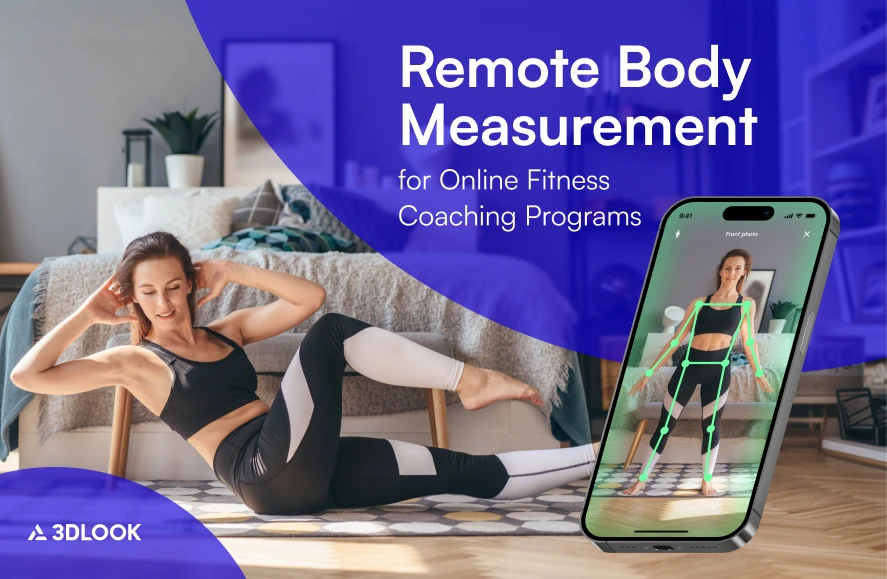
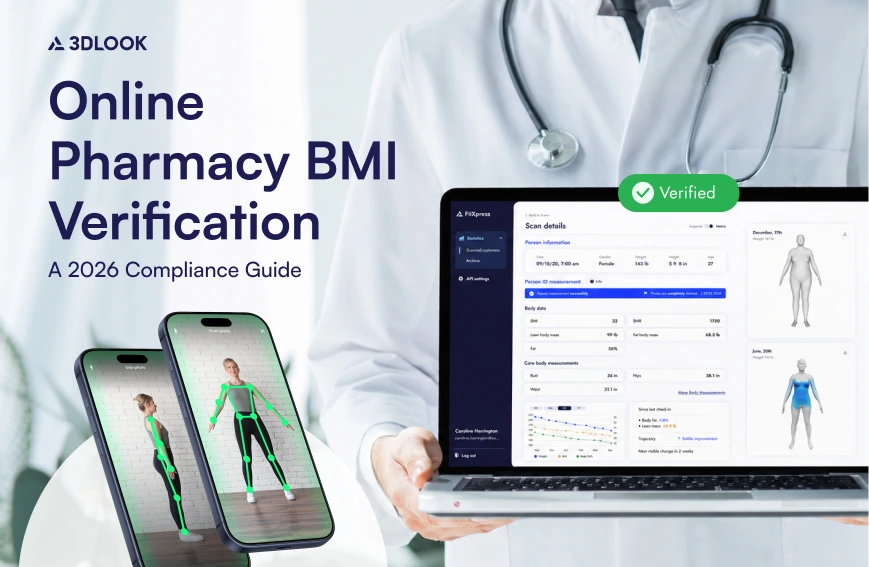
FitXpress by 3DLOOK is a mobile body scanning solution built around a guided two-photo flow. A candidate or returning employee completes a front and side smartphone capture, and FitXpress returns structured body data — 80+ body measurements, BMI inputs, and body composition estimates — with results processed in roughly 45 seconds before the appointment.
Three properties matter for the occupational health use case:
- Remote, pre-appointment capture. The scan is performed outside the clinic on the candidate’s or employee’s own smartphone before the visit. The intake data arrives ahead of the appointment slot.
- Structured, time-stamped outputs. Each scan generates a machine-readable record with a capture timestamp and validation outcomes from the guided flow.
- Compliance posture. FitXpress is HIPAA- and GDPR-maintained, BAA-ready, and runs on encrypted-in-transit, encrypted-at-rest storage with role-based access controls. Personal identifiers are not processed; captured images are deleted immediately after processing or within a configurable retention window, depending on program policy.
The body-related verification capabilities are the same ones used in BMI/build verification deployments outside the occupational health context.
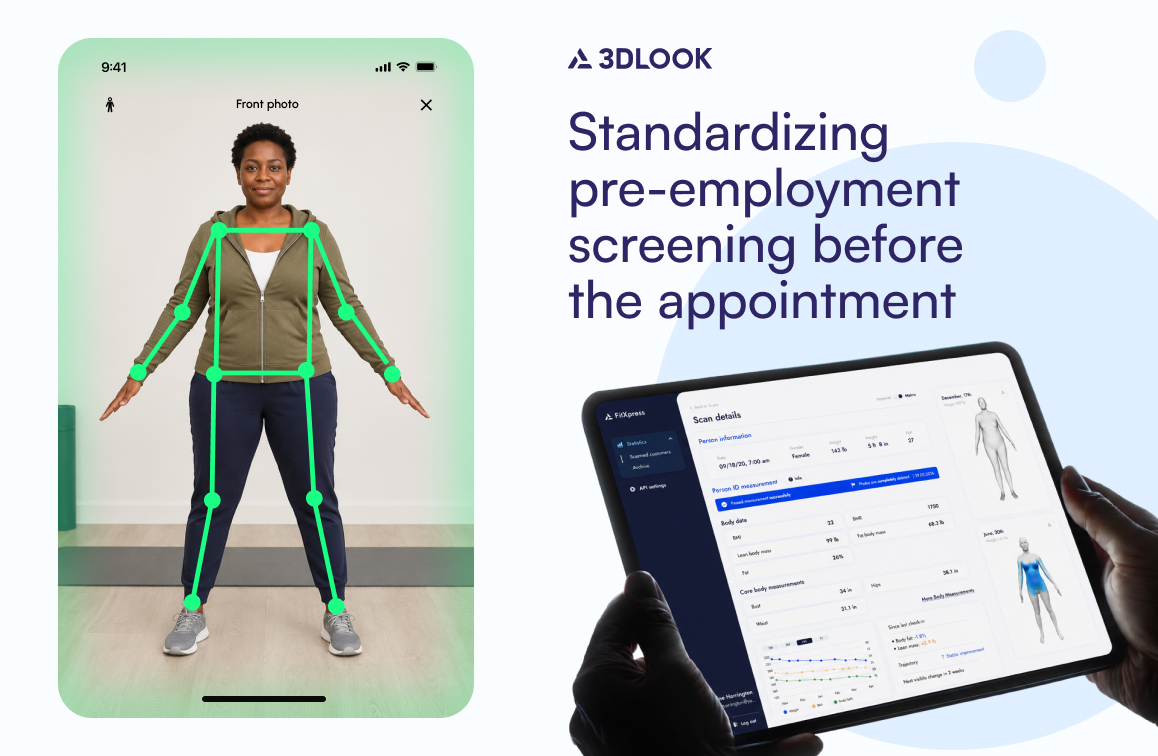
Standardizing pre-employment screening before the appointment
Pre-employment screening is where high-volume employer programs feel intake-step inefficiency first. A candidate who has accepted a conditional offer waits to start a job until the screening clears; an occupational health clinic running pre-employment evaluations as part of a workforce screening contract maintains a queue of candidates whose start dates are tied to the clinic’s throughput.
In U.S. employment contexts, pre-employment medical examinations apply only after a conditional offer of employment and where the same examination is required of all entering employees in the same job category, consistent with EEOC enforcement guidance under the Americans with Disabilities Act (ADA). FitXpress intake operates inside that framework — it does not enable a pre-offer medical examination and should not be deployed in a way that would.
Inside the post-offer framework, the intake step that precedes the examination is the part that benefits from a digital workflow. The candidate completes a remote two-photo scan on their own smartphone before the appointment, and the clinic team opens the visit with the intake record already attached, rather than manually collecting that data.
Standardized pre-employment screening intake reduces the variability that produces rescreens, which is what high-volume employer programs and multi-site workforce screening vendors need to make case review repeatable.
How can employers speed up pre-employment medical clearance?
Employers and occupational health providers can speed up pre-employment medical clearance by collecting required intake data before the appointment, standardizing candidate body-measurement records, reducing missing information, and giving clinic teams structured records to review during the visit rather than collecting them at the visit.
Reducing delays in return-to-work and fit-for-duty workflows
Return-to-work and fit-for-duty workflows share the same operational shape as pre-employment screening but carry more documentation weight. Workers’ compensation administrators, absence management programs, and employer health teams need consistent intake records to support clinician review of an employee’s readiness to resume duties after injury, illness, or absence.
Delays happen when intake documentation is incomplete or when the program must schedule a separate measurement visit to fill a gap in the file. A baseline body measurement, captured before injury or at the first absence, is not part of most program workflows. When a return-to-work review is requested, the clinician compares the current observation with either self-reported recall or a measurement taken at the same visit. Still, same-visit measurements may not provide a comparable baseline.
FitXpress can support remote intake before the return-to-work review. The employee completes the same guided two-photo scan on their own smartphone, and the program receives the structured body measurement record before the appointment or an asynchronous review. The pattern mirrors the bariatric pre-qualification workflow, in which a baseline scan precedes a clinical decision, and subsequent scans produce structured longitudinal data for program review.
What is return-to-work clearance?
Return-to-work clearance is the process of determining whether an employee can resume specific job duties after injury, illness, absence, or work restriction. It may involve occupational health review, employer policies, role-specific requirements, documentation, and medical or functional assessment, depending on the case.
Pre-employment screening vs return-to-work screening
The two workflows share the same intake mechanics but differ in their goals, documentation expectations, and clearance criteria.
| Workflow | Typical goal | Common intake needs | FitXpress role |
| Pre-employment screening | Support candidate clearance for entry into a job category | Candidate data, body measurements, BMI inputs, program documentation | Remote intake before the post-offer appointment |
| Pre-placement health assessment | Assess readiness for a specific role or placement | Role-specific intake inputs and standardized records | Structured body measurement capture before placement review |
| Return-to-work screening | Support clearance after injury, illness, or absence | Updated body data, documentation, and review inputs | Time-stamped intake data before the return-to-work review |
| Fit-for-duty assessment | Assess the ability to perform required job duties | Consistent intake and supporting documentation | Standardized measurement data feeding clinical review |
The common thread is that FitXpress sits before the clinical review in each case, never inside it. The clearance and fitness-for-duty determinations are the responsibility of the licensed clinician, operating in accordance with employer policies and applicable regulatory frameworks.
What is the difference between pre-employment screening and return-to-work screening?
Pre-employment screening supports candidate clearance before entry into a job category, typically after a conditional offer of employment. Return-to-work screening supports clearance for an existing employee to resume duties after injury, illness, absence, or restriction. Both rely on consistent intake documentation, but the clearance criteria, employer policies, and review pathways are different.
Better occupational health documentation across sites and vendors
Documentation is where the operational value of structured intake compounds. Under OSHA’s 29 CFR Part 1904 recordkeeping standards, employers with 10 or more employees in covered industries are required to maintain records of work-related injuries and illnesses on OSHA Forms 300, 300A, and 301, with annual electronic submission required from establishments meeting size and industry criteria. The recordkeeping framework benefits from the underlying data being consistent across reporting periods and across sites. Free-text notes captured by hand at the appointment are hard to meet that level; structured, time-stamped records do.
For occupational health programs, the documentation gains from digital intake are concrete:
- Standardized body-measurement records captured through the same workflow each time, comparable across candidates, sites, and program stages.
- Time-stamped screening documentation showing when each measurement was captured, under what validation conditions, and against which intake form version.
- Structured data for review, QA, reporting, and audit defense — a machine-readable file that can be queried, compared, and validated rather than transcribed.
- Multi-site consistency for employer programs running screening across multiple clinics, vendors, or geographies.
- Easier longitudinal comparison because intake records produced through the same guided flow at different times sit in the same structural format.
The compliance posture matters at procurement. FitXpress is HIPAA- and GDPR-maintained, BAA-ready, and runs on encrypted-in-transit, encrypted-at-rest storage with role-based access controls — the floor an occupational health program or workforce screening vendor should expect from any partner handling employee body data.
How can occupational health clinics standardize body measurements across sites?
Clinics can standardize body measurements by using a consistent digital intake workflow that captures measurements through a guided flow at every site, stores structured, time-stamped records, and applies the same documentation rules across locations, clinicians, and vendor partners.
What improves with digital occupational health intake?
Digital intake delivers operational outcomes the buyer can quantify. The relevant metrics are throughput, rework, time to data availability, and documentation quality.
- Reduced pre-appointment intake delays. Body measurement capture moves out of the appointment slot. The clinical visit opens with intake data already attached.
- Higher clinic throughput. By removing manual measurement collection from the appointment, the same clinic team can process more candidates or employees per day without adding capacity.
- Fewer rescreens and rework. Structured intake reduces missing or inconsistent body measurement data — the most common cause of repeat appointments.
- Faster pre-appointment data turnaround. Better intake data, available earlier, reduces back-and-forth between intake teams, clinicians, and reviewers. The clearance decision itself remains with the clinician, but the path to the decision shortens.
- Better documentation quality. Time-stamped, standardized records support audit-friendly workflows and easier reporting across programs.
- Lower screening cost per candidate. More efficient intake reduces repetitive manual work, and the cost savings compound at multi-site or high-volume scales.
Who uses FitXpress for occupational health screening?
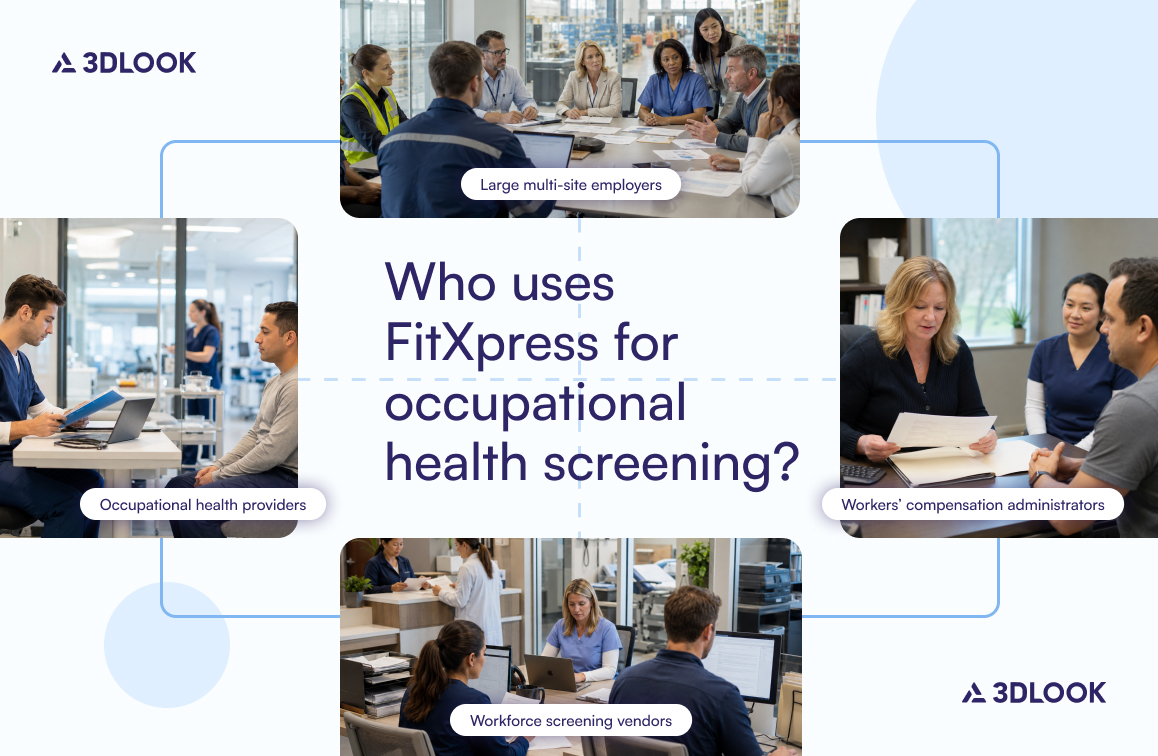
Four buyer profiles deploy FitXpress in occupational health contexts, each with a distinct operational priority.
- Occupational health providers. Clinics and clinic networks use FitXpress to standardize intake before pre-employment, pre-placement, and return-to-work appointments. The operational gains are increased throughput per appointment slot and reduced rescreen volume.
- Workforce screening vendors. Vendors operating multi-employer screening contracts use FitXpress to deliver a repeatable candidate intake workflow across employer programs and across clinic partners. Standardization is the buyer’s primary requirement.
- Workers’ compensation administrators and absence management providers. Programs supporting workers’ comp claims and absence cases use FitXpress to capture structured body measurement intake for return-to-work documentation. The operational gain is documentation completeness and reduced delay between absence and clearance review.
- Large multi-site employers. Employer health services, especially across distributed workforces, use FitXpress to drive consistency across locations, screening vendors, and employee populations. The buyer profile here parallels the employer-side underwriting use case, where the value is structured remote evidence collection at scale.
More than body scanning: workflow rules, QA, reporting, and scale
FitXpress operates as a digital intake and documentation layer for high-volume occupational health screening workflows. Beyond the raw body measurement capability, it standardizes intake, supports QA, generates structured reporting, and deploys across multi-site programs without on-site hardware. The operational layer is what makes the difference at enterprise scale, where reliable measurement alone does not solve the screening throughput problem.
Generic body scanning tools may capture measurements. Occupational health programs need more than that — consistent intake workflows, multi-site standardization, audit-ready documentation, role-based access controls, integration paths for downstream review systems, and a compliance posture that holds at procurement.
What FitXpress does and does not do
Compliance and scope are non-negotiable in employment-decision contexts. The table below makes the boundary explicit.
| FitXpress helps with | FitXpress does not do |
| Remote body measurement intake | Diagnose medical conditions |
| Structured, time-stamped body data | Replace occupational health examinations |
| BMI and body composition estimates as intake inputs | Make fitness-for-duty or clearance decisions |
| Multi-site documentation consistency | Replace clinician judgment or employer policies |
| Workflow standardization across vendors | Override employer clearance frameworks |
| Reporting, QA, and audit-trail support | Act as a standalone medical authority |
| Pre-appointment data turnaround | Inform hiring or employment decisions based on body measurements or BMI |
Since FitXpress does not provide medical advice, diagnosis, or treatment recommendations, it is not positioned as a medical device. Compliance evaluation is based on data privacy and recordkeeping frameworks (HIPAA, GDPR, OSHA recordkeeping, employer-specific data handling), with regulatory classifications determined by intended use, deployment context, and applicable jurisdiction.
Occupational health deployments should define privacy, security, retention, access, and decision-governance requirements before implementation. For FitXpress-specific information on data handling, security controls, and regulatory boundaries, see the FitXpress privacy and security FAQ.
Can body measurement software replace an occupational health exam?
No. Body measurement software can support occupational health intake and documentation, but it does not replace occupational health examinations, clinician review, employer-specific clearance policies, or legally required medical decision-making processes.
How digital occupational health intake works with FitXpress
The implementation pattern is the same across pre-employment, return-to-work, and fit-for-duty workflows. Five steps connect the scan link to the program’s existing screening process.
- Step 1 — The candidate or employee receives a scan link. The link is sent before the appointment or review, on whatever channel the program already uses for intake communication.
- Step 2 — The user completes a two-photo scan. Front and side images, captured on a standard smartphone, with no app installation required. The guided flow walks the user through pose and alignment.
- Step 3 — FitXpress returns structured body data. 80+ body measurements, BMI inputs, and body composition estimates are computed from the two photos, with results processed in roughly 45 seconds. The record is time-stamped and validated through the guided capture sequence.
- Step 4 — The data is incorporated into the intake workflow. Structured, time-stamped, and ready for clinician review or program-level QA before the appointment.
- Step 5 — Providers or program teams use the data. Intake records feed clearance review, documentation, QA, multi-site reporting, and audit-trail workflows. The clinical and clearance decisioning steps continue to run on the program’s existing rules.
FitXpress sits before the appointment in the program’s existing intake channel, and the structured output flows into the existing screening record. No clinic-facing hardware is required.
Next step
See how FitXpress can support pre-employment screening, return-to-work clearance documentation, and fit-for-duty intake workflows in your occupational health program. Get in touch with 3DLOOK or book a FitXpress demo to explore the technology in practice with our team.
FAQ
Occupational health screening intake is the pre-appointment data collection step before a pre-employment, pre-placement, return-to-work, or fit-for-duty assessment. The collected inputs feed the clearance review conducted by the licensed clinician.
Digital intake collects required data before the appointment, reducing manual steps, missing information, and repetitive documentation work during the visit. Clinical visits open with intake data already attached, so the appointment slot can be spent on examination and review rather than data collection.
Providers can reduce bottlenecks by collecting intake data remotely, standardizing body measurement capture across sites and staff, and giving clinic teams structured records before the appointment.
Depending on the employer, role, and provider workflow, pre-employment screening may collect candidate information, job-related requirements, health questionnaires, body measurements, BMI-related data, and the documentation needed for post-offer review. In U.S. contexts, the medical examination component applies only after a conditional offer of employment and where the same examination is required of all entering employees in the same job category, consistent with EEOC guidance under the ADA.
Return-to-work clearance is the process of determining whether an employee can resume specific job duties after injury, illness, absence, or work restriction. It may involve occupational health review, employer policies, role-specific requirements, documentation, and medical or functional assessment.
No. Body measurement software can support intake and documentation, but it does not replace occupational health examinations, clinician review, or employer-specific clearance policies. FitXpress provides intake data; the clearance determination remains with the licensed provider.
FitXpress captures structured, standardized, time-stamped body measurement data and BMI inputs that can support consistent intake documentation, QA, multi-site reporting, and audit-trail workflows. The data is machine-readable and produced through the same guided capture each time, making it directly comparable across candidates, sites, and program stages.