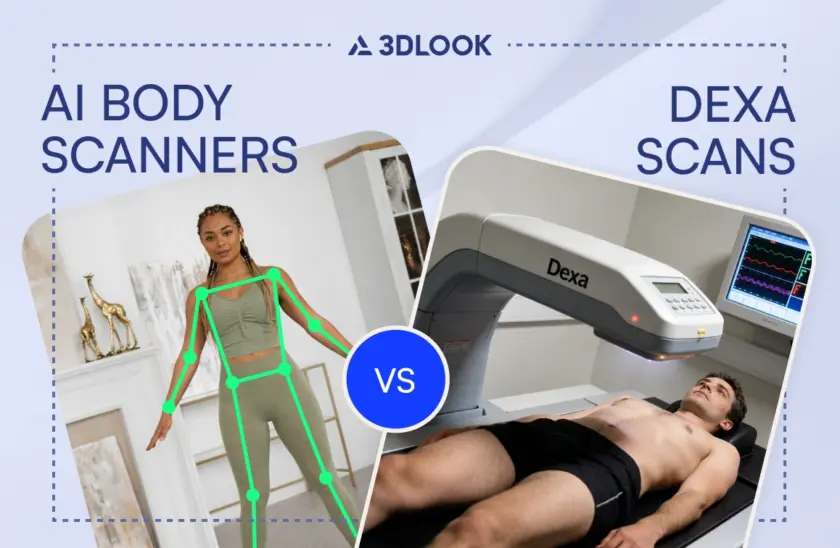
Understanding the difference between DEXA and mobile body scanning is important for digital health programs that use body data to guide monitoring, engagement, or program design.
DEXA and AI-driven mobile body-scanning tools can support body composition or body measurement workflows, but they are not interchangeable. DEXA is an imaging-based clinical assessment method, and hardware body scanners are facility-based measurement systems. FitXpress is a mobile body-data solution designed to help programs collect structured body measurements, body composition estimates, and progress-tracking data remotely and repeatedly.
This article explains where each method fits, when FitXpress can complement DEXA, and why mobile body scanning should not be positioned as a diagnostic replacement for clinical imaging or clinical assessment tools.
Disclaimer. FitXpress and the mobile body-scanning workflow described in this article support remote body-data tracking, longitudinal measurement, and engagement. They do not perform diagnostic imaging, replace DEXA or other clinical assessment tools, replace clinician review, or constitute a medical diagnosis. FitXpress is not positioned for diagnostic medical-device use in this workflow. Body composition outputs are intended to support trend tracking and program engagement; clinical interpretation, diagnostic decisions, and treatment determinations remain the responsibility of qualified professionals.
In short. FitXpress is not a DEXA replacement. DEXA is best suited for clinical imaging, bone density assessment, and milestone body composition assessment. FitXpress complements DEXA by helping digital health programs, including telehealth, GLP-1, and weight-loss, collect remote body measurements, body composition estimates, and progress-tracking data between clinical assessment points.
Why this comparison matters for digital health programs
The body-data needs of digital health programs have expanded beyond scale weight. GLP-1 programs, metabolic health platforms, and structured weight-management workflows now request body measurements beyond scale weight — body shape data, body composition estimates, changes in waist and hip circumference, and visible progress trends to support coaching, engagement, and program design. Weight alone is rarely sufficient for the decisions these programs need to make.
DEXA can be valuable at baseline or at milestone assessment points. It can produce imaging-based bone density and body composition measurements in a clinical setting. But DEXA scanning is not practical for frequent, remote, between-visit check-ins — and that is the operational gap most telehealth and weight-loss programs need to close. The practical question is rarely “DEXA or mobile?” It is “how do these two methods fit together inside a program that needs both clinical assessment moments and frequent remote tracking?”
This is where FitXpress is designed to fit — as the mobile body-data layer between clinical assessment points, not as a replacement for the clinical assessment itself.
What DEXA scans do well
Dual-energy X-ray absorptiometry (DEXA, also DXA) is a clinical imaging technology that uses a very small dose of ionizing radiation to produce images of bone and soft tissue. According to RadiologyInfo.org’s DEXA patient guide, DEXA is commonly used to diagnose osteoporosis and to assess an individual’s risk of developing osteoporotic fractures, and remains the most widely used and standard method for diagnosing osteoporosis.
DEXA is used as a clinical standard for bone mineral density assessment and for body composition analysis in clinical, athletic, and research contexts. It can provide detailed regional analysis — arms, legs, trunk, and android/gynoid fat distribution — that supports clinical decisions, sports performance analysis, and research protocols.
DEXA’s strengths are operational as much as analytical. The technology is well-established, recognized as regulated clinical imaging equipment, and supported by decades of clinical literature. In settings where the workflow requires clinical-grade assessment, milestone-level precision, or research-quality measurement — and where the patient or participant can come to a clinical facility — DEXA is the appropriate tool.
The trade-off is practical access. DEXA requires specialized imaging equipment, in-person appointments, and trained operators. It is not designed for, and not used for, frequent at-home or remote body-data check-ins. That is what makes DEXA a clinical assessment point rather than a continuous tracking layer.
What FitXpress and AI body scanners do well
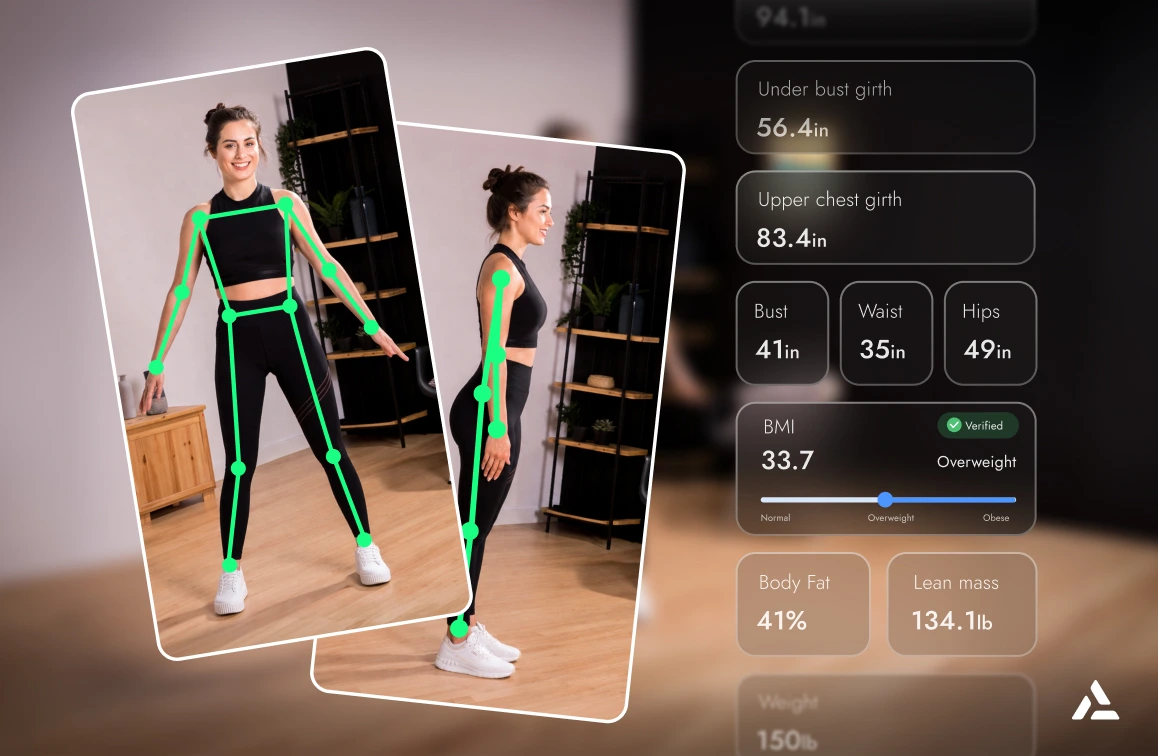
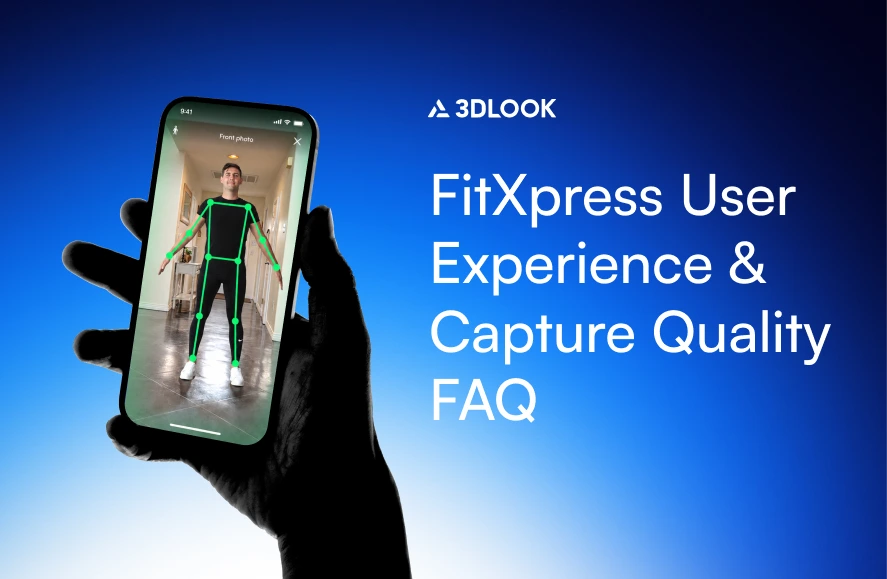
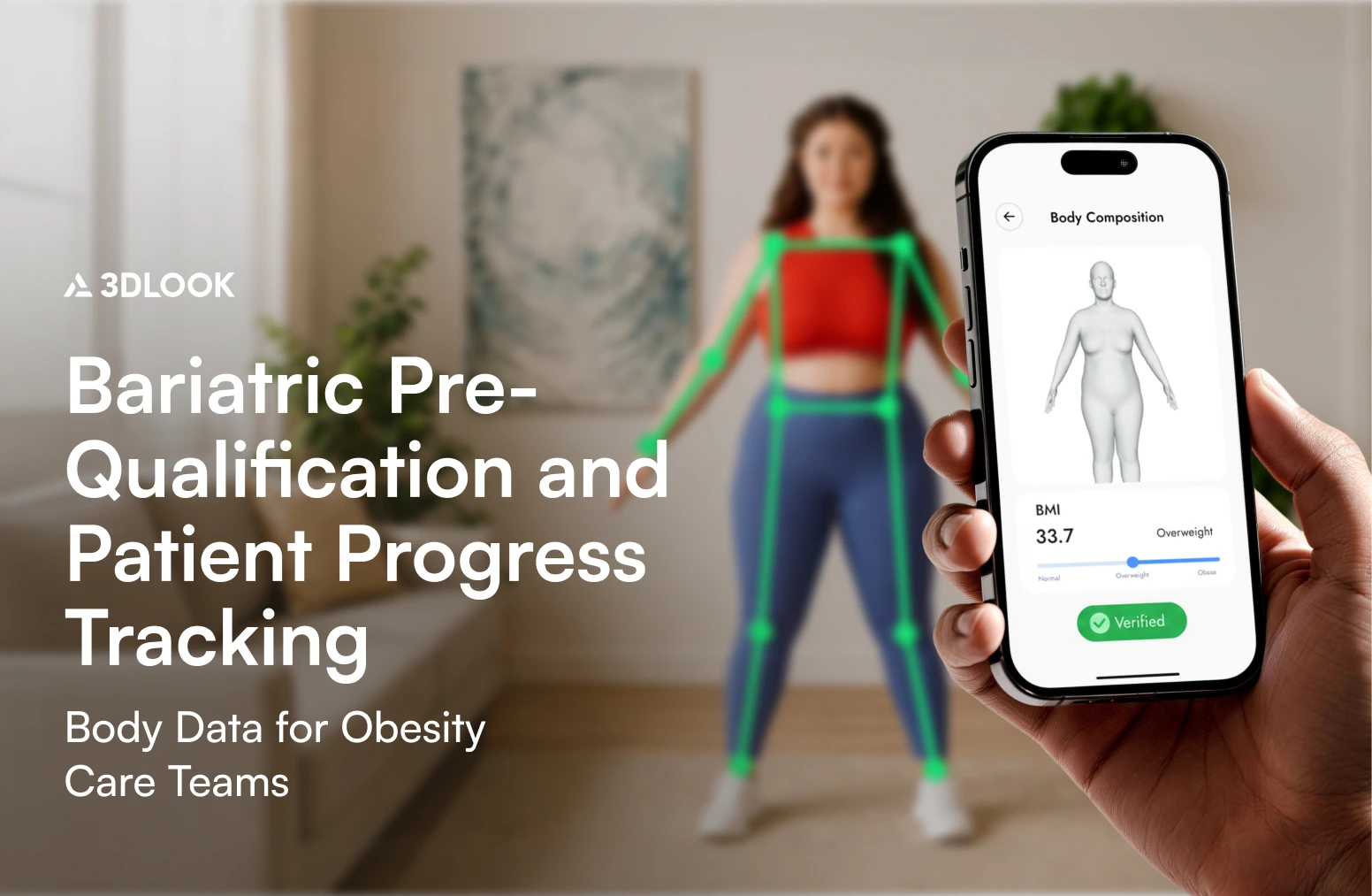
FitXpress is a mobile body-scanning solution built around a guided two-photo workflow. A user takes a front and side smartphone capture, provides height/weight/age/gender as required inputs, and FitXpress returns a 3D body model and structured body data — 80+ body measurements, BMI outputs, body composition estimates, and progress tracking signals — with results processed in roughly 45 seconds. No specialized hardware is required. The same workflow underpins remote body composition tracking deployments across digital health programs, such as telehealth, GLP-1, and metabolic programs.
The underlying technology stack — described in more depth in how 3DLOOK turns two photos into structured body data — uses computer vision and a statistical generative body model rather than depth sensors, structured-light hardware, or X-ray imaging. That design point is what makes mobile, remote, recurring scans practical.
Three properties of mobile body-scanning solutions like FitXpress matter for digital health program operators:
- Mobile and scalable. The scan completes on a standard smartphone, on any background, with no facility visit. Programs can deploy FitXpress as an AI body scanner for telehealth, wellness, or fitness use cases, across distributed users at scale, via API/SDK integration with their existing platform.
- Recurring and longitudinal. Because the scan does not require an appointment or facility, it supports recurring body-data check-ins at program-defined cadences. Each scan produces structured, time-stamped outputs that are directly comparable to earlier captures.
- Non-diagnostic by design. FitXpress outputs are structured body-data signals—measurements, body-composition estimates, and 3D visualization. They are designed to support program engagement and trend tracking, not to replace clinical assessment or imaging.
This is the operational layer that complements clinical assessment tools like DEXA — not a substitute for them.
DEXA vs FitXpress: compare by role, not by hype
A useful comparison is not “which technology is more accurate?” but “which method fits which workflow?” For programs evaluating mobile body scanning vs DEXA, the two are designed for different operational contexts and different decision types.
| Question | DEXA | FitXpress |
| Primary role | Clinical imaging and assessment | Remote body-data capture and progress tracking |
| Best fit | Bone density, clinical assessment, research, milestone scans | Telehealth, GLP-1, wellness, fitness, remote monitoring |
| Location | In-person facility | Smartphone-based, remote |
| Hardware | Specialized imaging equipment | No specialized hardware required |
| Frequency | Periodic, based on clinical need | Repeatable at program-defined intervals |
| Outputs | Bone density, lean mass, fat mass, and regional analysis | 3D model, 80+ body measurements, BMI, BMR, body fat %, fat/lean mass estimates, progress trends |
| Diagnostic role | Can support diagnosis in appropriate clinical workflows | Not diagnostic |
| Regulatory framing | Regulated clinical imaging equipment | Designed for non-diagnostic wellness, engagement, and body-data tracking workflows; classification depends on intended use, jurisdiction, and implementation context |
| Best program role | Baseline or milestone assessment | Longitudinal tracking between assessment points |
Is FitXpress a DEXA replacement, alternative, or complement?
FitXpress is best positioned as a complement to DEXA — not a replacement.
- FitXpress is not a DEXA replacement for bone density assessment.
- FitXpress is not a replacement for diagnostic imaging.
- FitXpress can be a practical alternative only for non-diagnostic workflows where the goal is remote tracking, engagement, or structured body-data capture.
- FitXpress complements DEXA by helping programs track body changes between DEXA scans or other in-person clinical assessments.
The most useful program design for many telehealth, GLP-1, and metabolic programs uses DEXA (or another clinical assessment method) at baseline and milestone visits, and FitXpress as the recurring, remote tracking layer in between.
Why someone may use FitXpress instead of DEXA
A program may use FitXpress as a DEXA alternative when the goal is scalable, remote, recurring body-data capture rather than diagnostic imaging. Common scenarios:
- Frequent remote progress tracking across a distributed user base
- User engagement signals during weight-loss or fitness journeys
- Body measurement capture without a clinical visit
- Body-shape visualization for coaching and adherence
- Longitudinal comparison across program stages
- A scalable workflow that does not require facility infrastructure
- A lower-friction check-in between clinical reviews
The important distinction: a program should not use FitXpress instead of DEXA for diagnostic imaging, bone density assessment, clinical confirmation, or research-grade body composition measurement. Those workflows require the established clinical method, not a mobile measurement layer.
Why use FitXpress between DEXA scans
DEXA can provide a high-value clinical snapshot at a baseline or milestone moment. FitXpress can help the program understand the trend line between those snapshots. The two outputs serve different roles in the same program: DEXA can provide an imaging-based assessment point; FitXpress depicts what is changing between those points continuously.
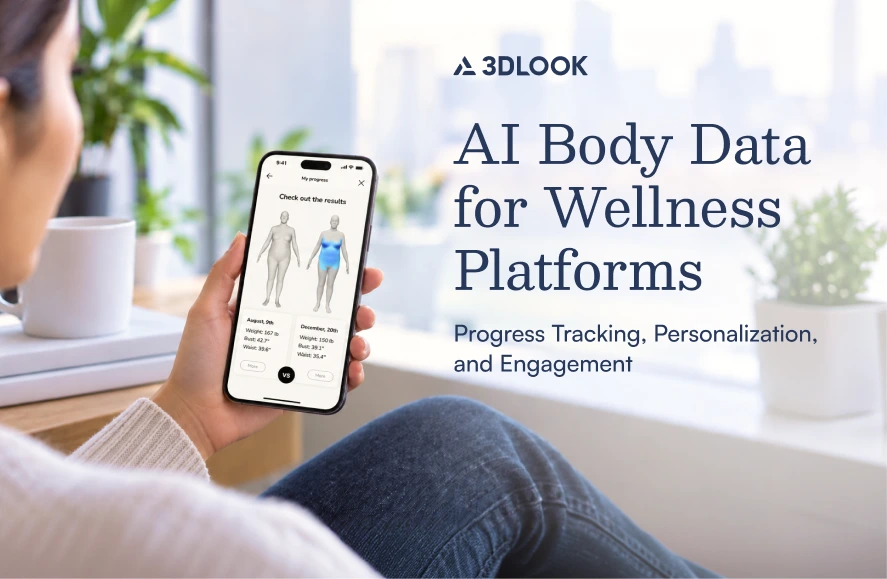
In a weight-management or metabolic program, between-scan tracking can include changes in waist and hip circumference, changes in body shape visible in the 3D model, weight-related trends, trends in body composition estimates, and engagement signals such as scan completion cadence. The data does not substitute for the clinical assessment — it supports the program’s view of trajectory between assessment moments.
How often can users scan with FitXpress vs DEXA or hardware?
The right cadence depends on the program. FitXpress can support frequent remote scanning because it uses a smartphone, requires no facility visit, and does not involve radiation exposure. Many GLP-1, metabolic, wellness, and fitness programs choose to scan every 2 weeks or once a month. The cadence should match the program’s coaching, review, and engagement rhythm rather than the technical maximum supported by the scan.
DEXA scanning is periodic and depends on clinical need, provider guidance, access, and cost. Hardware scanning depends on whether the user can visit the physical location. The cadence math is therefore: DEXA at clinical-need and facility-visit intervals; FitXpress at the recurring program-design interval that fits the workflow.
How FitXpress fits inside a GLP-1 or metabolic program
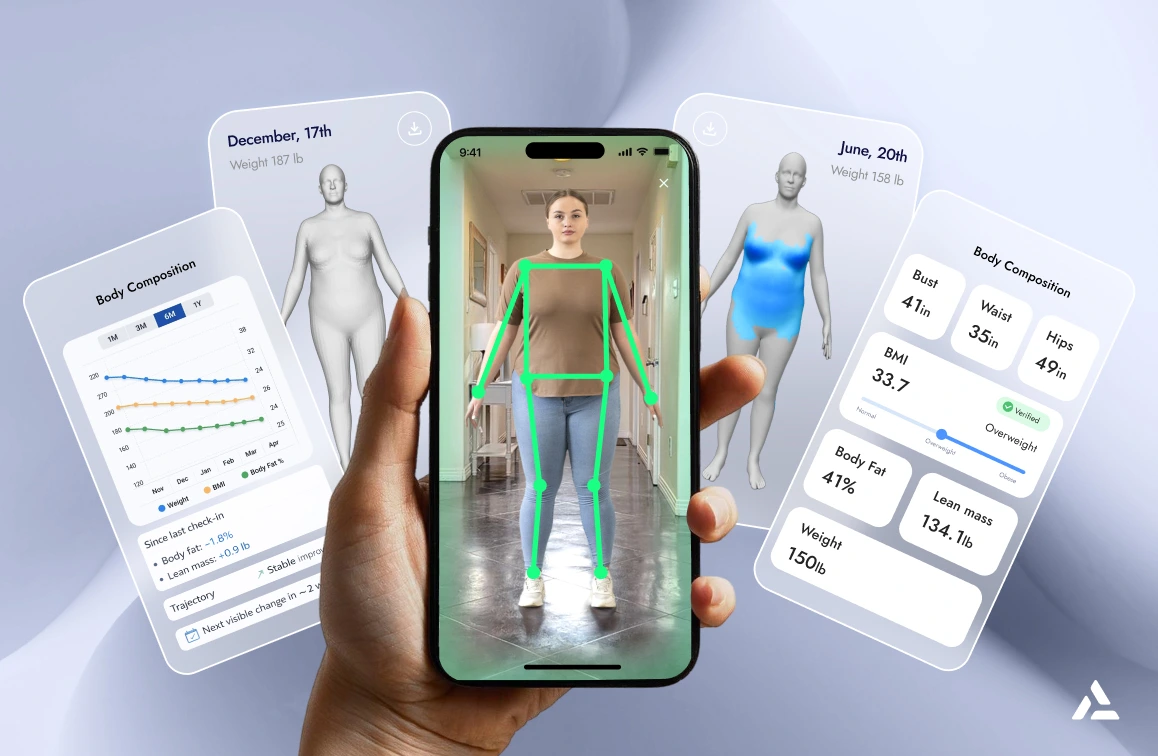
For GLP-1 and metabolic programs, FitXpress operates as a five-step workflow that runs alongside the clinical pathway and supports GLP-1 body composition tracking from enrollment through maintenance:
- Baseline onboarding. FitXpress captures starting body data remotely before or during program enrollment. The baseline includes the structured measurement set, BMI outputs, body composition estimates, and a 3D model snapshot that becomes the anchor for later comparison.
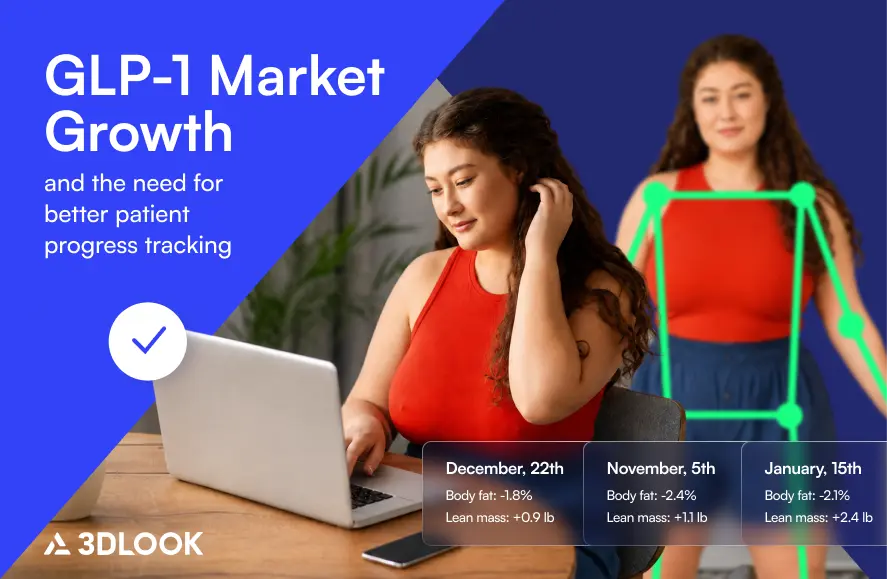
- Active weight-loss phase. Users complete recurring scans every 2 to 4 weeks, depending on the program model. Each scan produces a comparable record that can be reviewed by care teams or surfaced in the user’s progress view.
- Coaching or care review. Care teams, coaches, and program staff review body-data trends — waist and body-shape changes, body-composition estimate direction — alongside scale weight, clinical lab data, and adherence signals. Body-data trend visibility supports coaching decisions that scale weight alone cannot inform.
- User engagement. The 3D visualization and progress data give users a tangible view of change that scale weight does not provide. Engagement signals —such as scan completion and recurring use—can be tracked alongside clinical outcomes.
- Maintenance phase. As users transition from active weight-loss into maintenance, periodic FitXpress scans support long-term tracking, retention, and the program’s view of trajectory beyond the active phase.
Compliance scope for GLP-1/metabolic program use. In a GLP-1 or metabolic program, FitXpress should be positioned as a remote monitoring and engagement layer, not as a diagnostic or prescribing tool. FitXpress does not:
- Determine GLP-1 eligibility
- Diagnose obesity-related disease
- Diagnose sarcopenia
- Confirm clinical muscle loss
- Replace provider judgment
- Make prescribing decisions
- Prevent or treat disease
Clinical assessment, diagnostic determinations, and prescribing decisions remain with the licensed provider, in accordance with applicable clinical guidelines.
Discover how AI-powered body intelligence is reshaping GLP-1 programs, telehealth, and digital health, from accurate remote assessments to safer and more engaging patient journeys.
Where hardware body scanners fit
Hardware body scanners — facility-based systems used in clinics, gyms, wellness centers, and controlled environments — sit between DEXA and mobile scanning in terms of access. They can support structured measurement workflows for users already onsite and may produce repeatable measurements without requiring a clinical imaging facility. They do require equipment, floor space, setup, maintenance, and user presence at the location.
The framing is operational, not technical. The relevant question is not “hardware or mobile?” but “onsite workflow or remote workflow?” Programs that operate distributed user bases, telehealth pathways, or app-based engagement models need a remote workflow — and that is where FitXpress is designed to fit.
Is FitXpress diagnostic?
FitXpress is positioned as an intake and progress-tracking layer that provides structured body-data outputs — body measurements, BMI outputs, body composition estimates, 3D model visualization, and longitudinal trend data — to support wellness, telehealth, weight-loss, and fitness workflows.
FitXpress does not diagnose disease, replace DEXA or clinical imaging, replace clinician judgment, determine treatment eligibility, or make prescribing decisions. FitXpress outputs are supportive body-data signals. Diagnosis, treatment decisions, and clinical interpretation remain the responsibility of qualified professionals.
Does FitXpress require regulatory clearance?
Regulatory requirements depend on intended use, product claims, jurisdiction, workflow, and how outputs are used. The FDA’s General Wellness: Policy for Low Risk Devices guidance describes when low-risk lifestyle products fall outside the medical device definition — provided they do not make disease-specific, diagnostic, or treatment-oriented statements.
FitXpress should be positioned within a non-diagnostic wellness and lifestyle framing: structured body-data outputs that support progress tracking, engagement, and program monitoring, without diagnostic, disease-specific, or treatment-oriented claims. The regulatory classification for any specific deployment should be evaluated by the deploying organization’s legal and regulatory team based on intended use, the specific claims made, and the applicable jurisdiction.
Privacy and data security considerations
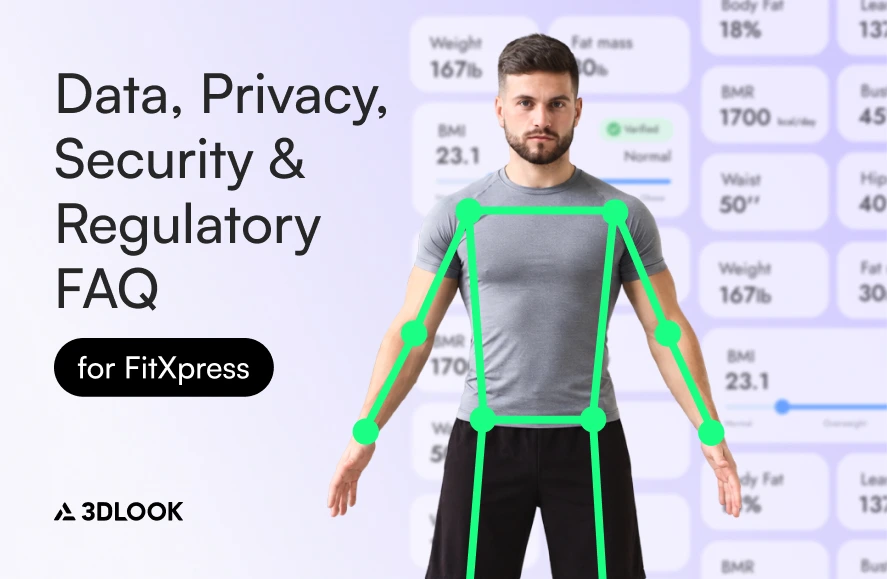
Body images and body-derived data are sensitive. FitXpress uses two photos to generate the 3D model and downstream measurement and composition outputs, and the program operator is responsible for clear user communication regarding consent, data use, storage, retention, and deletion. Telehealth and weight-loss workflows often face additional jurisdiction-specific controls that the operator’s legal and compliance teams should evaluate before deployment.
The 3DLOOK FitXpress technical posture supports common compliance frameworks. FitXpress maintains HIPAA compliance and adheres to GDPR principles, supports Business Associate Agreement (BAA) execution where applicable, and runs on encrypted-in-transit, encrypted-at-rest storage with role-based access controls. FitXpress is designed to minimize the processing of direct identifiers in the scanning workflow, and captured images are deleted immediately after processing or within a configurable retention window, depending on program policy.
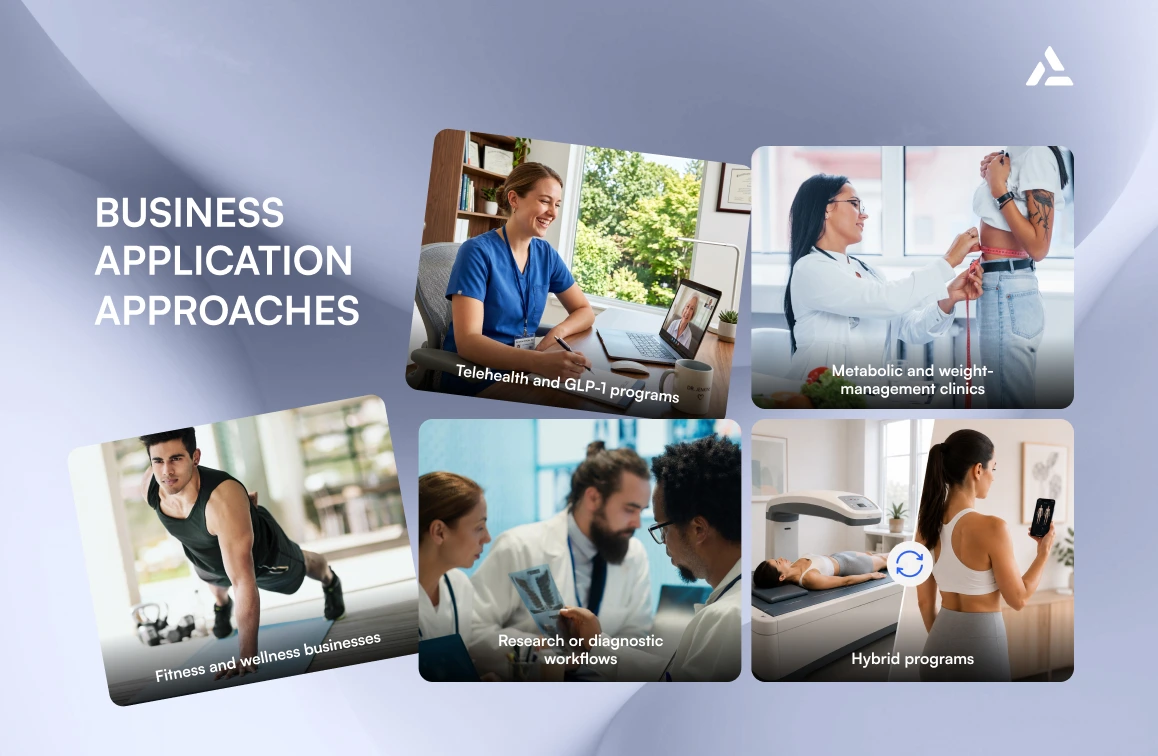
Business application approaches
Telehealth and GLP-1 programs. FitXpress can support remote onboarding, recurring body-data tracking, progress visualization, and engagement between clinical visits. DEXA is appropriate when the program design includes clinical assessment milestones that require imaging-grade measurement. The combination — DEXA at milestones, FitXpress in between — is a possible efficient operational pattern.
Metabolic and weight-management clinics. DEXA or another established clinical tool may be used at selected milestone moments where imaging-based or pre-defined body composition assessment is part of the protocol. FitXpress can support between-visit monitoring, remote check-ins, and program-level engagement signals.
Fitness and wellness businesses. FitXpress can support body scanning for weight loss programs, frequent member engagement, body-shape visualization, and progress tracking across a distributed user base. DEXA or hardware scanners may be relevant if the business operates a clinic-style component.
Research or diagnostic workflows. DEXA or another established clinical tool remains the appropriate choice when the workflow requires diagnostic, research-grade, or highly standardized assessment.
Hybrid programs. Many telehealth and metabolic programs operate a hybrid model: DEXA (or another clinical method) at the assessment milestones the protocol requires, FitXpress as the structured body-data workflow that runs between those milestones. The two tools serve different roles in the same program.
Decision framework
| Need | Best fit |
| Bone density assessment | DEXA |
| Osteoporosis-related diagnostic workflow | DEXA |
| Research-grade clinical measurement | DEXA or another established clinical method |
| Remote body measurements | FitXpress |
| Body-shape progress tracking | FitXpress |
| GLP-1 program engagement | FitXpress |
| Between-scan monitoring | FitXpress |
| In-clinic milestone assessment | DEXA or hardware scanner |
| Fully remote user journey | FitXpress |
| Clinical assessment + remote engagement layer | DEXA (clinical) + FitXpress (engagement) |
The framework follows the central thesis: the question is rarely “which tool wins?” The useful question is “which tool fits this specific decision?” — and for many telehealth, GLP-1, metabolic, and wellness programs, the answer is both, in different roles.
DEXA, hardware body scanners, and FitXpress do not need to compete for the same role. DEXA supports clinical and imaging-based assessment moments. Hardware scanners support structured measurement workflows when users are on-site. FitXpress supports recurring remote body-data tracking between those moments. For digital health programs, the strongest model is often not choosing one method over another, but assigning each method to the workflow it serves best.
Next steps
See how FitXpress can support remote body composition tracking in your telehealth, GLP-1, or metabolic health program. Get in touch with 3DLOOK or book a FitXpress demo to explore the technology in practice with our team.
FAQ
A DEXA scan uses low-dose X-rays to measure bone density, lean mass, fat mass, and regional body composition in a clinical setting. An AI body scanner like FitXpress uses smartphone photos to generate structured body data — 80+ measurements, BMI outputs, body composition estimates — for remote tracking, engagement, and progress visualization: different methods, different roles.
No. FitXpress is a non-diagnostic body-data layer for remote tracking and engagement workflows. It is not a DEXA replacement for diagnostic imaging or bone density assessment.
For non-diagnostic workflows — remote tracking, engagement, body-data capture, longitudinal monitoring — FitXpress can be a practical alternative. For clinical imaging, bone density assessment, or diagnostic use, FitXpress is not a substitute for DEXA.
Yes. FitXpress can support frequent remote tracking between DEXA scans or other clinical assessment points, giving programs a continuous view of body change between milestone measurements.
The choice depends on the workflow and the decision being supported. A program may use FitXpress when it needs scalable remote body-data capture, progress tracking, engagement, and longitudinal monitoring rather than diagnostic imaging.
DEXA produces a high-value clinical snapshot at a point in time, but it is not designed for frequent remote check-ins. FitXpress helps programs monitor body measurements, body-shape changes, and body-composition estimate trends between those clinical snapshots.
FitXpress can support frequent remote scans because it uses a smartphone and does not require facility visits or radiation exposure. Many programs choose every two to four weeks or monthly scanning rather than daily — the right cadence should match the program’s coaching, review, and engagement rhythm rather than the technical maximum.
DEXA scan frequency depends on clinical need, provider guidance, and the specific purpose of the scan. Programs and providers determine cadence based on patient context and clinical protocol; there is no universal frequency.
As a remote body-data tracking and engagement layer that supports monitoring beyond scale weight. FitXpress is not a diagnostic or prescribing tool, does not determine GLP-1 eligibility, and does not make clinical decisions about treatment.
No. FitXpress provides structured body-data outputs for non-diagnostic workflows — wellness, telehealth, weight-loss, fitness, engagement. Diagnosis and treatment decisions remain with qualified professionals.
FitXpress should be positioned within a non-diagnostic wellness and lifestyle framing. Regulatory classification for a specific deployment depends on intended use, claims, jurisdiction, and implementation context.
DEXA is the better choice for bone density assessment, clinical imaging workflows, diagnostic contexts, and research or sports performance contexts requiring imaging-grade body composition measurement — in any workflow where clinical validation and imaging-grade precision are required.
Not exactly. They serve different roles in different operational contexts. The strongest model for many telehealth, GLP-1, and metabolic programs uses both: DEXA for clinical assessment moments, and FitXpress for the remote tracking layer between them.
Mobile body scanning should not be framed as a replacement for DEXA for clinical or diagnostic body composition assessment. It can support remote, non-diagnostic body composition trend tracking when the goal is program engagement, longitudinal monitoring, or user progress visibility rather than imaging-based clinical assessment.