Scope: This guide explains where 3DLOOK’s FitXpress supports verified body-measurement workflows across health programs, from remote capture to structured outputs for review, documentation, and operational decision-making. For a broader context on artificial intelligence in healthcare, read the overview of AI in healthcare. For a technical explanation of the scanning process, check how 3DLOOK turns two photos into structured body data.
Why body data keeps failing health programs
Most conversations about AI in healthcare start too broadly. The more useful question for a program owner is narrower: where does the body data a program already relies on come from, and can it be trusted for the decision it feeds?
In practice, that data is self-reported, measured manually at inconsistent points in time, or captured once and never repeated. A telehealth program asks members for their weight. An underwriting team builds from an application. A trial site measures waist circumference using a tape measure that varies among coordinators. Each workflow exposes the same underlying body-data problem in a different operational context. These workflows are typically owned by clinical operations, member engagement, underwriting, wellness, and research teams that need trustworthy body data collected remotely and at scale.
What verified body data means in this context
By body data, we mean structured, repeatable measurements of a person’s body: circumferences, linear dimensions, and body composition, captured in a consistent format that a workflow can act on. FitXpress produces this from two smartphone photos, returning 80+ measurements, body composition outputs such as Body Mass Index (BMI), body fat percentage, and lean and fat mass, along with a 3D model in under 45 seconds.
The distinction that matters is between verified body data and a single self-reported number. A member’s stated weight is one figure with no provenance. A structured scan is a standardized, repeatable record that can be compared over time. The capture mechanics are covered separately in the section on how 3DLOOK turns two photos into structured body data.
The shared workflow problem: self-report, manual measurement, progress visibility, documentation
The same failure modes appear across healthcare programs:
| What happens today | Why does it cost the program? | How verified body data helps |
| Members and applicants self-report weight and BMI | Inaccurate, outdated, or misrepresented inputs | A structured, repeatable record captured before review |
| Body is measured manually at intake | Variance between staff, sites, and visits | Standardized capture that repeats the same way each time |
| Progress is a number on a scale | Small real changes get lost; members disengage | Composition and 80+ measurements, comparable scan to scan |
| Records live in notes and photos | Weak audit trail for payers and regulators | Timestamped, structured documentation |
Two properties matter across all of these workflows. Repeatability, or scan-to-scan consistency, is what makes longitudinal tracking reliable: FitXpress scan-to-scan variance is typically < 1 cm. And accuracy, measured against a reference, is what makes a single reading defensible. The two are not the same thing, and neither should be reduced to one universal number.
Where FitXpress fits, and where it does not
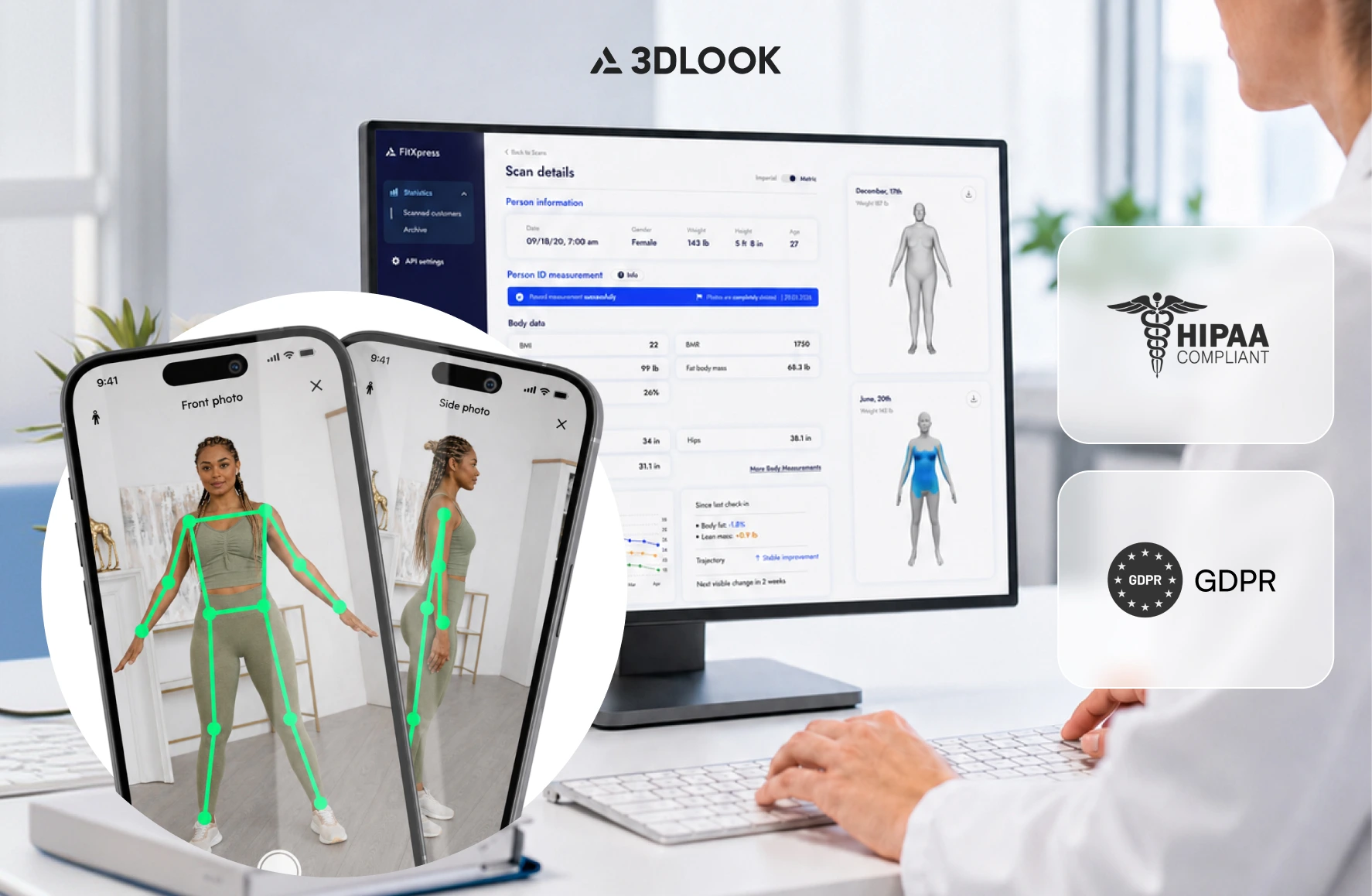
FitXpress is an operational layer. It standardizes how body data enters a workflow and how it is documented, so reviewers spend less time chasing and reconciling inputs. It supports review; it does not make the call.
That boundary is deliberate. FitXpress does not diagnose conditions or make decisions regarding treatment, underwriting, eligibility, hiring, or clearance. It does not replace a clinician, a DEXA-scan, a calibrated scale, or a protocol-defined reference method. FitXpress is not positioned as a medical device. Data privacy and compliance are evaluated against frameworks such as the Health Insurance Portability and Accountability Act (HIPAA) and the General Data Protection Regulation (GDPR), and FitXpress supports HIPAA-compliant and GDPR-aligned implementations. Where a workflow or protocol allows, it provides the structured, repeatable data that a human review still depends on. The role of FitXpress is to support the workflows of clinicians, underwriters, examiners, and reviewers with structured body-data inputs.
Explore verified body data by health program
Each workflow has a dedicated use-case resource for the operational context, buyer needs, and implementation model.
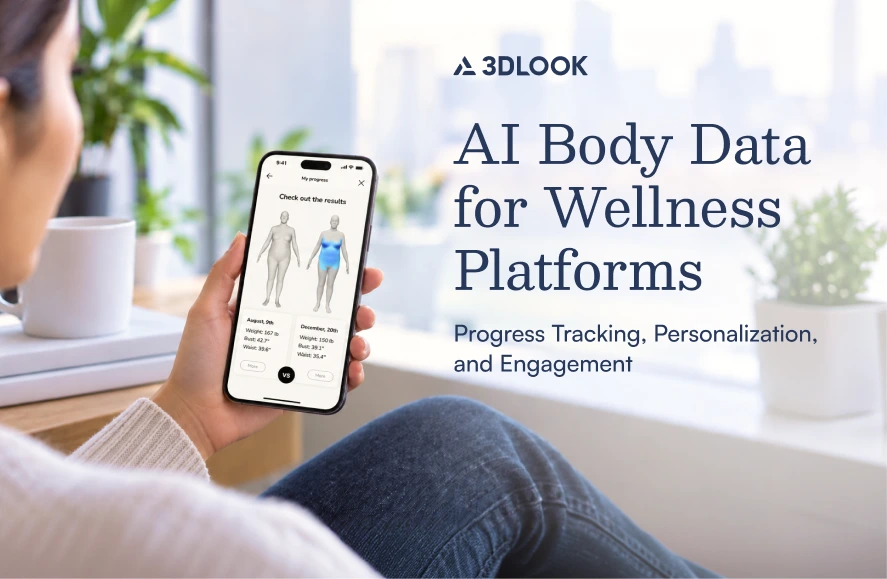
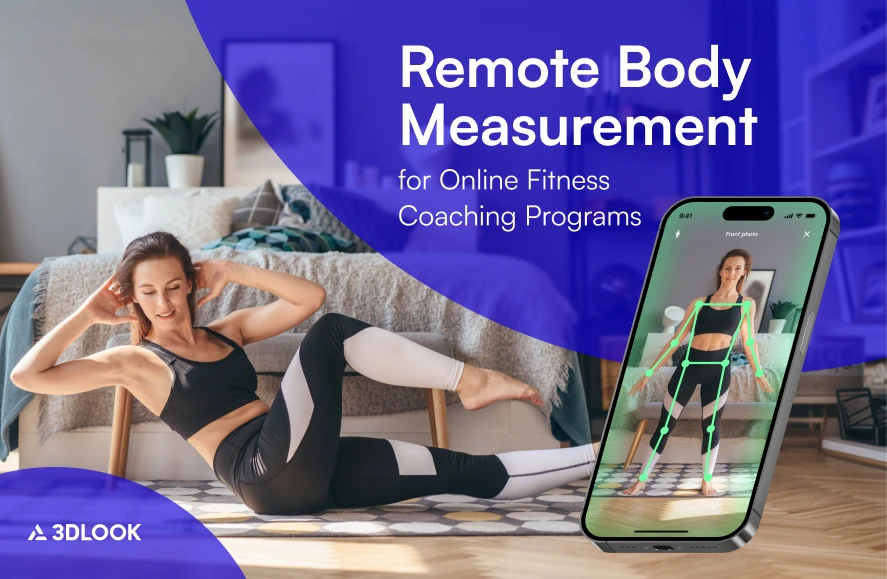
Connected and digital fitness. Connected fitness and coaching apps often depend on visible progress to support retention. FitXpress adds body-data personalization and 3D progress views that give members a reason to stay and upgrade, without clinical framing. See FitXpress for connected and digital fitness.
Telehealth. Virtual-first clinics and remote monitoring programs risk disengagement when progress is not visible between check-ins. FitXpress provides repeatable body data that makes real change visible between visits, supporting adherence and giving payer and employer partners defensible longitudinal outcomes. See FitXpress for telehealth and digital health.
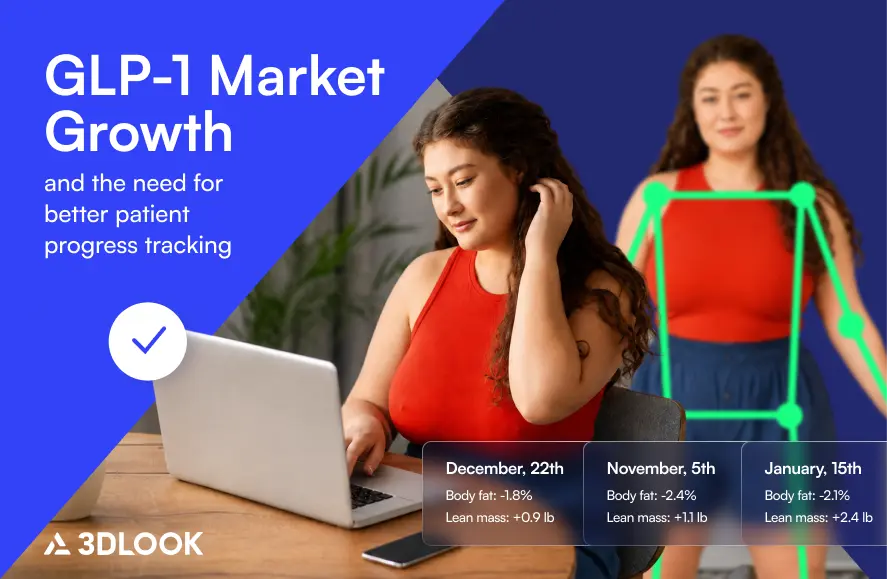
GLP-1 and weight-loss programs. Programs built around GLP-1 medications need to show change beyond a single number on the scale. FitXpress captures changes in composition between visits and gives the clinician a structured baseline for review.
BMI verification. Remote prescribers and online pharmacies need a more consistent way to validate BMI and body build inputs before clinician review. FitXpress adds structured, audit-ready body data to the workflow without making clinical or compliance decisions. See FitXpress for BMI verification.
Insurance underwriting. Self-reported build is a leading driver of misclassification in accelerated underwriting. FitXpress provides remote structured body data as supporting evidence for the underwriter, speeding triage and leaving an auditable per-case trail. It remains supporting evidence; fraud review remains a human task. See mobile body scanning for insurance underwriting.
Wellness rewards. Employers and health plans carry an administrative burden verifying wellness activity across distributed, hybrid workforces. FitXpress adds remote, standardized capture that makes verification consistent and traceable, while the incentive decision stays with the program. See wellness rewards verification.
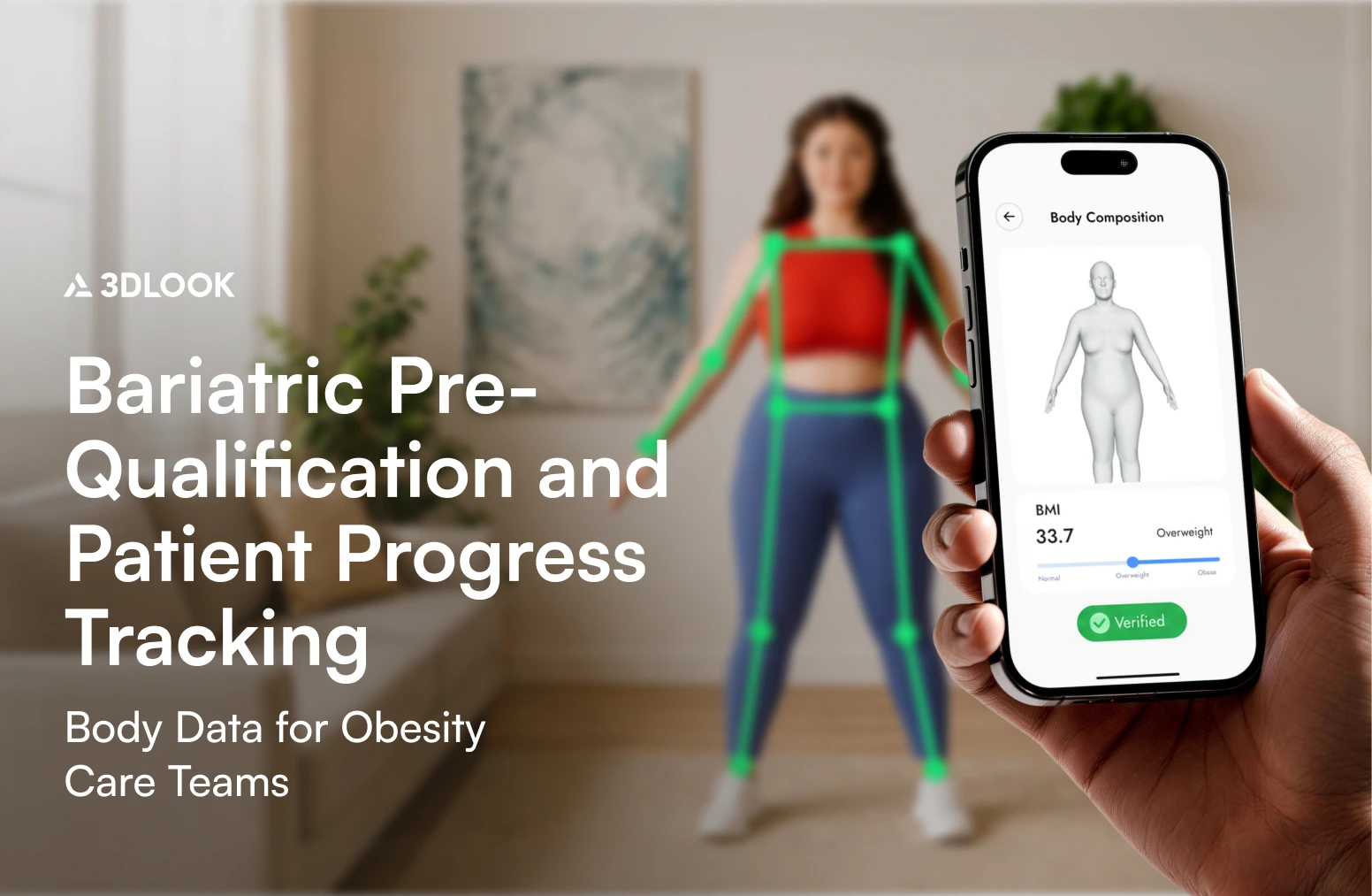
Bariatric pre-qualification. Obesity care teams waste consult slots on patients who turn out to be ineligible. FitXpress supports remote pre-qualification with structured records that reduce wasted consults and streamline pre-authorization paperwork, without making the clinical decision. See bariatric pre-qualification with mobile 3D body scanning.
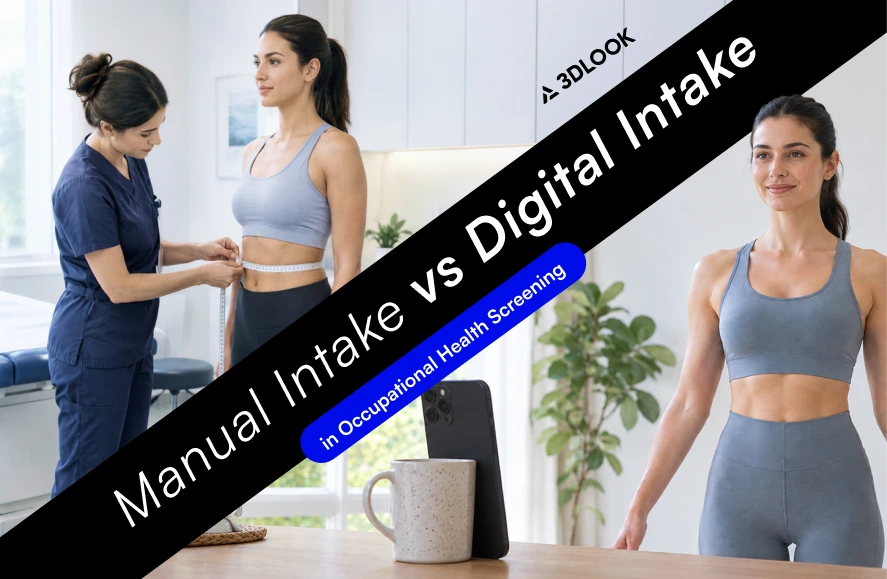
Occupational health. Occupational health providers screen large, distributed workforces, and manual intake varies across sites and examiners. FitXpress adds remote, standardized body-data capture with timestamped records that support examiner review. It supports screening workflows; it does not make fitness-for-duty, clearance, or hiring decisions. See standardizing occupational health screening.
Clinical trials. Hybrid and decentralized obesity and metabolic trials struggle with measurement variability across sites and with participant visit burden. FitXpress offers standardized remote anthropometric capture, providing timestamped, structured records that support monitoring and audit readiness. It does not validate endpoints or replace protocol-defined reference methods; eligibility and endpoints remain investigator-led. See standardizing anthropometric measurements for obesity trials.
Discover how AI-powered body intelligence is reshaping GLP-1 programs, telehealth, and digital health, from accurate remote assessments to safer and more engaging patient journeys.
Accuracy, privacy, and compliance
Accuracy should be evaluated by use case: reference method, capture protocol, tolerance, and decision type all matter. FitXpress validation data and repeatability are addressed in the body-scanning accuracy framework.
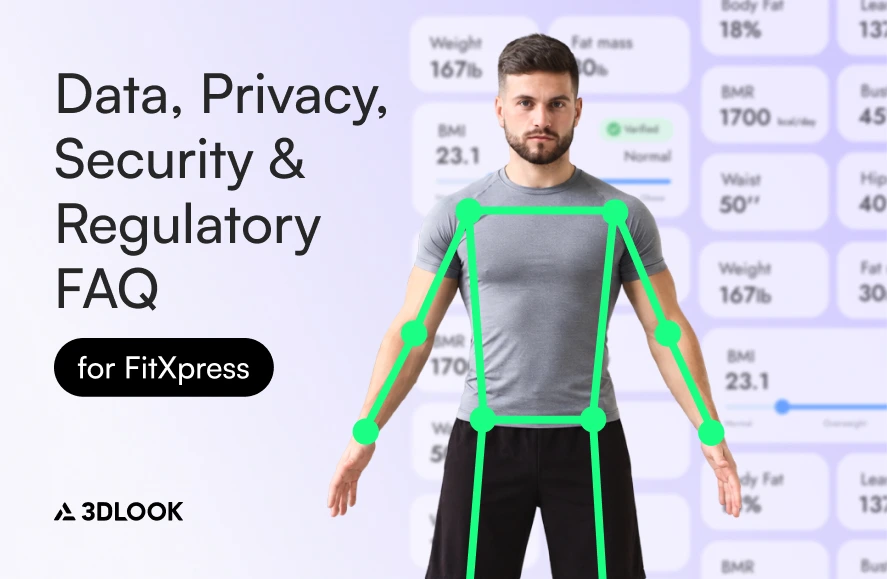
On privacy, FitXpress supports HIPAA-compliant and GDPR-aligned implementations, with encryption in transit and at rest, configurable retention, photo-handling controls, and deletion workflows. Detailed answers on storage, retention, deletion, and certifications are covered in the data, privacy, and security FAQ.
Where to go next
For program-specific evaluation, 3DLOOK can help map where verified body data fits within an existing workflow — let’s talk.
FAQ
It is a structured, repeatable body measurement captured by computer vision rather than manually or by self-report. It provides structured, repeatable inputs — BMI, composition, and 80+ measurements — that support review and documentation in a health program.
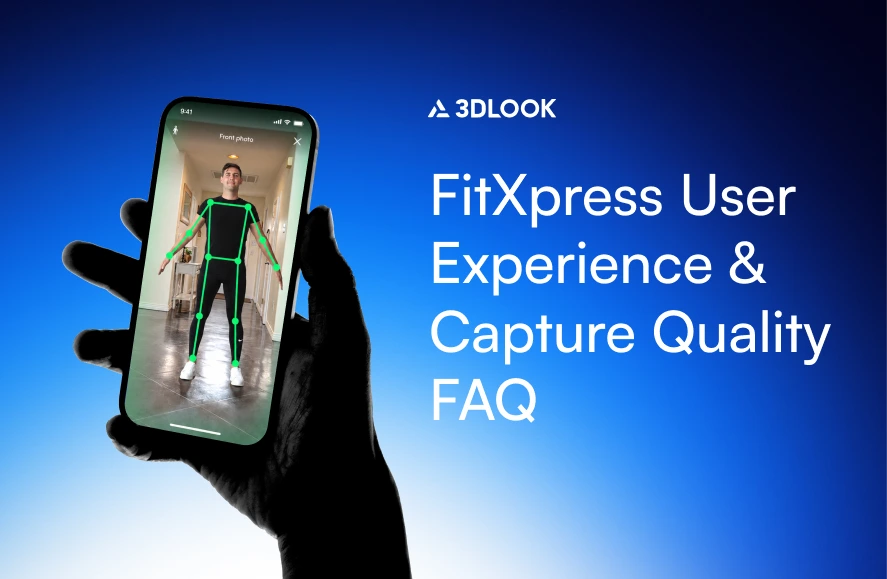
FitXpress uses two smartphone photos and guided capture to return body measurements, body composition, and a 3D model in under 45 seconds. No dedicated scanner or in-person visit is required.
No. FitXpress is a support layer. It standardizes intake and documentation so that a clinician, underwriter, or reviewer can make decisions with better input. It does not diagnose or make treatment, underwriting, eligibility, or clearance decisions.
No. FitXpress supports standardized body-data capture and documentation. It does not replace clinician review, DEXA, calibrated scales, or protocol-defined reference methods where those are required.
Connected and digital fitness, telehealth, GLP-1 and weight-loss programs, BMI verification, insurance underwriting, wellness rewards, bariatric pre-qualification, clinical trials, and occupational health. Each has its own workflow and its own resource linked above.
FitXpress supports HIPAA-compliant and GDPR-aligned implementations, with encryption in transit and at rest, configurable retention, photo-handling controls, and deletion workflows. Full details are covered in the data, privacy, and security FAQ.