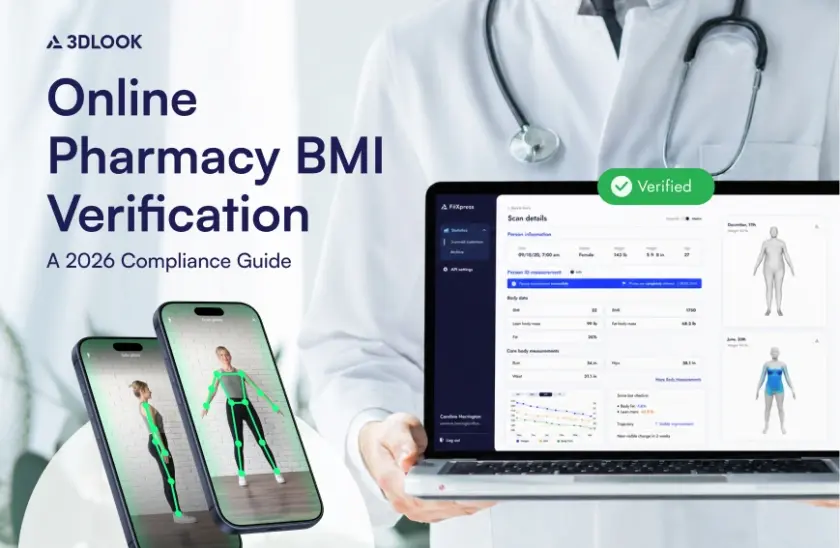
In conversations with UK online pharmacy teams, 3DLOOK heard concerns about patients using generative AI tools to alter body photos submitted as evidence of BMI for weight-loss eligibility. Some teams have described photo manipulation as a recurring issue in order-flow intake. When a regulated prescribing decision relies on self-reported weight paired with a camera-roll photo, the submitted evidence provides limited independent verification of the underlying body data.
Online pharmacy operators and compliance leads need to assess the limitations of camera-roll uploads, the capabilities available for structured verification, the related requirements in telehealth programs, and the vendor controls that support the pharmacy order flow.
Disclaimer. Mobile body scanning solutions presented in these workflows do not provide diagnoses, replace required medical evaluations, or make clinical judgments. They produce body measurements and body composition estimates intended to serve as supporting evidence within workflows operated by appropriately qualified clinical teams or authorized compliance personnel.
Why camera-roll uploads provide limited verification
Some online weight-loss prescribing workflows collect self-reported weight alongside one or more uploaded body photos for clinical review. The patient enters a self-reported weight and uploads one or two images from a camera roll, after which a clinician reviews the file and approves or escalates the application.
This approach depends on the submitted image accurately representing the patient at the time of assessment and on the reviewer being able to identify inconsistencies from visual evidence alone. A camera-roll image can support visual review, but it provides limited evidence of when, how, or by whom it was created. The operational effect of these limitations increases as application volume and manual-review requirements grow.
Why generative AI increases the risks associated with photo uploads
The growing accessibility of generative AI tools has made it faster and easier to produce plausible altered body images. 3DLOOK’s CEO, Katerina Galich, publicly documented her own experiment in a March 2026 LinkedIn post, in which she asked ChatGPT and Gemini to generate images depicting her as 27 kg heavier than her actual weight. ChatGPT produced a body that was visibly wider while preserving her real face, a combination that could pair with a genuine headshot. Gemini produced a more anatomically plausible body and altered the face. Both outputs took seconds to generate. The experiment did not test whether those images would pass a pharmacy’s clinical review.
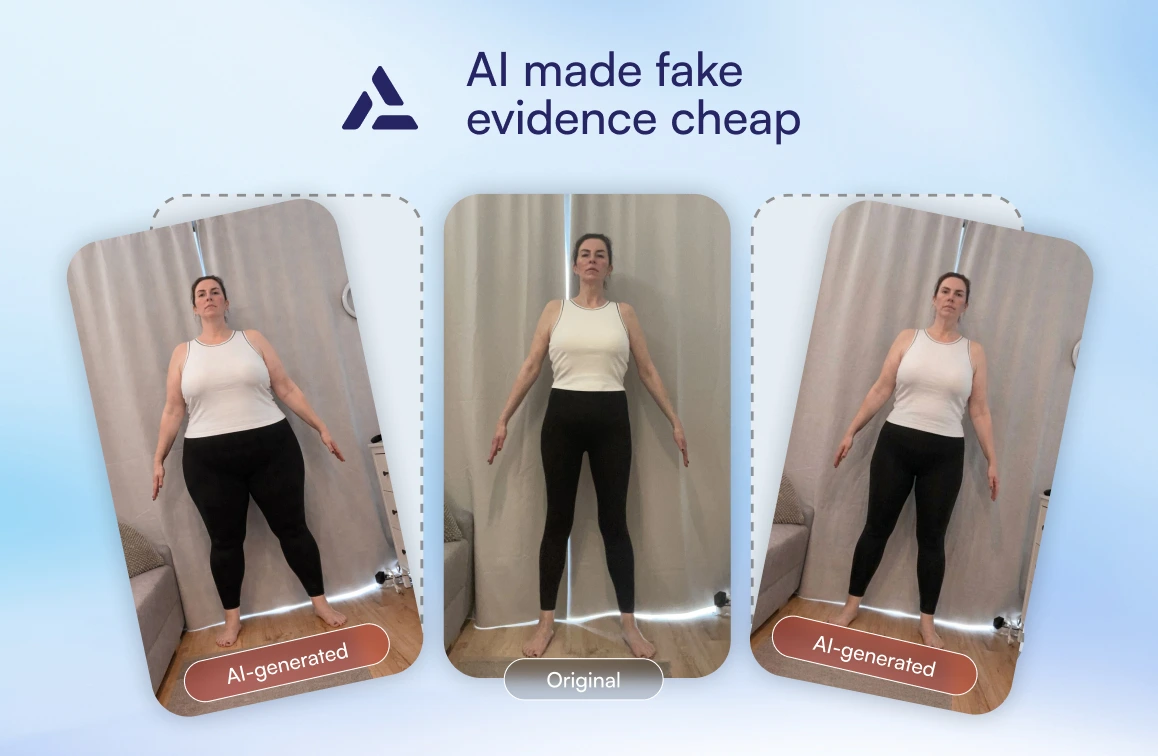
The experiment illustrates that camera-roll uploads provide limited information about capture time, liveness, and provenance. This limitation becomes more consequential in high-volume prescribing workflows that rely on manual image review.
In February 2025, the UK General Pharmaceutical Council updated its guidance governing pharmacy services provided at a distance. The guidance requires prescribers to independently verify a person’s weight, height, and/or BMI. Information supplied solely through an online questionnaire is insufficient.
Stronger verification methods can add capture-time records, provenance information, and system-generated body-data estimates to the review workflow.
Capabilities to consider in a remote BMI verification workflow
A remote BMI verification workflow may combine the following capture, validation, and documentation capabilities:
- Live, in-session photo capture. Images are captured through an embedded camera flow during the verification session. Access to the device’s camera roll is disabled. Direct capture at the point of intake reduces the opportunity to edit the image before submission.
- Liveness and pose checks. Liveness controls may require a prompted action during capture, helping indicate whether the session involved a live person and identify certain static-image or prerecorded-source presentation attempts. Pose checks assess whether the person is positioned correctly. Patient identity verification may require a separate control.
- Clothing assessment. A system may identify clothing that could reduce the reliability of the resulting estimate and use that information to request a retake or route the session for review.
- AI-derived body data and self-report cross-check. The system produces body-data estimates from the scan, including predicted weight. The customer can compare predicted weight with self-reported weight and configure mismatch thresholds that account for the model’s expected error range.
- Structured session records. The system can provide timestamped capture events, pose and clothing validation outcomes, validation statuses, and applicable check results in a format the pharmacy team can review without reconstructing the session from screenshots.
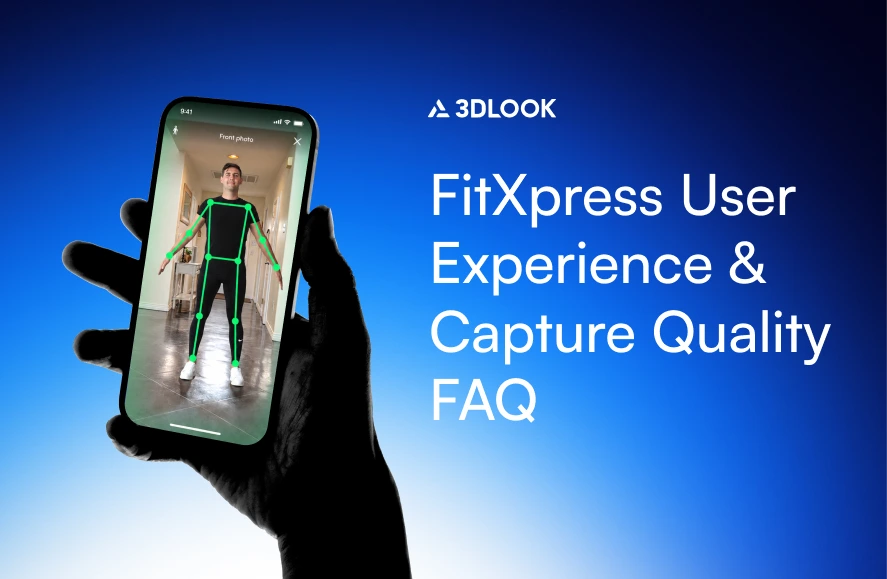
Pharmacies can evaluate these controls according to their clinical, governance, integration, and documentation requirements. See the FitXpress user experience and capture-quality FAQ for the broader capture workflow, including positioning, clothing, self-scanning, and in-flow corrections.
How FitXpress applies this standard inside the pharmacy order flow
Use Case Summary: Online Pharmacy BMI Verification
| Industry | Online pharmacy, telehealth, weight-loss |
| Problem | Camera-roll photo uploads provide limited verification evidence for weight-loss prescribing decisions |
| Solution | Guided live capture through the FitXpress software development kit (SDK), with pose, capture-quality, clothing, and liveness checks integrated into the order flow |
| Outputs | Predicted weight, BMI calculated using supplied height and predicted weight, 80+ body measurements, body-composition estimates, and structured session and validation data |
| Role | Server-side configuration within the pharmacy order flow (Pattern B) |
| Business value | Additional evidence for eligibility review and structured data that can support the pharmacy’s documentation workflow |
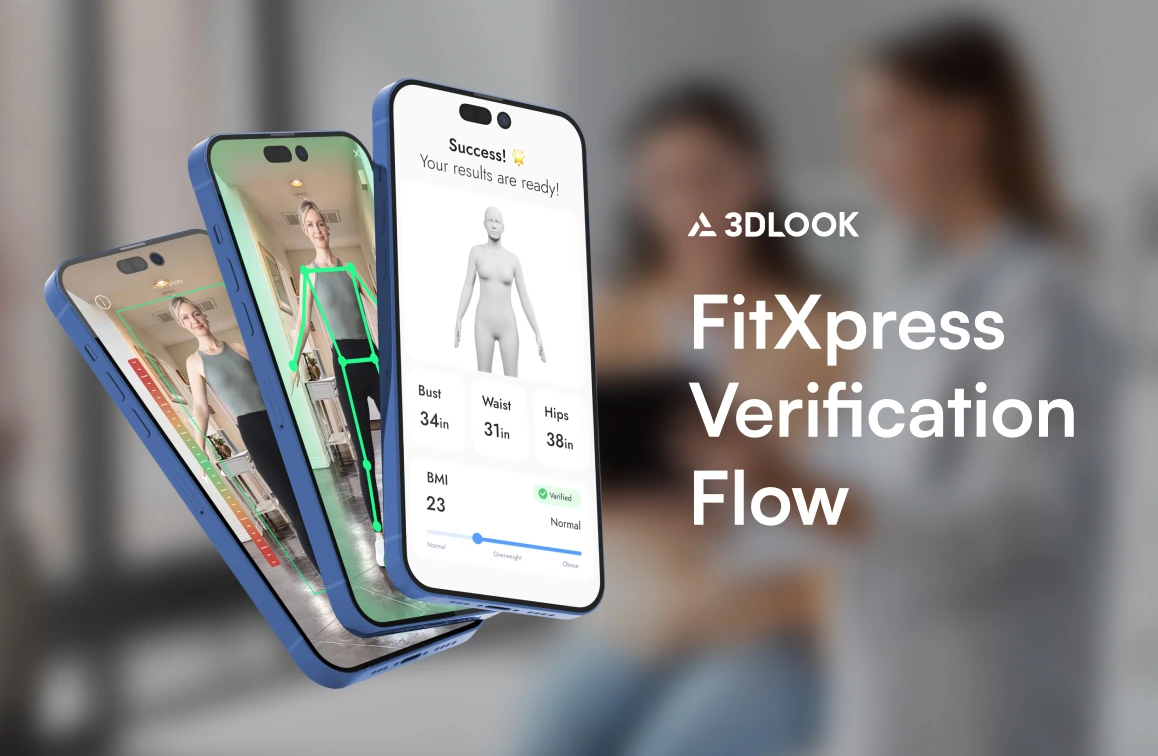
FitXpress provides a two-photo body scan that can be integrated into an order or checkout flow. Processing typically takes under 45 seconds. The integration and data-display configuration can be adapted to the pharmacy’s workflow.
The data presented to the patient and the pharmacy depends on how the scan is integrated into the order flow. In a Pattern B configuration, the patient completes the guided capture without seeing the resulting body metrics. The pharmacy receives the scan outputs and session data for its review workflow.
The guided-capture and validation controls address several limitations of camera-roll uploads:
- FitXpress controls capture via its SDK, without a camera roll picker, and applies real-time pose and tilt validation.
- FitXpress clothing assessment classifies clothing fit or bulkiness and flags conditions that may reduce the reliability of the scan.
- The Smart Scales capability generates predicted weight, which the pharmacy can compare with self-reported weight using its own mismatch threshold and review protocol.
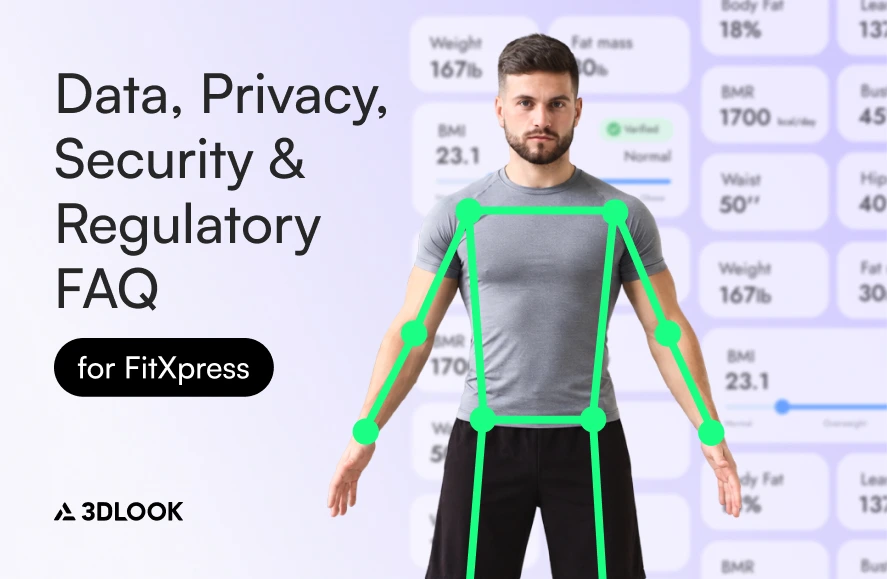
Procurement reviews typically assess privacy, security, data retention, hosting, encryption, and contractual safeguards. For the corresponding FitXpress details on privacy, security, retention, hosting, deletion, and regulatory status, see the FitXpress privacy, security, and regulatory FAQ.
FitXpress complies with the Health Insurance Portability and Accountability Act (HIPAA) and supports deployments aligned with the General Data Protection Regulation (GDPR). A Business Associate Agreement (BAA) is available upon request. Photos are encrypted in transit using Transport Layer Security (TLS) and stored in Amazon Simple Storage Service (Amazon S3) using server-side encryption with Amazon S3 managed keys (SSE-S3). Images are blurred as part of the privacy-protection workflow and deleted after processing by default. Structured outputs are retained in accordance with the pharmacy’s configuration and contractual terms. The architecture is described in more detail on the 3DLOOK technology page.

Discover how AI-powered body intelligence is reshaping GLP-1 programs, telehealth, and digital health, from accurate remote assessments to safer and more engaging patient journeys.
What a pharmacy compliance team should ask any verification vendor
The following procurement checklist helps a pharmacy determine whether a vendor’s capabilities match its verification, integration, privacy, and documentation requirements.
Confirm the permitted image sources and the controls applied during capture.
A document that presents the liveness controls is designed to identify and distinguish these controls from image-quality assessment.
Confirm whether the workflow requests a retake, produces a flag, or routes the session for review.
Define how it is compared with self-reported data and how exception thresholds are configured.
Confirm the timestamps, statuses, outcomes, and available export or integration formats.
Storage location, retention window, and encryption posture, including TLS in transit and server-side encryption at rest, are procurement requirements that should be documented before a pilot begins.
Confirm the applicable contractual safeguards and deployment controls before a pilot begins.
Confirm which outputs are displayed to the patient, which are provided to the pharmacy, and how the configuration is controlled.
In-session capture and liveness should be evaluated alongside accuracy, privacy, integration, documentation, and clinical workflow requirements.
How to verify BMI remotely in a telehealth workflow
Outside the online pharmacy checkout, telehealth and virtual weight-loss programs may use similar verification methods at enrollment, during scheduled follow-up points, or during exception review.
When additional verification may be needed
Self-reported height and weight are fast to collect, but population-level research has documented differences between self-reported values and bias-corrected estimates. Centers for Disease Control and Prevention (CDC) researchers reported in Preventing Chronic Disease that self-reported BMI underestimated the prevalence of severe obesity by 40% compared with bias-corrected estimates, 5.3% versus 8.8% in 2020 data. The finding does not quantify error for every individual submission, but it demonstrates the limitations of relying on self-reported height and weight across a large population. When BMI contributes to eligibility, safety, or longitudinal progress assessment, that population-level finding supports considering an additional data point alongside self-reported values.
Remote verification methods
Programs typically choose from four approaches, often in combination:
- Connected scale. A Wi-Fi or Bluetooth scale provides device-recorded weight and may estimate body composition, depending on the model, since many smart scales use bioelectrical impedance analysis (BIA). Height usually remains a separate input, and the scale does not provide body measurements or a 3D visual record of progress.
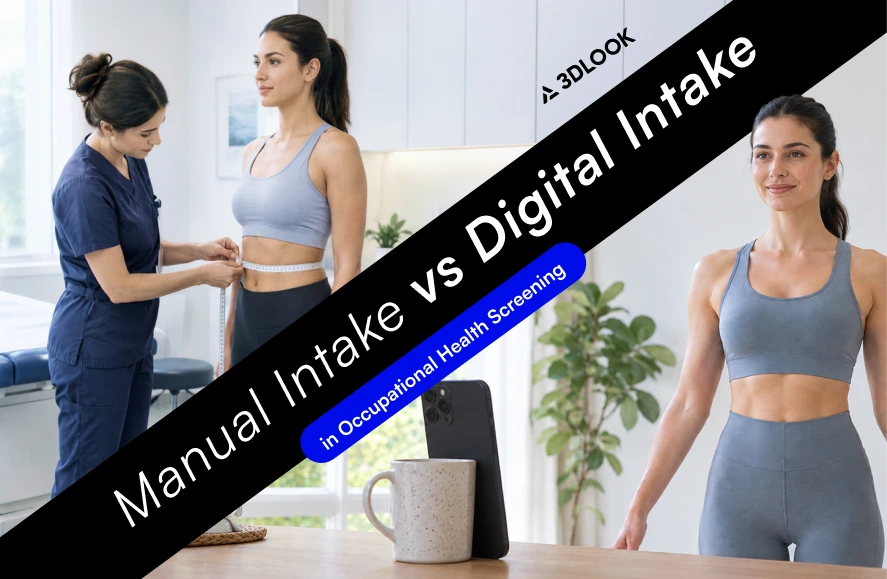
- Video-observed measurement. A clinician or care coordinator watches the patient measure height and weight on a video call. It allows a staff member to observe the measurement directly, but requires staff time for each session.
- Guided live smartphone body scan. Two guided live photos, front and side, combined with customer-provided onboarding data such as supplied height, generate predicted weight, BMI calculated using supplied height and predicted weight, body measurements, and body-composition estimates. Both smart-scale and photo-based body-composition outputs are estimates and should be interpreted in light of the method’s validation evidence and expected error range.
- Hybrid workflow. A program can pair a connected scale for routine check-ins with a guided live scan at enrollment and milestones, reserving video-observed measurement for cases requiring direct staff observation.
Method choice should depend on the requirements of each workflow stage. A program may use different methods at enrollment, routine monitoring, and exception review.
Practical workflow
A remote BMI verification step generally follows the same sequence, regardless of the methods it combines:
- Collect patient-provided height and weight at enrollment or at program-defined follow-up points.
- Capture an additional weight or body data record via a connected scale, a guided live scan, or a video-observed measurement.
- Compare the BMI calculated from self-reported weight with the BMI calculated from predicted weight using the same supplied height.
- Route exceptions according to the program’s review protocol.
- Record the capture method, relevant outputs, validation status, and review outcome in the program’s documentation system. FitXpress can provide session timestamps and structured scan and validation data, while the provider records its review and decision.
When BMI contributes to eligibility, treatment, or safety decisions, the workflow should route the result to an appropriately qualified reviewer in accordance with the program’s protocol. Administrative or progress-tracking workflows may follow different review rules.
How FitXpress supports this workflow
FitXpress can apply the same guided capture, body-data generation, and validation capabilities at telehealth enrollment or program-defined follow-up points. Programs can compare the BMI calculated from predicted weight with the BMI calculated from self-reported weight using the same supplied height. Session data can be integrated through the application programming interface (API) or software development kit (SDK). The telehealth provider remains responsible for documenting its review and making eligibility and treatment decisions.
Where a protocol requires dual-energy X-ray absorptiometry (DXA), BIA, or another reference assessment, FitXpress does not replace a method required by the program’s protocol. It can provide complementary data between those assessments.
Programs evaluating this workflow can see how FitXpress fits into telehealth and digital health programs, as well as the wider AI in Telehealth and AI Body Data for Health hubs.
Related reading
Online pharmacy BMI verification sits in a broader category of remote body-data workflows that share the same provenance, audit, and compliance requirements.
For life insurance underwriting teams on accelerated paths, the same evidence problem appears on the underwriting side and is examined in detail in AI in Insurance Underwriting: Mobile 3D Body Scanning for Remote Evidence Collection. For employer and insurer wellness program operators where rewards depend on documented body changes, the verification standard is covered in Wellness Rewards Verification for Employers & Insurers Using AI 3D Body Scanning.
See FitXpress inside an order flow
The problem is the method, not the patient. The fix is to move BMI verification from a passive file submission to a live, in-session capture event that the pharmacy can audit end to end. That is what FitXpress does inside an online pharmacy order flow, and a leading UK online pharmacy runs it as the BMI verification step in its checkout today.
Compliance leads, chief pharmacists, and operations leaders who carry this risk can request a FitXpress demo to see how online pharmacy BMI verification works end-to-end during checkout, including server-side deployment, anti-manipulation defenses, and audit-ready evidence collection.