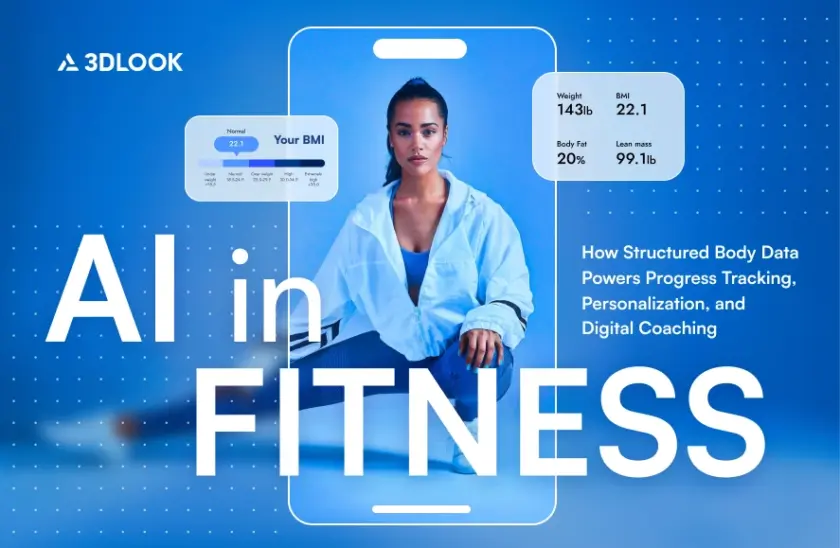
Scope note: This hub covers AI applications inside fitness apps, digital coaching platforms, and body-transformation programs. Body data also supports clinical weight-loss programs, telehealth, and insurance workflows; those use cases are covered in their respective hubs.
Fitness apps track activity well. Tracking body change is harder
Fitness apps have gotten good at counting steps, logging workouts, and monitoring heart rate. Most still struggle to answer a simpler question a subscriber is quietly asking every few weeks: Is my body actually changing?
Scale weight can fluctuate with hydration, food intake, time of day, and hormone-related fluid changes. That mismatch can make progress harder to interpret when scale weight changes slowly.
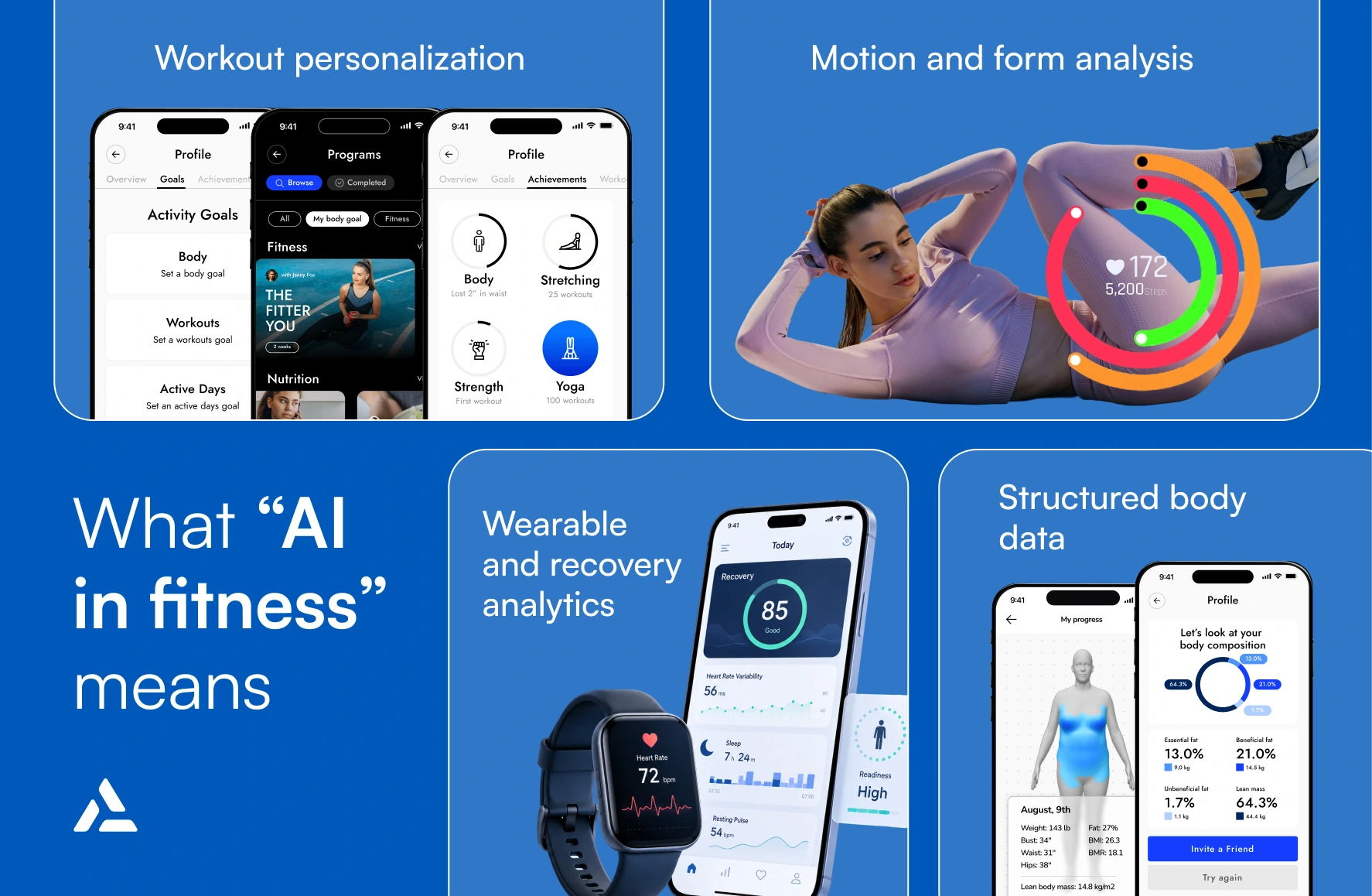
What “AI in fitness” means
AI in fitness refers to the use of machine learning, computer vision, and related technologies to analyze fitness data, personalize digital experiences, monitor progress, and support coaching or workout decisions. In practice, it spans four functional categories that fitness products combine in different ways:
- Workout personalization: adapting programs to goals, activity, and performance data
- Motion and form analysis: computer vision that reads exercise technique from a camera
- Wearable and recovery analytics: physiological signals like heart-rate variability and sleep
- Structured body data: measurements, body-composition estimates, and 3D models captured from photos or scans
Workout personalization, motion analysis, and wearable analytics are already widely represented across consumer fitness products. Structured body data adds a different type of input: measurements, body composition, and a 3D body model captured over time.
Why AI in fitness matters now
The fitness app market is a large and growing target for this kind of capability. Global fitness-app revenue was estimated at roughly $12.1 billion in 2025 and is projected to reach approximately $33.6 billion by 2033, a compound annual growth rate of about 13%.
Growth at that scale is happening alongside a persistent retention problem: industry benchmarking shows most fitness apps retain only a low single-digit share of users by day 30, with even top-performing apps in the category reaching roughly a quarter of installs still active a month in. Separate research into health-app usage patterns has found that roughly seven in ten users stop using a fitness app within the first three months, with lack of personalization and difficulty judging whether progress is happening cited among the leading reasons. For subscription-based fitness products, early cancellation can limit the time available to recoup customer acquisition costs, making early engagement commercially important.
Three shifts explain why AI, and structured body data specifically, are becoming more relevant to that retention problem:
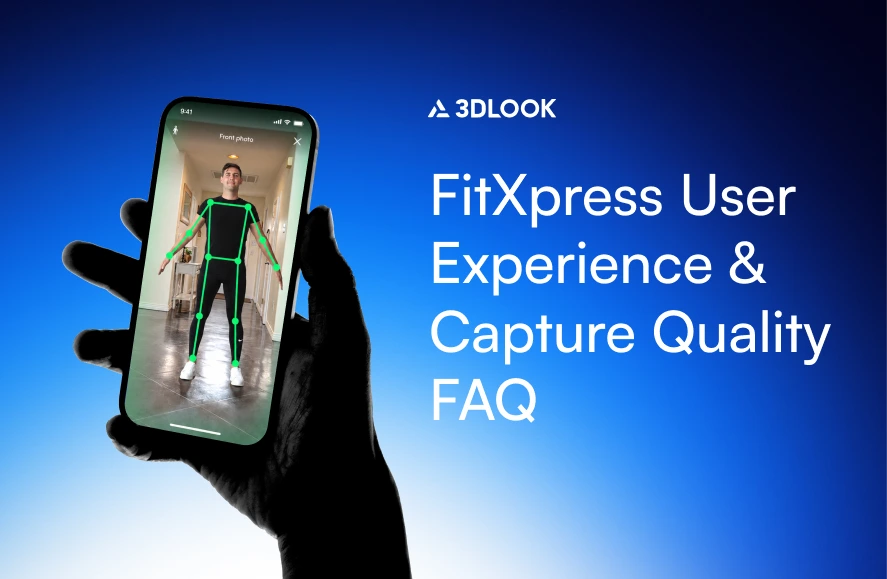
- Smartphone cameras are capable enough. The same device that logs a workout can now capture structured body measurements from two photos, which computer vision models process to generate measurements and a 3D body model.
- User expectations have moved. Consumers accustomed to personalized recommendations from other consumer apps increasingly expect fitness products to adapt to them individually rather than assign a generic plan.
- Retention economics reward visible progress. In subscription fitness, giving users a way to see change that a scale cannot show creates opportunities for recurring progress check-ins that support continued engagement, though it is not a guaranteed fix for churn on its own.
AI fitness capability landscape
The table below groups the main AI-enabled capabilities used across fitness products today. Categories are complementary rather than competing: most mature fitness platforms combine two or more of them, and a platform that only uses one category typically has a corresponding gap in what it can measure or personalize.
| AI fitness capability | Typical data input | Primary application | Main limitation |
| Workout personalization | Goals, activity, and performance data | Program recommendations and adaptation | Quality depends on the breadth and reliability of user data |
| Motion analysis | Camera-based movement data | Form feedback and repetition tracking | Captures movement rather than longitudinal body change |
| Wearable analytics | Activity and physiological signals | Readiness, recovery, and training-load insights | Does not provide full-body measurements |
| Nutrition support | Food logs, goals, and behavioral data | Meal tracking and nutrition guidance | User-entered data may be incomplete or inconsistent |
| Mobile body scanning | Smartphone images and user inputs | Measurements, body composition, and progress tracking | Requires guided capture and consistent conditions |
Illustrative examples exist in each category today, though this is not an exhaustive list, and inclusion does not imply endorsement or product integration:
- Workout personalization: Spur.fit uses AI to help coaches generate workout plans based on a client’s goals, fitness level, limitations, and preferences. The plan can be adjusted as the client progresses and reviewed or refined by the coach.
- Motion analysis: Platforms such as Kemtai and ASENSEI use computer vision through a laptop, tablet, or smartphone camera to track movement, provide real-time feedback on exercise form, and count repetitions.
- Wearable analytics: Devices such as WHOOP interpret heart-rate variability, resting heart rate, sleep performance, and other physiological signals to assess recovery and provide training-readiness guidance.
- Nutrition support: Apps such as FitGenie provide personalized macro targets based on a user’s goals, support food logging, and generate meal plans designed to fit those macros.
- Mobile body scanning: solutions such as FitXpress capture body measurements, body composition, and a 3D model from two smartphone photos.
Structured body data: the foundation layer
Most fitness apps already collect three kinds of data: activity (steps, workout minutes, calories), biometric snapshots (weight, heart rate), and self-reported inputs (goals, preferences). What is usually missing is structured body data: measurements, shape, and body composition, tracked as they change over weeks and months.
Smart scales provide weight and, in many cases, several estimated body-composition metrics. However, they do not capture a full set of body dimensions or produce the same 3D record of shape change. Mobile body scanning fills that gap, and from two smartphone photos, a fitness app can receive:
- 80+ body measurements
- Body-composition estimates (body fat percentage, lean mass, fat mass)
- Calculated metrics such as Body Mass Index (BMI) and Basal Metabolic Rate (BMR)
- A 3D body model for visual comparison across scans
- Body dimensions and proportions that can serve as additional personalization inputs
This data layer gives a fitness product something a step counter or a scale cannot: a record of changes in body dimensions and body composition over time, alongside a visual 3D comparison. Establishing whether a given change came from fat loss, muscle gain, hydration, posture, or another factor still depends on trends, context, and, where a coach is involved, professional judgment.
The table below compares mobile body scanning with other common ways fitness products currently capture body-related data to show where each fits and where each is limited. AI capabilities describe what the product does; data sources describe the information available to support those functions.
| Data source | What it captures | Best suited to | Main limitation |
| Wearables | Activity, recovery, and physiological signals | Training readiness and daily monitoring | Does not capture full-body dimensions |
| Smart scales | Weight and body composition | Frequent home check-ins | Estimates may vary with hydration and measurement conditions |
| Motion tracking | Exercise, movement, and form | Real-time workout feedback | Does not track body dimensions |
| Mobile body scanning | Measurements, body composition, and 3D body model | Remote longitudinal progress tracking | Requires standardized capture |
| Dual-energy X-ray absorptiometry (DEXA) | Imaging-based composition and bone data | Periodic reference assessment | Facility-based and unsuitable for frequent remote use |
For a closer look at how two-photo capture compares with video-based and hardware-based methods, see Body Scanning Technology: 2-Photo vs Video vs Hardware. For how the capture and measurement pipeline works end-to-end, see AI-powered body scanning for fitness.
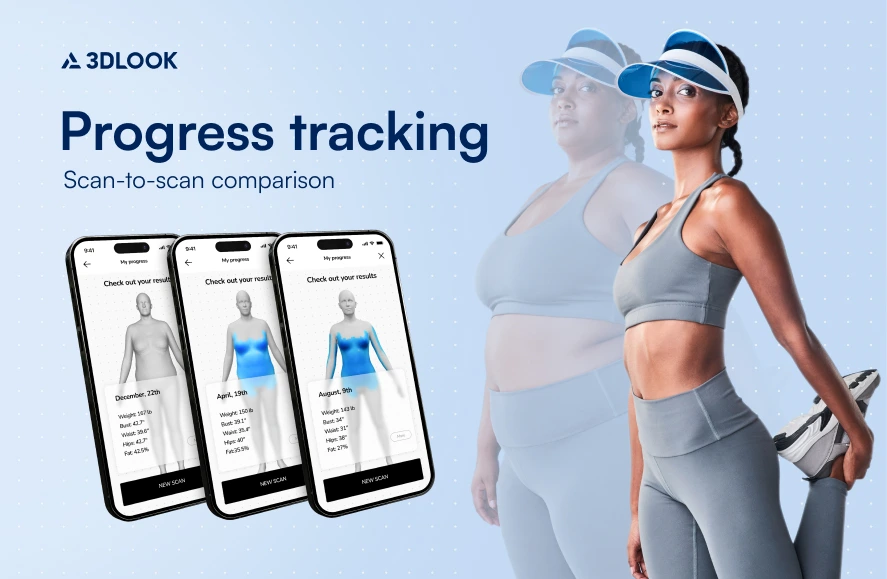
Progress tracking: scan-to-scan comparison
Weight is a composite number. It combines fat, muscle, bone, water, and waste, so two people at the same weight can have very different body compositions, and one person can gain weight. In contrast, estimated body fat decreases, or one loses weight, while estimated lean mass also decreases. Weight can be a useful progress signal, but it does not independently show how fat mass, lean mass, or individual body dimensions may be changing.
Scan-to-scan comparison is designed to show what changed, not just whether a single number moved:
- Circumference changes by body region: waist, hips, chest, arms, and thighs were tracked independently
- Body-fat percentage trend over multiple scans, rather than a single-point estimate
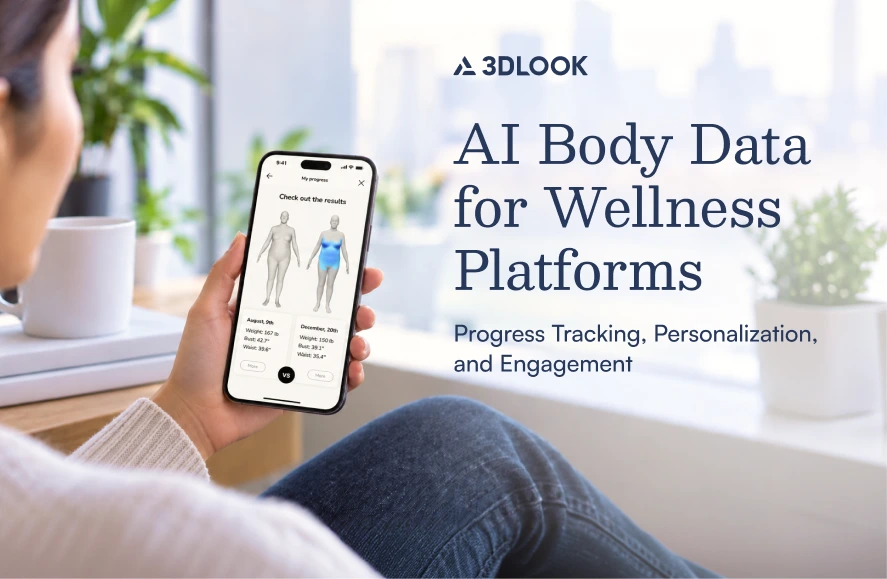
- A side-by-side or overlaid 3D comparison showing visible differences between scans
- Measurements plotted across weeks and months, smoothing out daily fluctuations
For fitness apps, this gives the progress tab a way to show body change directly rather than relying on weight alone, which can give users additional ways to assess progress during periods when the scale does not move. For digital coaching platforms, structured measurements give coaches a consistent input for program review, distinct from a client’s self-reported sense of progress and less invasive than requiring in-person measurement.
The underlying technology is mobile body scanning: a user takes two photos with a smartphone, and computer vision models generate a 3D body model with measurements. Scan-to-scan consistency helps fitness platforms assess longer-term measurement trends, particularly when results are reviewed across multiple assessments and collected under comparable conditions. For the full accuracy and repeatability framework, including how it varies by use case and capture condition, see Body Scanning Accuracy: A Framework for Enterprise Decisions.
Personalization: body data as additional context
Most fitness-app personalization today relies on self-reported inputs: age, weight, stated goals, and preferences. That produces a plan fit to a demographic profile rather than an individual body.
Structured body data adds a different kind of input, though it works alongside other inputs rather than replacing them:
- Body shape and proportions can inform how an exercise is cued or modified. A user with different limb-to-torso proportions may need a different setup for the same movement pattern. Body measurements and body composition can provide additional context alongside goals, mobility, fitness level, performance, recovery, and professional judgment; they are not, on their own, a basis for prescribing or ruling out specific exercises.
- Body-composition trends over time give a program a second signal beyond weight. A change in estimated lean mass, for example, may prompt a coach to review nutrition, training load, recovery, and measurement conditions before deciding whether to adjust the program.
- Regional measurement changes can surface changes in waist, chest, arm, or thigh circumference that a single weight reading would report as no change. Whether that regional change reflects the intended training effect is something a program, a coach, or the user still needs to interpret.
Fitness apps that use body data this way are adding a measurement layer to their existing personalization inputs, not replacing goals, mobility assessments, and professional judgment with a body scan.
Digital coaching: virtual trainers and human coaches
Digital coaching generally falls into two categories: AI-driven virtual trainers that give automated feedback, and human coaches who work with clients remotely through a platform. Structured body data is relevant to both, in different ways, and the two should not be conflated.
AI virtual trainers use computer vision to analyze exercise form in real time, reading joint angles and movement patterns against a reference model. Motion analysis and body measurements could be combined so that feedback accounts for individual proportions.
Human coaches on digital platforms face a different constraint: they cannot physically measure a remote client. Progress assessment typically relies on self-reports, progress photos, and scale weight, all of which vary in reliability. A coach managing a large remote caseload has limited ability to confirm whether a reported measurement change reflects the body or the way it was measured.
Structured body data from a mobile scan gives remote coaches a more standardized input. Guided capture, pose validation, and consistent anatomical landmarks help standardize measurement collection across remote settings, though clothing, pose, and camera positioning still affect results, which is why capture guidance matters. For platforms that employ coaches, this generally means:
- Coaches can review scan data without collecting the measurements manually
- Program-adjustment discussions can reference a measurement trend rather than a client’s recollection
- A scan creates a timestamped record that can be reviewed at subsequent check-ins
For a closer look at how this fits into a connected or digital fitness product, see FitXpress for connected and digital fitness.

Discover how AI-powered body intelligence is reshaping GLP-1 programs, telehealth, and digital health, from accurate remote assessments to safer and more engaging patient journeys.
Bias and accessibility considerations
AI-driven capture and analysis do not automatically make a fitness product more accessible or less biased; that depends on how the underlying system was built and validated. Before adopting any AI-based measurement or coaching tool, fitness businesses should assess:
- Whether the validation data represents the intended user population, across body types, ages, and skin tones
- Whether capture guidance works across different body types and mobility levels, including users who cannot stand in a specific pose unassisted
- Device and camera requirements, and whether they exclude users with older or lower-end smartphones
- Clothing and pose requirements, and how clearly these are communicated before capture
- Language and instruction accessibility for the markets the product serves
- Whether an alternative workflow exists for users who cannot complete the standard capture process
FitXpress’s guided capture and pose-validation steps are designed to support consistent measurement collection across a range of users. For data handling and regulatory details, see the FitXpress privacy documentation.
Implementation and evaluation considerations for fitness companies
Adding an AI-driven body-data capability requires several product, privacy, and user-experience decisions, although the details vary by vendor and deployment.
Integration approach. Body-data capture is typically delivered through an application programming interface (API) or software development kit (SDK), allowing the fitness company to embed capture at onboarding, on a recurring schedule, or on demand, subject to the available integration options. Integrating capture into the existing product experience can make it easier to connect scanning with onboarding, check-ins, and progress tracking.
User adoption. Two photos and a fast result are only part of adoption. Showing users an immediate result can make the purpose of the capture clearer and give them a direct benefit from completing it. By contrast, a capture step that collects data only for the company may offer less obvious value to users.
Privacy communication. Users commonly ask what happens to their photos and who sees their data. Clear, visible answers at the point of capture can reduce uncertainty and should route to a full privacy policy.
Coach workflow integration. Structured body data can reduce the need for coaches to collect measurements manually and give them a standardized record to review. Platforms should plan who reviews scan data, how often, and what triggers a program-adjustment conversation.
Measurement cadence. The appropriate scanning cadence depends on program duration, expected rate of change, user experience, and measurement variability. A short transformation program might use more frequent checkpoints than a year-round fitness app; neither is a universal best practice, and cadence should be set against the specific program rather than a fixed rule.
Beyond integration mechanics, fitness businesses evaluating any AI-driven body-data or fitness-AI tool should weigh:
- Relevance of the outputs to the intended fitness workflow
- Measurement accuracy and repeatability, and how each is defined and tested
- Performance under real-world capture conditions, not only controlled demos
- Integration options and the implementation effort they require
- User guidance and the scan- or capture-completion experience
- Privacy, data retention, and consent configuration
- Accessibility across body types, devices, and user environments
- Whether accuracy, repeatability, or outcome claims are backed by stated validation evidence
Who can use structured body data in fitness?
Structured body data is relevant to several kinds of fitness products, each with a different workflow:
- Digital fitness and workout apps may add recurring scan checkpoints, for example, monthly, so users can see a 3D comparison and composition trend alongside their workout log instead of relying on the scale alone.
- Remote coaching platforms can use a scan at client onboarding to establish a baseline, then schedule periodic rescans so the coach can review measurement trends between sessions.
- Connected fitness products (equipment paired with a companion app) can embed scanning into the companion app. Hence, equipment users get a body-composition view alongside their workout metrics and device-generated data.
- Personal training and transformation programs can use a scan at the start and end of a defined program, or at set intervals throughout it, to give clients a visual and numerical record of change over the program’s duration.
- Fitness clubs offering a digital member experience can offer scanning as a periodic member benefit, giving staff and members a shared, structured record to discuss instead of a single weight reading.
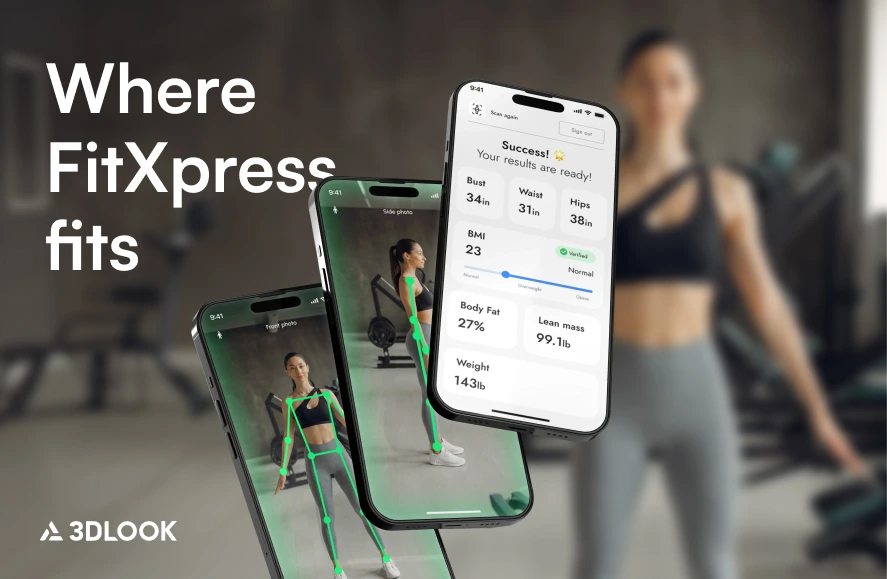
Where FitXpress fits
FitXpress is a mobile body-scanning solution that provides the structured body-data layer for fitness applications. It is a body-data solution that fitness apps and platforms can integrate into their own user experiences.
What it provides:
- Capture: two photos from a smartphone camera, processed into 80+ body measurements, body-composition outputs (including body fat percentage, lean mass, and fat mass), and a 3D body model, with results available in under 45 seconds.
- Progress tracking: scan-to-scan comparison with measurement trends tracked over time, and 3D model overlay showing where the body changed between two scans.
- Integration: supported through API and SDK options, so the fitness company retains its own user experience and embeds the capture and results flow into onboarding, check-ins, or progress tracking.
- Accuracy and repeatability: internal validation against expert manual measurements shows approximately 96-97% agreement, with a typical absolute error of 1.5-2.0 cm and scan-to-scan repeatability of under 1 cm. Accuracy depends on capture conditions such as lighting and clothing, as well as on adherence to the guided pose. For the full framework behind these figures, see Body Scanning Accuracy: A Framework for Enterprise Decisions.
What FitXpress does not do
FitXpress provides structured body data for fitness workflows. It:
- Provides measurements and body-composition estimates; it does not diagnose or treat medical conditions.
- Does not independently prescribe workouts or nutrition plans.
- Does not replace a coach’s judgment or a reference clinical assessment method such as DEXA.
FAQ
AI in fitness refers to the use of machine learning, computer vision, and related technologies to analyze fitness data, personalize digital experiences, monitor progress, and support coaching or workout decisions. It spans virtual trainers, wearable analytics, motion tracking, nutrition support, and mobile body scanning.
Mobile body-scanning workflows vary by provider. With FitXpress, a user takes two photos using a smartphone camera. Computer-vision models generate a 3D body model, 80+ measurements, and body-composition estimates, with results typically available in under 45 seconds.
No. It provides structured measurement data that can support a trainer’s assessment. The trainer interprets the data, adjusts the program, and provides guidance; the technology does not prescribe workouts, diagnose issues, or make training decisions on its own.
Outputs vary by provider. FitXpress provides 80+ body measurements (circumferences, lengths, widths), body-composition estimates (body fat percentage, lean mass, fat mass), calculated metrics such as BMI and BMR, and a 3D body model.
For FitXpress specifically, internal validation against expert manual measurements shows approximately 96-97% agreement, with a typical absolute error of 1.5-2.0 cm and scan-to-scan repeatability of under 1 cm. Accuracy depends on capture conditions such as lighting, clothing, and following the guided pose. See the full accuracy framework for how this varies by use case and decision tolerance.
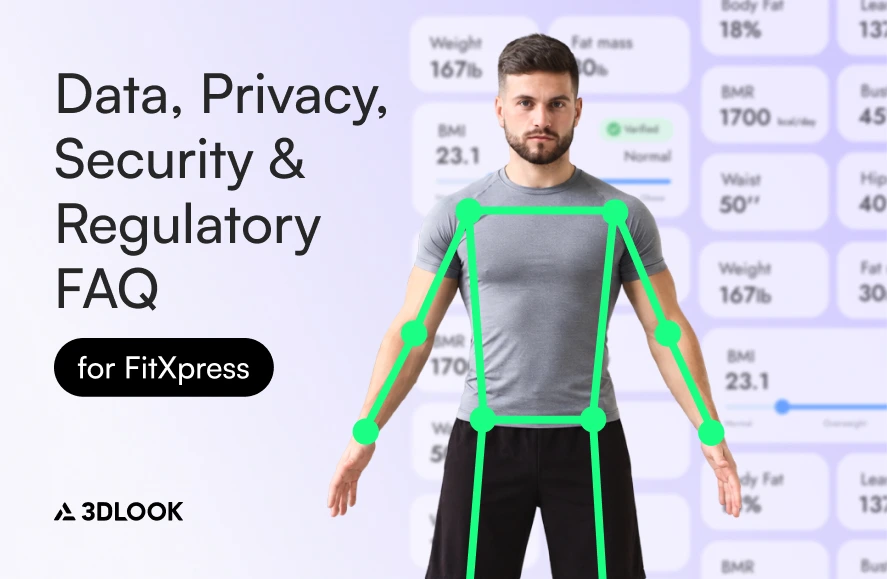
FitXpress processes photos to extract measurements, then deletes them immediately or within 30 days, with faces obfuscated at capture and no names or personal identifiers stored alongside scan data. Data is encrypted in transit and at rest. Full details are in the FitXpress privacy documentation.
The consistency of repeated scans depends on factors including clothing, pose, camera positioning, lighting, and how closely the user follows the capture instructions. Hydration, food intake, time of day, and other short-term physiological changes may also affect weight and estimated body-composition outputs. Guided capture and consistent scanning conditions help make results more comparable over time.
Smart scales provide weight and often estimate several body-composition metrics. Mobile body scanning adds body dimensions, such as waist, hip, chest, arm, and thigh measurements, together with a 3D record that can support visual comparison between scans. Both methods are suitable for remote check-ins, but their outputs and sources of variability differ.
Fitness apps can integrate mobile body scanning through an application programming interface (API) or software development kit (SDK), depending on the provider. Scanning can be embedded into onboarding, recurring progress check-ins, coach workflows, or an on-demand progress feature. The integration should also define how results are displayed, how frequently users are invited to scan, and how consent, retention, and privacy information are handled.
There is no universal scanning schedule. The appropriate cadence depends on the program’s duration, expected rate of change, user experience, and measurement variability. A short transformation program may use more frequent checkpoints than a year-round fitness service. Scans should be spaced far enough apart for meaningful trends to emerge and completed under reasonably consistent conditions.