In a longitudinal wellness program, scale weight can remain largely unchanged while waist, hip, or chest measurements move. For a wellness platform, reliance on a single value can leave measurable physical change outside the progress view.
The value of AI body data becomes clearer when a second scan is available. The baseline establishes a single point in time; the follow-up turns it into a dated comparison that can inform the progress view, a coaching conversation, or the next content prompt.
This application spans consumer wellness apps, lifestyle and nutrition coaching, habit-building products, digital well-being ecosystems, and employee wellness programs. Workout programming and performance are covered in the AI in fitness workflows. Patient monitoring belongs within healthcare and telehealth workflows, while incentive verification is addressed in the wellness rewards programs.
From a baseline to a progress record
Across the member journey, body data contributes at three points:
| Moment | Body-data role | Platform response |
| Baseline | Establishes the starting record | Presents selected measurements and explains what they mean |
| Follow-up | Shows change across comparable records | Highlights relevant differences and updates the progress view |
| Next step | Connects the trend with the member’s goal | Select content, prepare a coaching prompt, or schedule another check-in |
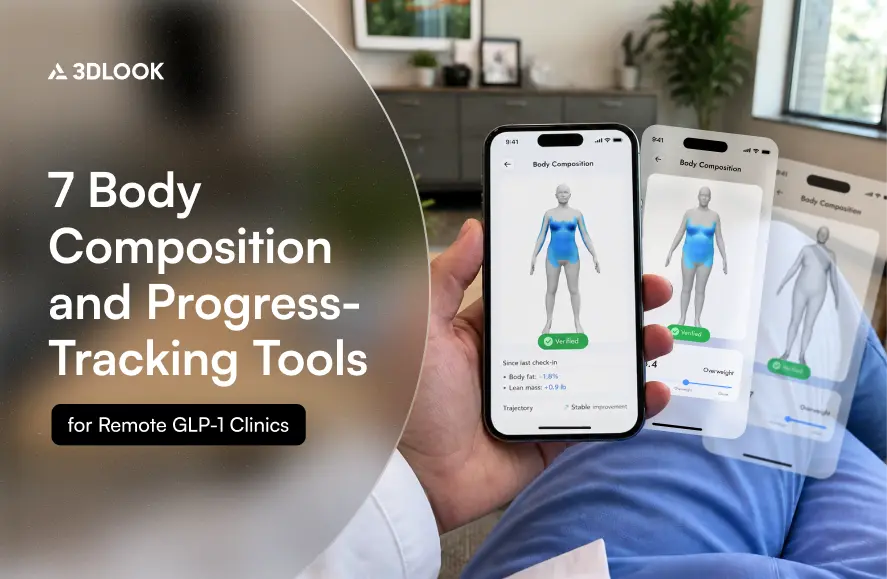
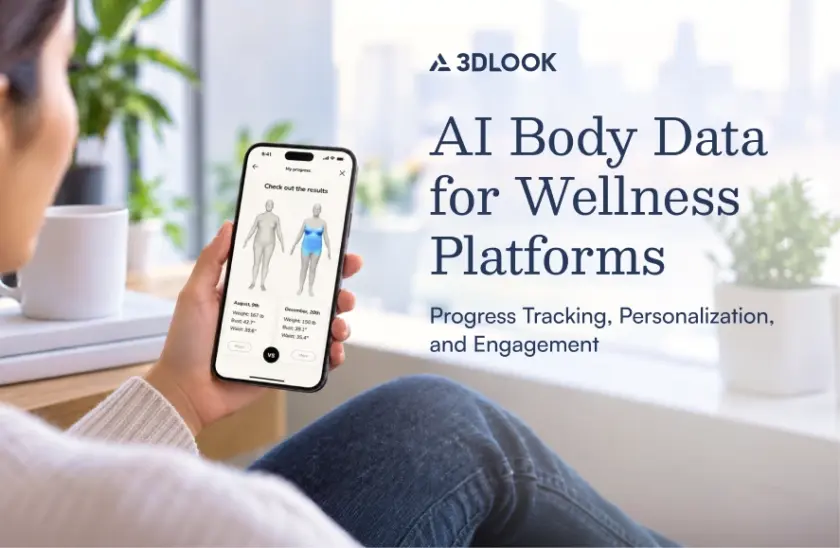
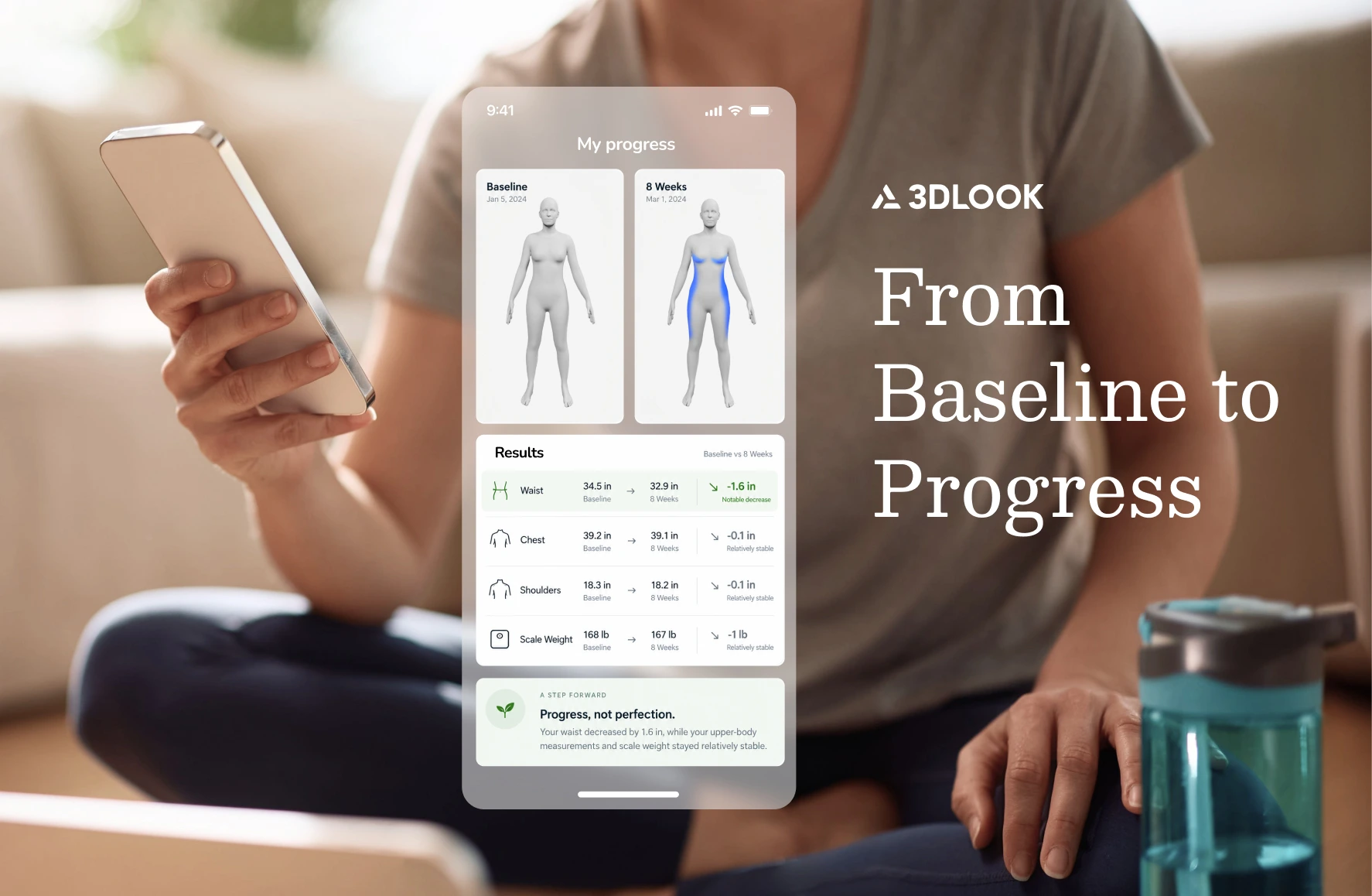
An eight-week check-in illustrates the difference. Scale weight may show little movement, while the later scan records a smaller waist measurement and similar chest and shoulder measurements. The app can place the baseline and current 3D models together, identify the measurements that changed, and show the date of each capture. The resulting progress view indicates the location and direction of change beyond scale weight.
Weight remains a useful trend, and BMI relates weight to height. Both provide limited information about where change occurred or how fat mass and lean mass estimates developed over time. Beyond BMI examines the business case for adding greater context to physical progress tracking.
Turning comparison into a useful wellness platform experience
The comparison is the starting point. Its operational value depends on how it is integrated into the member experience.
Goal-aligned progress views
A focused progress view displays the measurements associated with the member’s goal. For a waist-focused goal, the main view might show waist circumference, a visual comparison, and the change since baseline. A broader body-composition goal may call for body fat percentage, fat mass, lean mass, and selected circumferences.
Additional outputs may be reserved for secondary views or authorized program tools where they serve a defined purpose. The primary member view remains tied to the goal that prompted the scan.
Body fat percentage requires a particular context. Presenting the estimate as a dated trend, with a plain-language explanation and consistent capture conditions, reduces the risk of overinterpreting an isolated value.
Longitudinal data within the broader member context
Baseline and follow-up scans contribute a physical trend to the member record. Combined with goals, preferences, activity, habits, and previous participation, that trend can inform progress summaries, coaching prompts, or content selection. The platform remains responsible for the rules applied to these inputs.
Purposeful check-ins and coaching
At a follow-up check-in, a coach can review the same dated comparison presented to the member. This shared reference supports a specific discussion of what changed, which routines were consistent, and which next step is appropriate. In an automated experience, the comparison can inform the progress view or content selection.
Recurring scan-to-scan comparison creates a distinct engagement point around visible progress. Its value depends on clear explanations, appropriate cadence, member control, and relevant content. The scan supplies the progress record; program design determines how effectively that record is used.
What makes a progress comparison credible
A credible longitudinal comparison requires repeatability, consistent capture quality, and validation evidence relevant to the intended users.
Repeatability
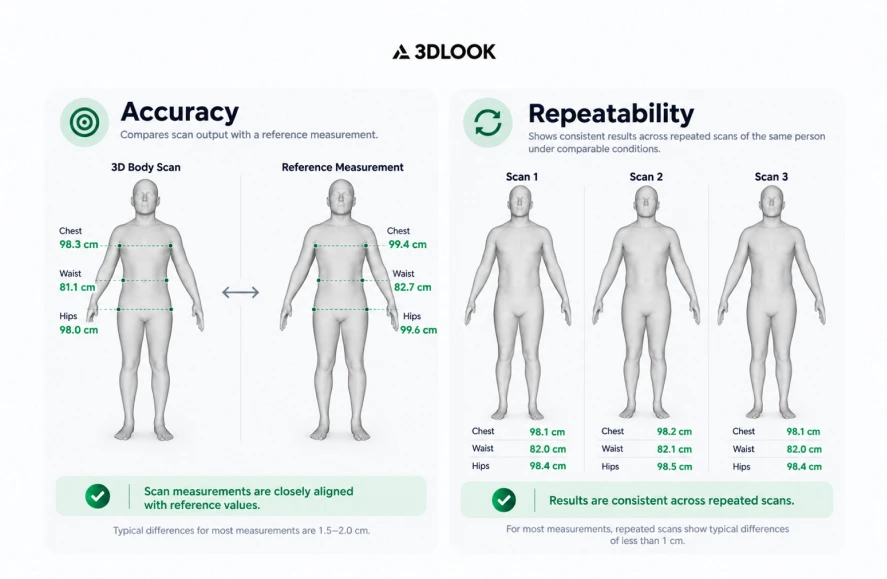
Accuracy and repeatability answer different questions. Accuracy quantifies the difference between a result and a reference method. Repeatability quantifies the consistency of repeated scans for the same person under the same conditions.
Repeatability is critical for longitudinal wellness tracking. If scan-to-scan variation exceeds the member’s actual change, the progress view may show an apparent difference or miss a real one. For most evaluated FitXpress measurements, repeated scans showed typical scan-to-scan differences of less than 1 cm.
Capture quality
Baseline and follow-up scans should use the same guided pose and similar capture conditions. Camera placement, lighting, clothing, and body position can influence the input. Clear instructions, pose checks, and a straightforward retake flow reduce avoidable variation before results reach the progress view.
Distributed wellness programs involve different phones and capture environments. Consistent guidance, therefore, contributes to measurement quality and usability.
Validation scope
Internal validation of FitXpress against expert manual measurements reported overall measurement accuracy of 96-97%, with a typical absolute error of 1.5-2.0 cm depending on the body part. The evaluated population covered ages 16-78, heights of 150-220 cm, and weights of 38-210 kg, with participants from the US and Europe.
These figures should be interpreted alongside the reference method, measurement protocol, tested population, and the tolerance required by the workflow. The 3DLOOK accuracy and privacy framework explains the methodology, evidence boundaries, repeatability results, and production controls in more detail.
Operational requirements for recurring check-ins
Recurring body-data check-ins require four operational elements.
- Set the purpose and create the baseline. The platform explains which data will be captured, how it will be used, who can access it, and how long it will be retained. The member completes the first guided scan.
- Present a focused result. The first result establishes the visual and measurement baseline. Labels identify which outputs are measurements, which are estimates, and how the selected metrics relate to the member’s goal.
- Repeat under comparable conditions. The member completes another guided scan using the same pose and similar conditions. For body-change programs, 4-12 weeks is a practical starting range, adjusted to the program goal and expected rate of change.
- Connect the comparison to the experience. The platform highlights relevant changes and links them to educational content, a coaching prompt, or the next scheduled check-in.
The division of responsibilities should be explicit. The wellness platform manages the member relationship, program logic, privacy information, result presentation, metric selection, and access controls. The body-data provider supplies the capture process, measurement outputs, and technical integration. The applicable contractual and regulatory responsibilities should be documented during implementation.
Initial product monitoring should cover scan completion rate, retake rate, second-scan rate, use of the progress view, and member understanding of the displayed results. Together, these indicators show whether members can complete the flow, return for a comparison, and interpret the information presented.
Privacy and data handling
Body photos and derived outputs require a defined purpose, controlled access, and a documented retention policy. In most enterprise deployments, the customer acts as the controller and 3DLOOK acts as the processor under the General Data Protection Regulation (GDPR).
3DLOOK stores scan data in Amazon Simple Storage Service (Amazon S3) with mandatory server-side encryption using Amazon S3 managed keys (SSE-S3). Data in transit is encrypted using Transport Layer Security (TLS). Photos are permanently removed immediately after processing or within 30 days, depending on client retention requirements. Photos retained temporarily are automatically blurred.
End-user images are not shared with third parties. FitXpress does not receive names, contact details, or other direct identifiers that connect a scan with a specific person. Deployment-specific privacy, contractual, and sector requirements must be confirmed during implementation. The 3DLOOK accuracy and privacy framework provides the full current description of these controls.
Where FitXpress fits
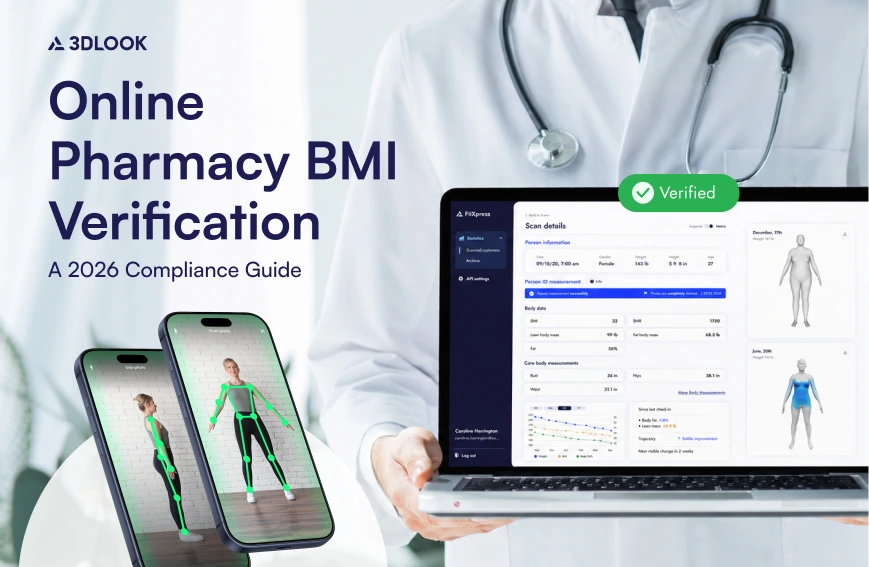
FitXpress provides the capture and structured data layer for an existing wellness product. From two smartphone photos, one from the front and one from the side, the system generates more than 80 body measurements, BMI, basal metabolic rate (BMR), body fat percentage, lean mass, fat mass, and a 3D body model in under 45 seconds.
Integration options include an application programming interface (API) and web and mobile software development kits (SDKs). The guided capture layer handles pose feedback and image collection within the member experience. The platform controls where scanning appears, which outputs are displayed, and how each result connects to program content or coaching.
FitXpress is not a medical device. It does not diagnose conditions, make clinical decisions, or determine treatment eligibility. Dual-energy X-ray absorptiometry (DXA), bioelectrical impedance analysis (BIA), calibrated scales, and mobile body scanning use different methods, reference systems, and evidence. The intended use and operating environment determine method selection.
Organizations evaluating the capture flow and returned data can review FitXpress for connected and digital fitness.
Wellness and adjacent applications
Corporate wellness applies the same remote baseline and follow-up workflow across a distributed population. A workplace wellness app can offer optional check-ins without requiring an on-site assessment. Programs that connect body data to incentives or rewards require additional governance, privacy review, and clear program rules. Wellness rewards verification for employers and insurers covers that application in depth.
Related wellness and body-data resources
The central evaluation criterion for a wellness product is whether the second scan produces a comparison that members and program teams can use. A credible implementation makes that comparison repeatable, understandable, and connected to a relevant next action.
Workout programming and performance are covered in AI in fitness. How to measure body composition compares measurement approaches. The AI body data maps related applications across health and wellness programs.
FAQ
The final cadence is personalized and should reflect the program’s goal, the expected rate of change, and the consistency of capture conditions.
Metric selection should begin with the member’s chosen goal and the program’s defined purpose. A focused progress view may include selected measurements, a visual comparison, and the change since baseline. Broader access depends on program need, privacy terms, and authorization.
Each method uses a different measurement process and reference system. Mobile body scanning supports remote, repeatable capture through a smartphone. Method selection is determined by the intended use, required evidence, available equipment, and operating environment.
3DLOOK stores scan data in Amazon S3 with mandatory SSE-S3 encryption. Photos are removed immediately after processing or within 30 days, depending on client retention requirements, and temporarily retained photos are automatically blurred. Full details are available in the 3DLOOK accuracy and privacy framework.