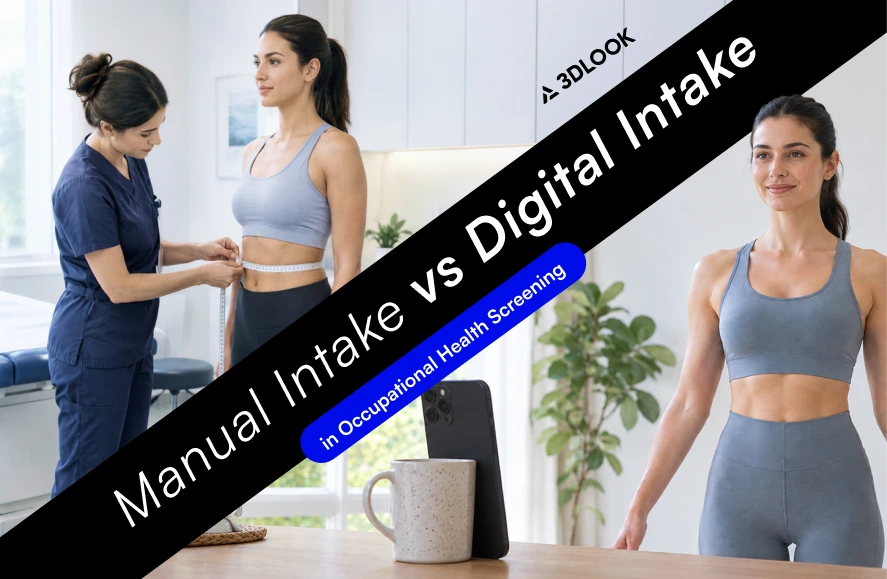
Not every body measurement workflow needs a scanner booth. Some businesses need fast, remote digital body measurements from a smartphone, while others need a more guided capture flow in a controlled hardware setup for higher-detail geometry.
The right method depends on what you are optimizing for: user completion rate, output type, privacy requirements, implementation cost, or performance at scale. Two-photo capture uses front and side images to generate measurements with minimal user effort. Guided video capture collects more visual input while staying mobile. Hardware 3D body scanning uses dedicated equipment to capture body geometry in a controlled environment.
Each method can work — but they solve different business problems.
This guide compares 2-photo, video, and hardware body-scanning across accuracy, user experience, scalability, cost, privacy, and business fit — and shows where 3DLOOK’s mobile-first approach fits best.
Quick Answer Block
- Two-photo body scanning generates 80+ digital body measurements from front and side smartphone photos in under 60 seconds. It is the best choice for remote, high-volume workflows where user completion matters most.
- Guided video body scanning captures more visual data via a slow rotation on a smartphone. Higher friction, slightly more visual context, but measurement-accuracy gains are typically not material.
- Hardware 3D body-scanning systems use booths or rigs to produce dense 3D meshes in a controlled environment: highest geometric fidelity, limited scalability, high cost per scan.
- For most B2B body data needs — health, fitness, apparel, uniforms — two-photo mobile capture wins on cost, completion rate, and scale. Hardware remains the right tool for fixed-location, archive-grade geometric records.
What Is Body Scanning Technology?
Body scanning technology is any capture method that turns a physical body into digital body measurements, a 3D model, or both. It can run on a smartphone using AI-driven image processing, or on dedicated hardware — booths, turntables, multi-camera rigs — built specifically to capture body geometry.
The choice between methods shapes user experience, deployment cost, privacy posture, and how easily the workflow scales beyond a single physical location and is not simply a technical matter.
How does a body scanner work?
A modern body scanner uses one of three input modes — two photos, a short guided video, or multi-angle hardware capture — and translates that input into a structured output. The output typically includes circumference measurements at key body landmarks, length measurements (inseam, sleeve, etc.), and in some cases a 3D avatar. AI-based mobile body scan apps infer these measurements from images using computer vision and pose estimation. Hardware 3D body scanners reconstruct the surface directly from depth or photogrammetry data.
What is a body scan app?
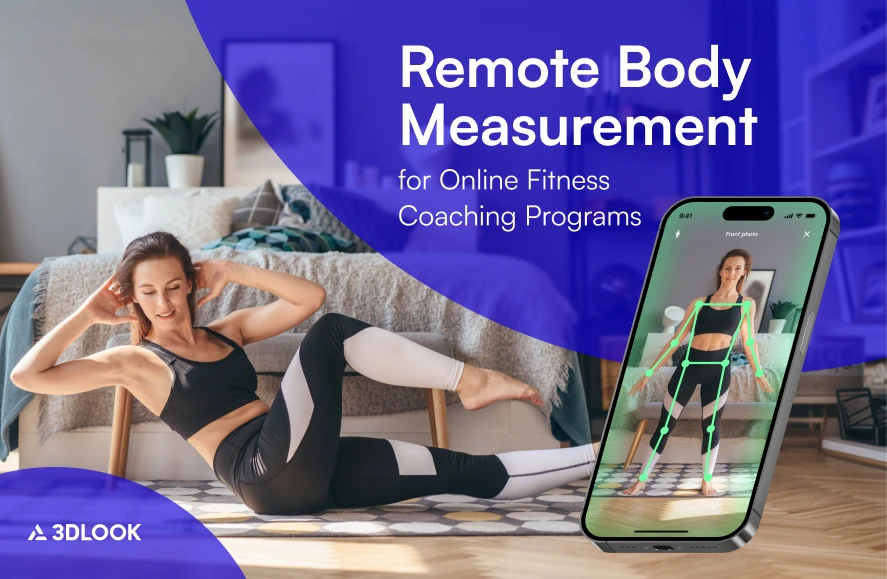
A body scan app captures body measurements from regular smartphone photos or videos. Mobile 3D scan app runs through a guided UX, processes input using cloud- or on-device AI models, and returns structured measurements within seconds. Body scan applications are now the leading deployment format for use cases that require remote access: telehealth, online fitness, e-commerce sizing, and remote uniform programs.
What is a body scanner machine?
A body scanner machine is dedicated hardware — usually a walk-in booth or multi-camera rig — that captures body geometry directly using depth sensors, structured light, or photogrammetry. Body scanner machines produce dense 3D meshes and are still used for research, anthropometric studies, premium bespoke tailoring, and military fit programs. Their main constraint is scale: every additional location requires another physical unit.
How 3DLOOK turns two photos into structured body data >>>
2-Photo vs Video vs Hardware at a Glance
| Criterion | 2-Photo Scan | Video Flow | Hardware 3D Scanner |
|---|---|---|---|
| Capture time | 30–60 seconds | 1–3 minutes | 2–10 minutes (excl. travel) |
| User effort | Low — 2 still images | Medium — slow rotation | High — must travel to the device |
| Output | 80+ measurements, optional 3D avatar | Measurements + visual model | Dense 3D mesh + measurements |
| Typical accuracy* | ~1.0–1.5 cm circumference variance | ~1.0–1.5 cm circumference variance | ~0.4–0.8 cm circumference variance |
| Scalability | Unlimited (any smartphone user) | Unlimited (any smartphone user) | Limited to the physical install base |
| Hardware cost | $0 — uses end-user device | $0 — uses end-user device | $5,000–$50,000+ per unit |
| Privacy posture | Image processing; configurable retention | Video processing; larger media footprint | Local geometry capture |
| Best fit | Remote, high-volume workflows | Mid-volume workflows, tolerating extra capture | Controlled environments, requiring archive-grade geometry |
* Reported accuracy varies by vendor, protocol, and reference method. Cited ranges reflect commonly published evaluations, not vendor-specific guarantees.
Body Scanner Machines vs Mobile 3D Body Scan >>>

Accuracy, Privacy, and Scalability Trade-Offs
A method that wins on one dimension often loses on another. Choosing well means knowing which trade-off your workflow can absorb.
How accurate is two-photo body scanning?
For most landmarks under normal conditions, independent evaluations of AI-based two-photo body-scanning consistently report circumference errors of ~1-2 cm. Published 2024 evaluations of mobile body measurement systems show waist circumference mean absolute errors in waist circumference near 1.88 cm against tape-measure baselines — within the tolerance most apparel, uniform, and fitness workflows are built around.
How accurate is video flow body scanning?
Video flow scanning theoretically captures more visual data than two photos, but in practice, the accuracy difference for measurement output is small. Published comparisons show measurement variance in a similar range to two-photo capture, because both rely on the same underlying skeletal and surface inference. The main upside of video is richer animation or motion data — not always relevant for measurement use cases.
How accurate is hardware 3D body scanning?
Calibrated hardware 3D scanners in controlled conditions can reach sub-centimeter accuracy, typically 0.4-0.8 cm on key circumferences, and produce dense 3D meshes suitable for archival or design use. The cost is operational: the user must travel to the device, the device must be calibrated, and throughput is bounded by physical capacity.
Which method is best for user privacy?
Privacy depends less on capture method and more on data handling. Two-photo and video systems process media that includes the user’s image; controls such as configurable retention, regional processing, encrypted transmission, and minimum-data principles matter more than the input format itself. Hardware capture keeps geometry local at the moment of scan, but still depends on what the operator stores. Regardless of capture type, choose a vendor whose documented data practices match your regulatory environment.
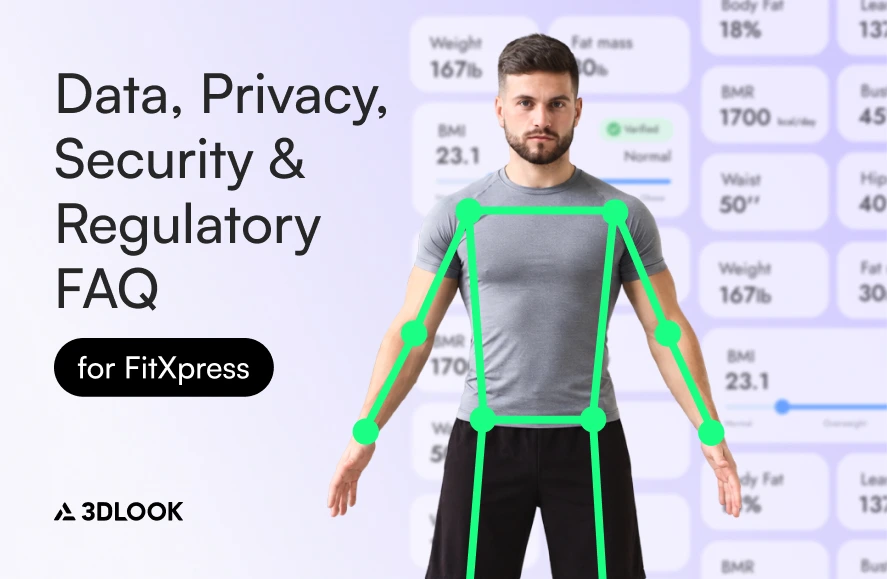
3DLOOK FitXpress Privacy Policy >>>
Which method scales?
While every additional location, region, or partner in hardware scanning requires an additional physical unit, calibration, and an operator, two-photo or video mobile capture scales as far as smartphone access reaches. For workflows where reach matters — remote health programs, distributed apparel customers, multi-site uniform deployments — mobile capture is structurally the only scalable answer.

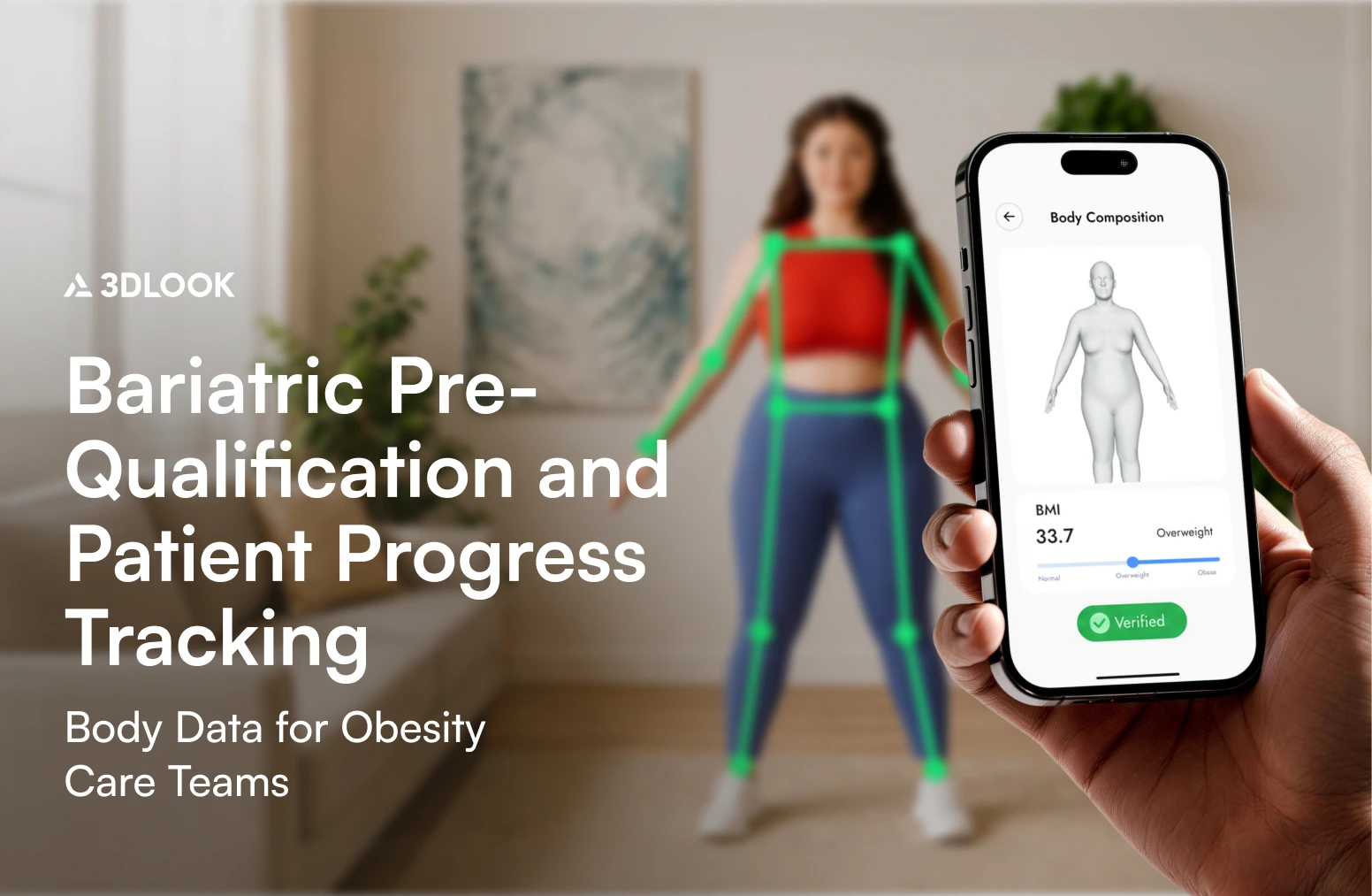
Discover how AI-powered body intelligence is reshaping GLP-1 programs, telehealth, and digital health, from accurate remote assessments to safer and more engaging patient journeys.
Which Method Fits Different Business Models?
Capture method is a strategic decision, not a purely technical one. The significance of the same accuracy figure varies for a telehealth program, a uniform manufacturer, and a custom tailor.
For health, fitness, and weight-loss programs
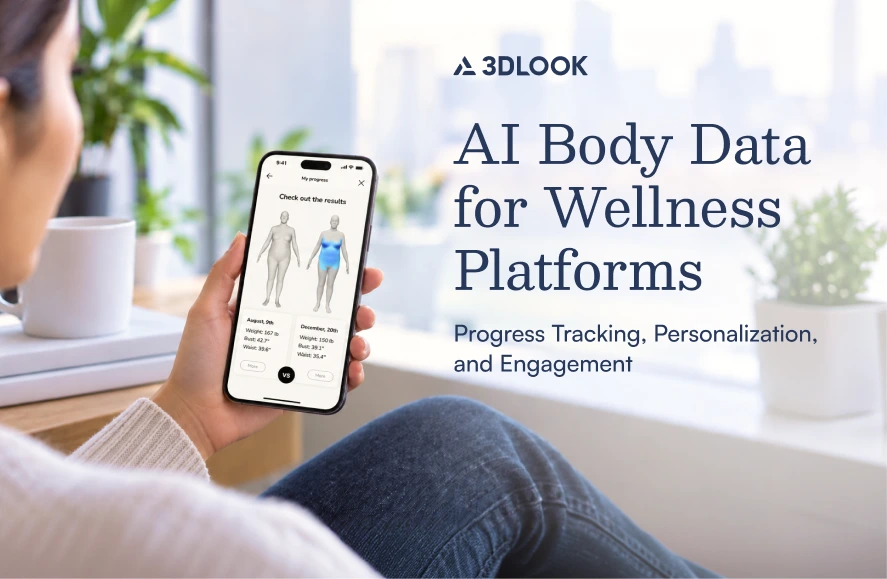
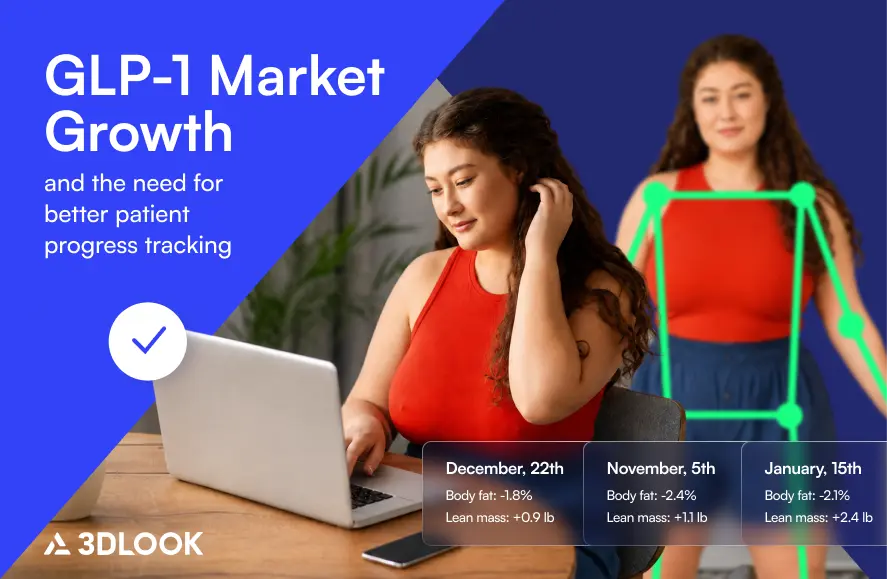
Health and fitness workflows need fast, repeatable body data that users will actually complete at home, on their own phones, often weekly or monthly. Friction is the enemy and every additional step lowers compliance. Two-photo mobile capture is the dominant fit here, because it delivers progress-tracking measurements in under a minute and works at the scale a digital health program needs. Outputs should be framed as supportive body data — useful for engagement and progress tracking — not as standalone diagnostic conclusions. Hardware is rarely viable outside of in-clinic settings.
For apparel, made-to-measure, and uniform programs
Apparel workflows need a measurement set that drives a fit decision — recommended size, custom pattern, or uniform spec, and two-photo capture supports these workflows end-to-end: 80+ measurements, a 3D avatar where needed, and direct integration into ordering or production pipelines. Hardware is still occasionally used for premium custom tailoring or for archival body data, but it does not scale across thousands of remote customers.
For controlled, single-site environments
Some workflows genuinely justify hardware: research labs, anthropometric studies, high-end bespoke ateliers, and military programs that require archived geometric records. If the environment is controlled, throughput is low, and geometric fidelity is paramount, a hardware 3D body scanner remains the proper tool.

Where 3DLOOK Fits Best
3DLOOK provides AI-powered computer vision technology that transforms two photos into structured body data and delivers 80+ measurements, body composition data and a 3D avatar from front and side smartphone images in roughly 45 seconds. The platform is deployed in two product motions, each aligned to different business area needs.
FitXpress — for health, fitness, telehealth, and weight-loss teams
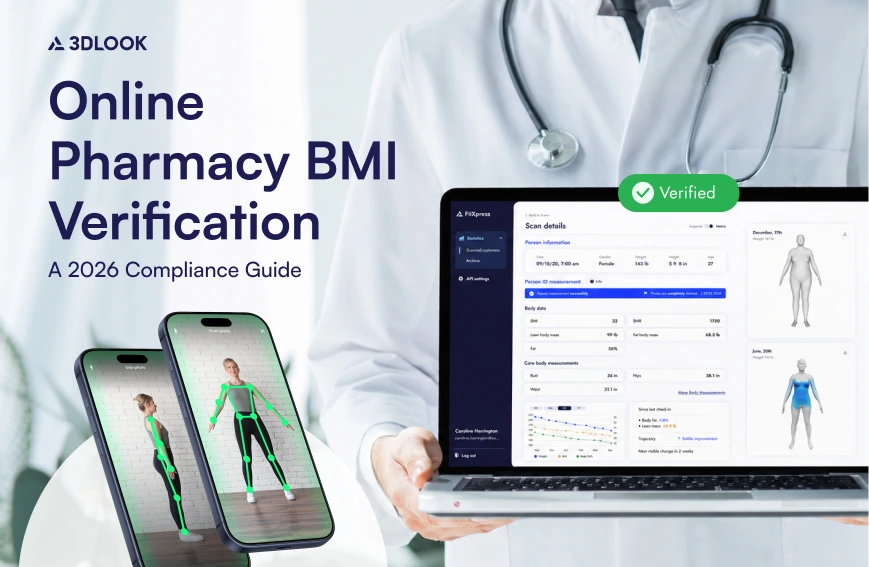
FitXpress turns two photos into body measurements, progress tracking, and supportive body data — including circumference deltas and BMI verification — that health and fitness programs use to engage users between visits. Outputs are designed as supportive body data, not clinical-grade diagnostic results.
Mobile Tailor — for apparel, uniforms, and made-to-measure teams
Mobile Tailor turns two photos into 80+ body measurements and a 3D model used directly in sizing, made-to-measure, and uniform workflows. It integrates into e-commerce, B2B ordering, and production pipelines.
Start a Mobile Tailor trial >>>
Not sure which product fits your workflow?
If you are still scoping the use case — choosing between health-side and apparel-side capture, or evaluating against a hardware option you already use — start with a scoping conversation.
FAQs About Body Scanning Technology
Body scanning technology is any system that captures physical body dimensions and translates them into digital body measurements, a 3D model, or both. It includes mobile body-scan apps that use two photos or a short video, and hardware 3D body scanners that use dedicated equipment, such as booths or multi-camera rigs, to capture body geometry directly. The right type depends on the accuracy requirements, scale, cost, and where the scan needs to take place.
Mobile body-scan apps typically deliver circumference accuracy of 1.0-1.5 cm across key landmarks, while calibrated hardware 3D body scanners can achieve 0.4-0.8 cm in controlled conditions. For most apparel, uniform, and fitness workflows, mobile accuracy sits comfortably inside the tolerance the workflow already assumes. Hardware accuracy matters most for research, archival, or premium bespoke contexts where sub-centimeter precision is non-negotiable.
A two-photo body scan typically completes in 30-60 seconds end-to-end on a smartphone, including the brief AI processing step. A guided video flow scan takes 1-3 minutes. Once the user is on-site, a hardware 3D body scanner takes 2-10 minutes. However, since the user has to travel to the device, wait for setup, and complete the scan in a controlled environment, the full user journey of hardware scanning is much longer.
No. Modern AI-based body scan apps run on any reasonably recent smartphone and require no additional hardware. Hardware 3D body scanners — the booths and rigs you may have seen in stores or research labs — are still in use, but they are no longer the only way to generate a 3D body scan or accurate digital body measurements. For remote and high-volume workflows, smartphone-based capture is now the standard.
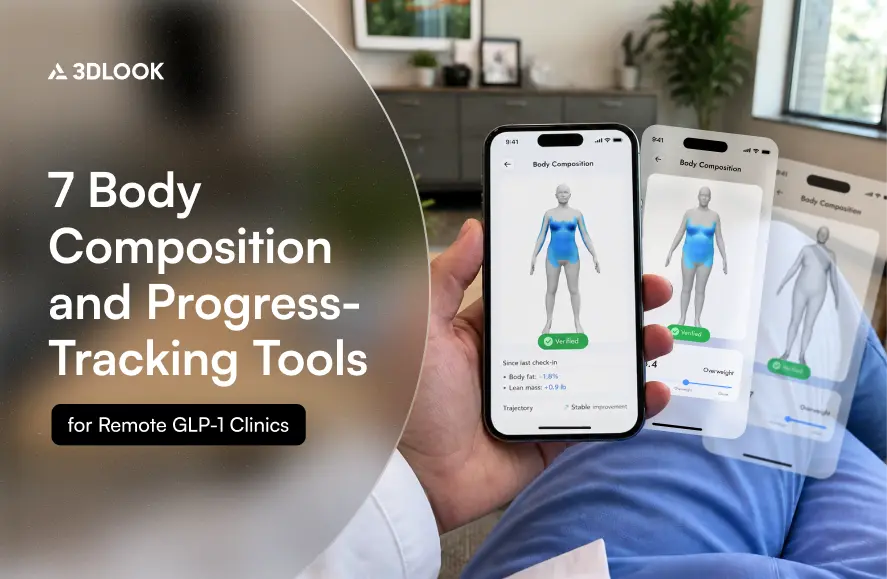
Body-scanning technology can provide estimates of body composition metrics, including body fat percentage, fat mass, lean mass, muscle mass, and body shape changes.
Privacy is determined by how the vendor handles captured media, not by the capture method choice. A rigorous approach to privacy protection combines clearly documented retention rules, regional data processing options, encrypted transmission, and a minimum-data policy. When evaluating a body-scanning vendor, request their published data-handling policy and confirm it aligns with your regulatory environment, especially if you operate in healthcare or under regional data laws.
If you need remote, high-volume measurements — health, fitness, telehealth, online apparel, distributed uniforms — choose mobile two-photo body scanning. If you operate a single controlled location with archive-grade geometry needs — research labs, premium ateliers, anthropometric programs — a hardware 3D body scanner is still a valid choice. The guided video flow sits between the two and is rarely the best option for either case.