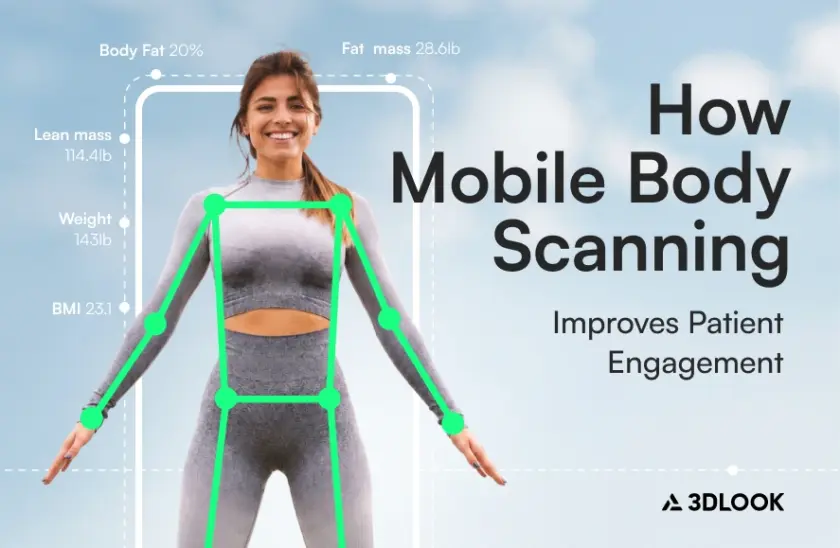
The engagement challenge in remote care
Remote care can reduce the number of in-person touchpoints through which patients and care teams traditionally review progress. In a clinic, a patient steps on a scale, a nurse records the number, and a visible ritual marks progress every few weeks. Virtual-first programs lost that ritual. What remains is a figure a patient types into an app between visits.
Self-reported weight and BMI offer a limited view of change. Readings may come from different scales, capture conditions vary, and a single number cannot show how measurements or body composition are changing.
When progress is difficult to recognize, patients may have fewer signals reinforcing continued participation. Over a 30-, 60-, or 90-day program, this can make consistent engagement harder to maintain.
Remote care is no longer a temporary shift. A 2026 analysis of the Medical Expenditure Panel Survey (MEPS), published in the journal Healthcare, found that the share of US adults with at least one telehealth visit rose from about 7% in 2020 to roughly 12% in 2021 and held near that level through 2023. Virtual care scaled and then settled into a standing channel. As telehealth becomes an established care channel, programs also need to consider how to keep patients engaged between virtual visits, when the usual in-person progress checks may be unavailable.
The useful question is not how to message patients more often. It is narrower: what signal can patients and care teams both see between visits, one that provides a structured view of change rather than relying only on self-reported figures? That question sits at the center of the wider shift toward AI in telehealth.
What mobile body scanning adds
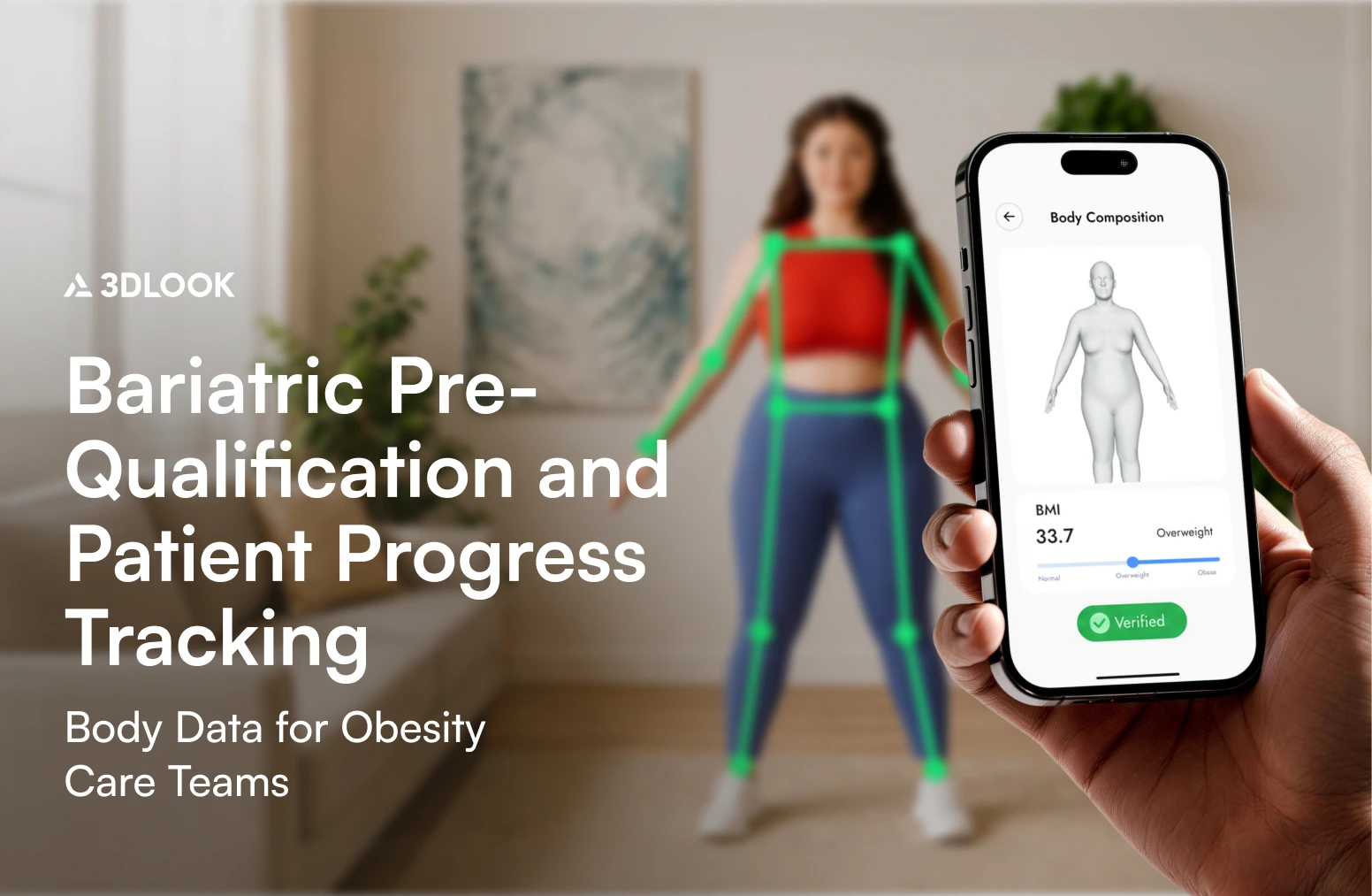
Mobile body scanning turns two guided smartphone photos, front and side, into more than 80 body measurements, body-composition estimates, and a 3D body model in approximately 45 seconds. It runs through an API or software development kit (SDK), allowing a program to embed capture inside its own patient app without specialized hardware.
The connection to the patient experience comes from how these outputs can be presented and used between visits. Structured, repeatable body data provides patients with a visible record of change and care teams with a consistent record to review between visits. One capture can support both a patient-facing progress experience and a structured record for the care team’s review.
The outputs include 80+ measurements, outputs such as BMI, BMR, body fat percentage, lean mass, and fat mass, a 3D model, and a scan-to-scan progress comparison. These outputs can support patient engagement in several ways; the mechanics of turning two photos into structured body data are documented separately, and the capabilities are described within a broader publication on AI-driven body data for health.
Mobile body scanning is a structured body-data capture layer that supports clinician review. It is not a medical device; the care team interprets the data and makes the decisions.
Five ways it can support patient engagement
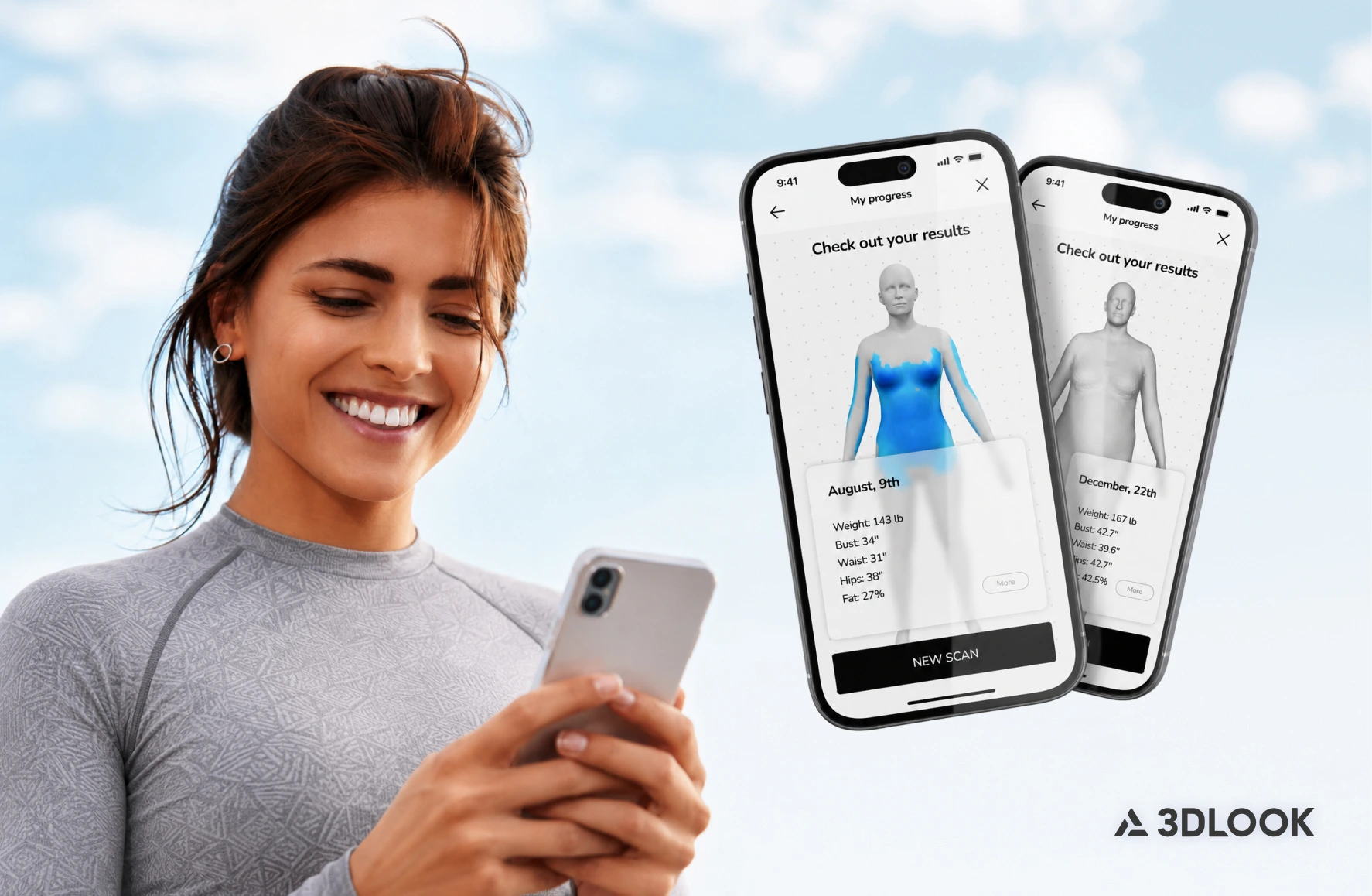
A single weight number is a limited motivator because it can hide the change that matters most. Structured body data can support engagement through several mechanics, each grounded in what the capture actually produces.
Visible progress that can support motivation. A 3D model and body-composition estimates give patients something concrete to look at between visits. A patient whose results indicate lower fat mass and higher lean mass may see little movement on a scale, while a body-composition record can help patients recognize that change and give them a reason to keep engaging.
Context beyond a single number. 80+ body measurements and body composition estimates can provide context that weight alone cannot. A reduction in measured waist circumference or an estimated increase in lean mass can tell a story that a single figure cannot, which is one reason programs increasingly look beyond BMI.
Reliable scan-to-scan comparison. For most evaluated measurements, repeated scans showed typical scan-to-scan differences of less than 1 cm. Consistent capture conditions help programs compare results more reliably over time, giving programs an additional engagement signal between visits — the mobile body scanning accuracy framework documents how that consistency is measured and against which reference.
A shared reference point for goals. Recurring scans can give programs a shared reference and create opportunities for more meaningful check-ins. Each capture can help reset goals in response to changes shown in the tracked outputs, turning a general intention into a more specific target. The next capture provides an updated point of comparison.
Lower-friction remote check-ins. Asynchronous capture can reduce the need for a synchronous visit booked only to record a measurement, while the care team still decides what the check-in means.
How the scan-to-scan experience works
These five mechanics turn into a repeatable loop that a program runs from intake onward.
- Enrollment capture. A patient takes a first guided two-photo scan at intake, from home, in about a minute.
- Baseline. The scan establishes a structured starting record of body measurements, body composition estimates, and a 3D model that later scans compare against.
- Scheduled re-scans. The program sets the cadence to match its length and the expected rate of change.
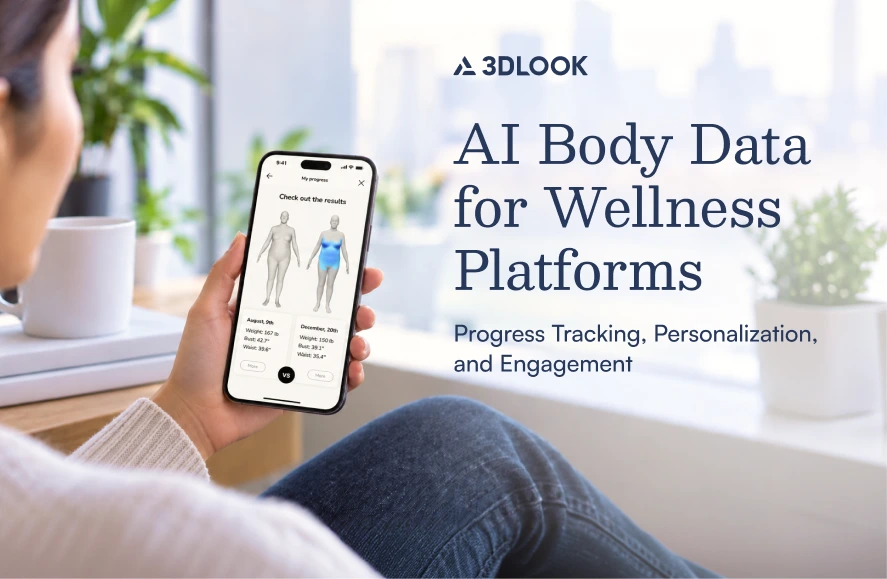
- Progress visualization. The patient can see a scan-to-scan comparison and the 3D model change over time, making progress more visible between appointments.
- Care-team review. The care team reviews the longitudinal body data record and interprets the changes reflected in the tracked outputs.
- Next-cycle goals. The loop resets around updated, visible reference points, and the next capture measures against them.
Guided capture can help programs collect more consistent data across repeated scans than an unstructured combination of self-reported figures and progress photos.
Running this loop consistently can support a few operational patterns.
- Visible progress can support repeat check-ins, which may help retention across a program cycle, though it does not guarantee the outcome.
- A consistent record can help care teams identify changes in the tracked body data and decide where additional follow-up may be useful.
- Standardized capture can reduce variability across patients and sessions, giving a program more consistent longitudinal records than a mix of home scales and progress photos, while reducing the manual reconciliation of self-reported data as volume grows.
These are engagement signals, not clinical outcome measures. Capture quality depends on instructions and conditions: the patient may stand in poor light, wear a loose sweater, or hold the phone at the wrong angle. Guided capture and retake logic reduces that error.
Applications beyond GLP-1
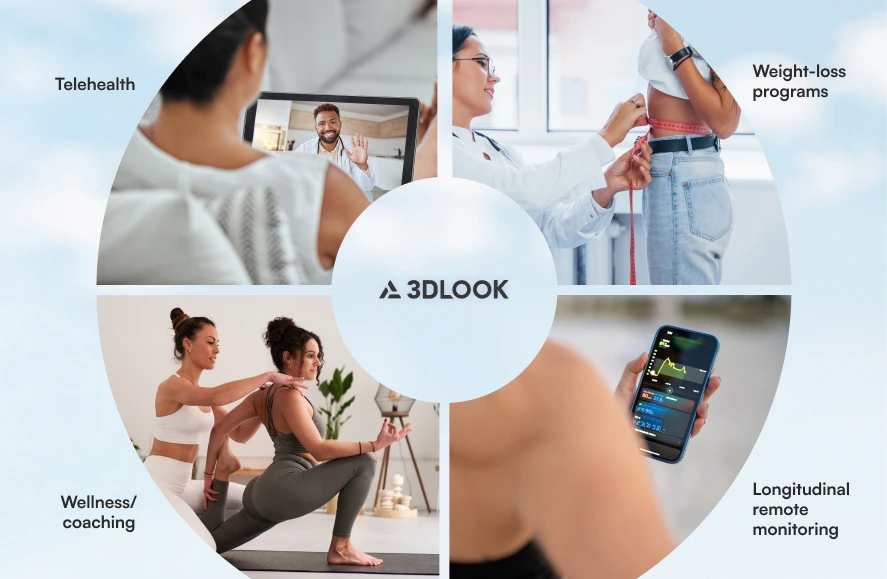
The same engagement pattern runs across program types, not one medication pathway.
In general telehealth care, a visible body record gives remote patients and clinicians a shared reference between virtual visits, which can help keep a longitudinal program legible when no one is in the room.
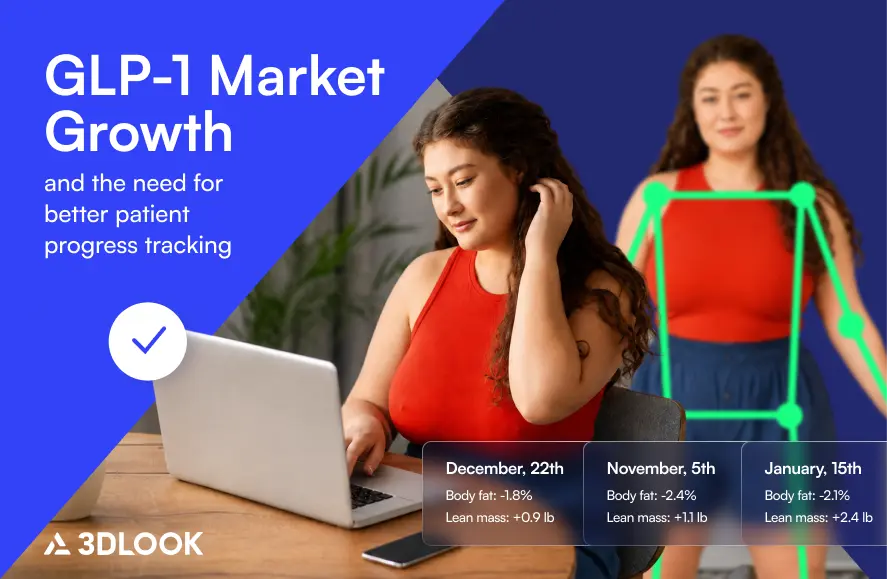
In weight-loss programs, body-composition estimates can provide context that weight alone does not show, allowing a patient experiencing a weight plateau to see estimated changes in fat and lean mass alongside a stalled number on the scale. GLP-1 programs are one case of this pattern. The adherence and retention mechanics specific to GLP-1 receptor agonist programs are covered in the dedicated visual progress-tracking deep dive on GLP-1 adherence and retention. In contrast, the broader commercial context is covered in the GLP-1 market analysis.
Wellness and coaching programs use the same visible progress to support engagement and repeat participation, with lighter, non-clinical framing. In remote monitoring and longitudinal care programs, recurring scans can provide an additional body-data record between formal assessment points, where consistency across captures matters more than any single reading.
The value is the engagement pattern that repeats across these contexts.
Implementation considerations
For operators weighing a rollout, a few considerations decide whether the signal holds up.
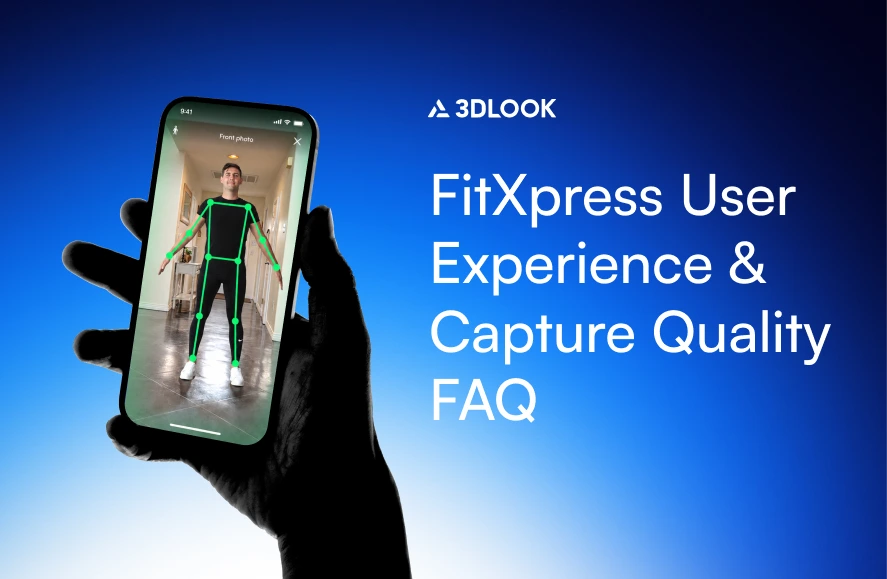
Capture guidance. The scan is guided, and results improve with tight clothing and even lighting. Production conditions differ from lab conditions, which is why retake logic and clear instructions matter. Controls can reduce capture error; they do not remove the need to set patient expectations. Capture protocol shapes the resulting numbers, making protocol discipline part of the rollout plan. Detailed requirements for repeatable at-home capture are covered in the FitXpress user experience and capture-quality FAQ.
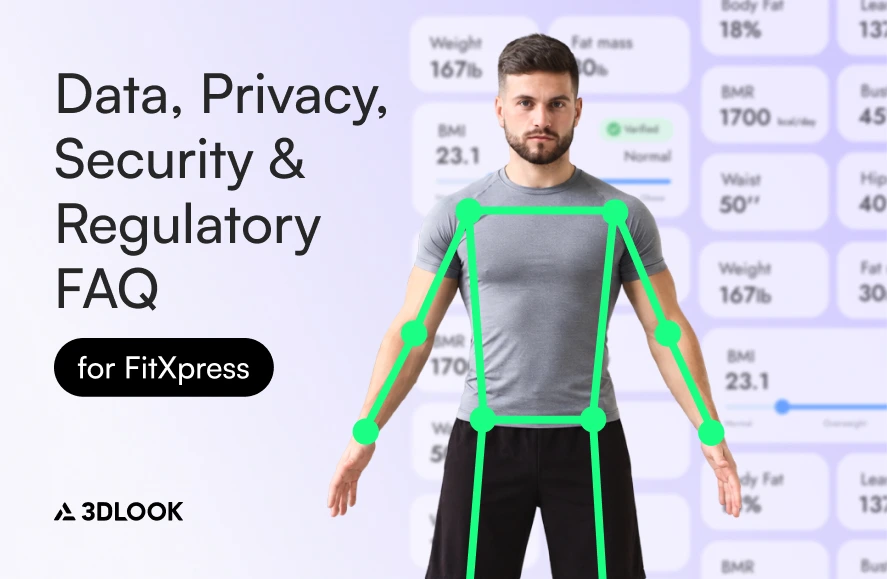
Privacy and consent. Capture consent, a retention policy for structured outputs, and data minimization should be settled before launch, aligned with the privacy and data-handling terms. Capture consent, a retention policy for structured outputs, and data minimization should be settled before launch, aligned with the privacy and data-handling terms. For FitXpress-specific details on these requirements, see the FitXpress privacy and data-handling FAQ.
Scan frequency. Cadence should track program length and the expected rate of change. More frequent is not automatically better: scanning too often surfaces noise, and scanning too rarely misses the moments that keep a patient engaged.
Integration. Embedding capture into an existing patient application and passing structured results to connected program systems are subject to the customer’s integration architecture.
Measuring engagement outcomes. A program can define what to track, including scan completion rate, repeat-check-in rate, and progress-visualization views. These are engagement signals: they indicate activity and change rather than standing in for clinical outcomes. The link between capture accuracy and program economics is examined in Accuracy drives ROI in digital health.
Discover how AI-powered body intelligence is reshaping GLP-1 programs, telehealth, and digital health, from accurate remote assessments to safer and more engaging patient journeys.
Where FitXpress fits, and where other methods remain necessary
FitXpress is the structured body-data capture layer in this workflow. It handles remote intake and documentation, progress tracking and scan-to-scan comparison, and support for review and monitoring. It is the layer that produces the visible, repeatable signal described above, connecting mobile body scanning to patient engagement in practice.
Delivery is white-label. The two-photo capture runs through an API or SDK and embeds in a program’s own patient app under its own branding, with no specialized hardware for the patient to buy or the program to ship.
Privacy posture is a procurement gate for a compliance buyer, which makes the specifics matter. Depending on the customer’s configuration and instructions, production photos are deleted after processing or retained temporarily for up to 30 days. Temporarily retained photos are blurred, whereas structured outputs may be retained per the customer’s configuration and agreement. Data is encrypted in transit with Transport Layer Security (TLS) and at rest. Standard hosting runs through Amazon Web Services (AWS) in the United States, with EU or UK hosting available on request.
FitXpress supports Health Insurance Portability and Accountability Act (HIPAA)-compliant workflows, with a Business Associate Agreement (BAA) available where required, and General Data Protection Regulation (GDPR)-aligned data handling. The privacy and data-handling terms set out the specifics.
FitXpress supports review and monitoring inside the program’s own workflows, designed around applicable data-privacy requirements. Each program remains responsible for evaluating the compliance requirements that apply to its implementation.
Four boundaries define the role of FitXpress:
- Supports review rather than diagnosis. The care team interprets the data and makes the decisions.
- Does not make clinical or eligibility decisions.
- Does not replace required clinical assessments, including reference methods such as dual-energy X-ray absorptiometry (DXA) or bioelectrical impedance analysis (BIA), where a protocol calls for them.
- Does not guarantee engagement or health outcomes. It supports the behaviors that can contribute to them.
Next steps
Structured, repeatable body data can turn invisible remote progress into a visible, reviewable signal. That signal can support engagement across telehealth, weight loss, wellness, and remote monitoring, generated from two smartphone photos, without specialized scanning hardware.
Operationally, a program can gain more standardized capture, more consistent documentation, scan-to-scan comparison, and less manual intake. The care team retains responsibility for interpretation and decisions, while the capture layer provides structured data for longitudinal review. Used within a well-designed patient experience, mobile body scanning can make progress easier to see and discuss between appointments.
For a remote care or weight-loss program evaluating how the capture layer fits an existing workflow, explore FitXpress for telehealth and digital health.
FAQ
Mobile body scanning turns two guided smartphone photos, front and side, into 80+ body measurements, body composition estimates, and a 3D body model in approximately 45 seconds, delivered through an API or SDK. It is a structured body-data capture layer that supports care-team review.
It can make progress visible and easier to compare over time. Patients see a scan-to-scan comparison and a 3D model that changes between visits, and care teams get a consistent record to review. Visible progress can support motivation and repeat check-ins, though it does not guarantee retention.
Each scan produces more than 80 body measurements, outputs including BMI, BMR, body fat percentage, lean mass, and fat mass, a 3D body model, and scan-to-scan progress comparisons. Depending on the customer’s configuration and instructions, production photos are deleted after processing or retained temporarily for up to 30 days. Temporarily retained photos are blurred.
The program and the expected rate of change set the cadence. It should be frequent enough to show real change above measurement noise and infrequent enough to avoid adding friction.
FitXpress is not a medical device. Compliance is evaluated against data privacy frameworks such as HIPAA and GDPR.
The care team reviews the data, whether that is a clinician or a coach. FitXpress supports that review and leaves the decision with the professional.
It supports remote check-ins and can reduce the friction of booking a visit only to record a measurement. It does not replace clinical assessment where the workflow requires one.
FitXpress supports remote body data capture and care team review. It does not provide diagnosis, make clinical or eligibility decisions, replace required clinical assessments, or guarantee engagement or health outcomes.