Why Traditional Measurement Methods Fail
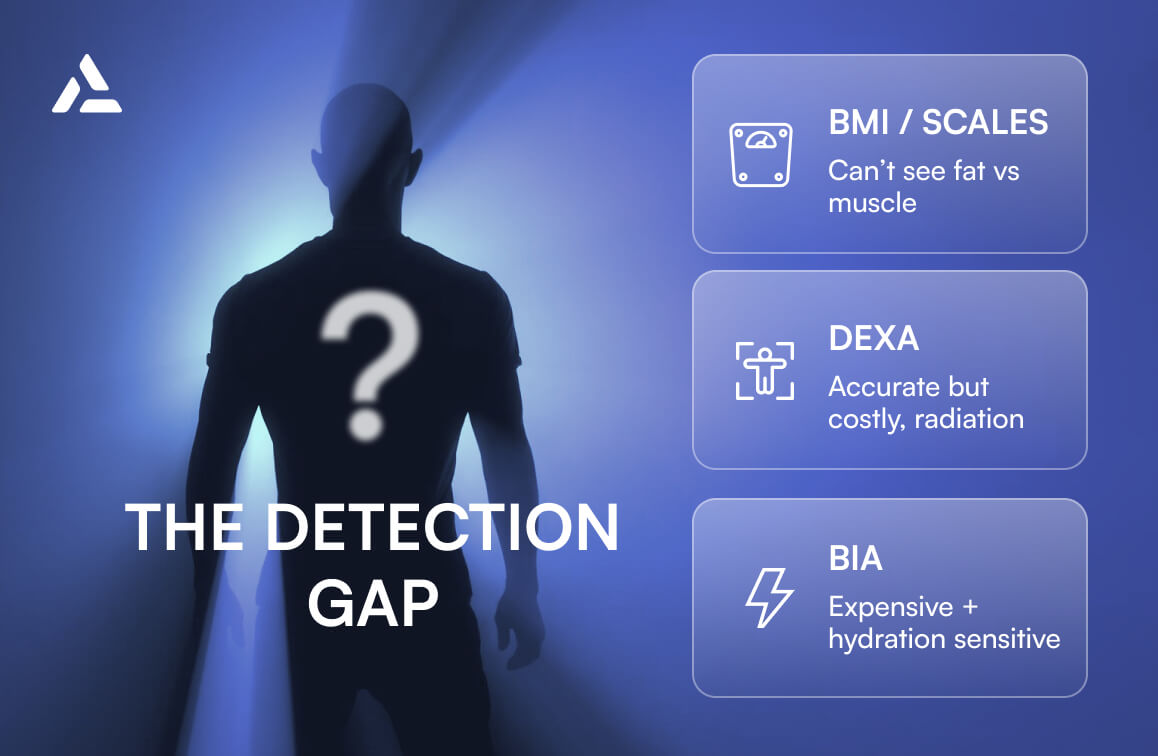
Some tools used by wellness practitioners have become objectively obsolete and don’t provide enough information to keep up with modern discoveries in human body studies, often leaving clients more confused than motivated. Trainers and clinicians usually see inconsistent results when using skinfold calipers or standard bioelectrical impedance (BIA) scales. Both methods depend heavily on who’s taking the measurement and the specific device algorithm, which can lead to noticeable swings in body fat readings. Reviews of BIA devices show variability of 3–8% compared with gold-standard DXA scans, suggesting results should be viewed as valid estimates rather than precise measurements. It may undermine specialists’ professional authority in the client’s eyes, and businesses face the challenge of reliably defining progress, overcoming the fluctuations of standard measurement tools.
Learn how AI-powered mobile 3D body scanning enables professionals to move away from static measurements toward dynamic, digital 3D mapping.
Disclaimer
The information provided in this article is for educational and informational purposes only and is not intended as medical advice, diagnosis, or treatment. Body fat percentage estimates generated through AI-powered 3D body scanning are predictive models. They should not be considered a substitute for clinical diagnostic tools or for professional medical evaluation.
Individual body composition, metabolic health, and physiological responses vary significantly based on age, sex, genetics, medical history, and lifestyle factors. Any decisions related to weight management, fat reduction, muscle gain, or changes in physical activity should be made in consultation with a qualified healthcare provider.
AI-driven body composition analysis is designed to support wellness tracking and professional guidance, but does not diagnose medical conditions, including obesity-related disorders, eating disorders, or metabolic disease. Wellness service providers should exercise professional judgment and refer clients for medical evaluation when appropriate.
Results, progress rates, and aesthetic outcomes vary by individual and cannot be guaranteed.
Reverse Engineering Body Composition
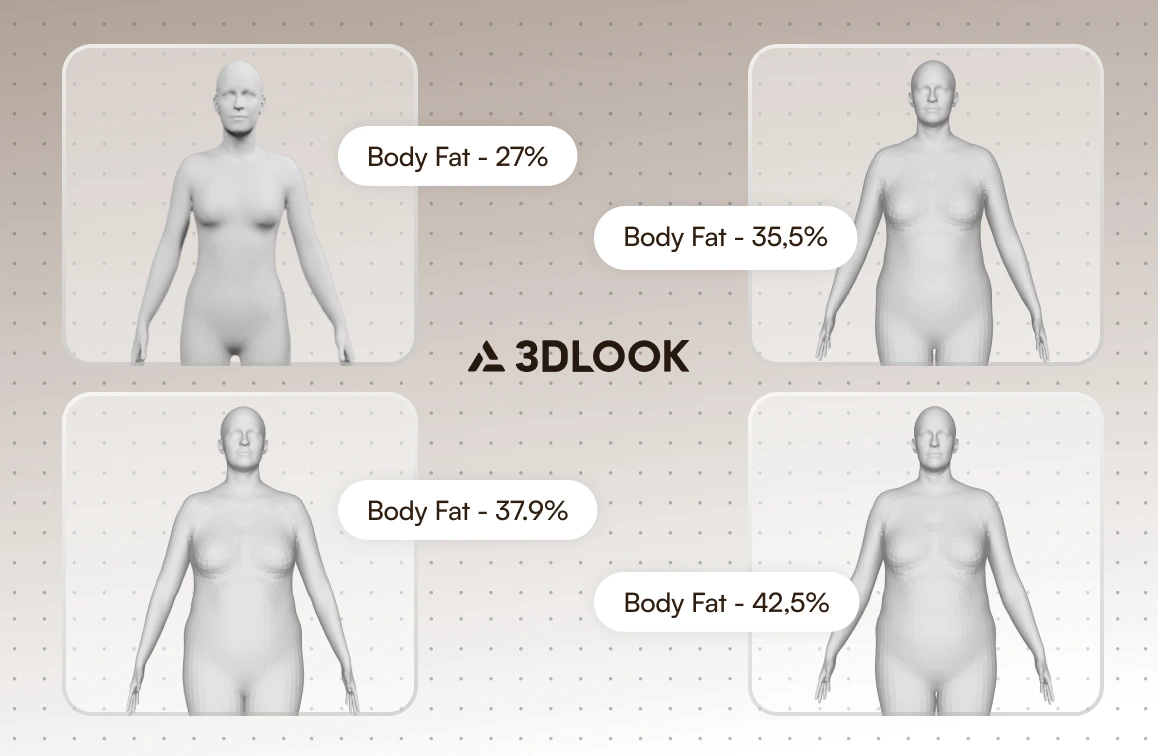
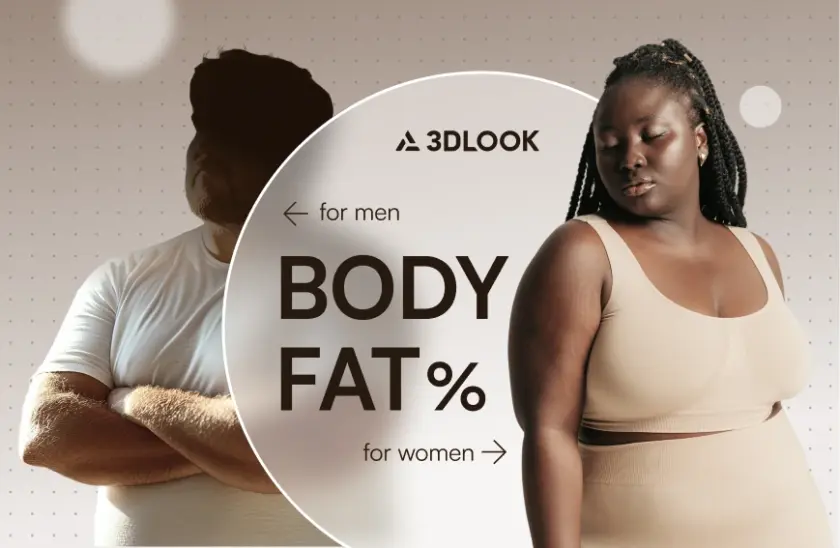
Most clients at the beginning of their fitness journey, often with a specific aesthetic goal in mind, rely on body fat percentage pictures they have seen or searched explicitly for. While it can help a client identify their “target look,” these static references don’t account for individual muscle density and skeletal structure. Thus, clients strive for a specific female or male body fat percentage seen online, and service providers must clarify the physiological basis for achieving it, which requires a solid, data-backed approach.
AI-powered mobile 3D scanning can transform subjective goals into highly accurate personalized visual body fat percentage guidance by:
- Providing a definitive body fat percentage allows for an instant determination of whether a client’s current body fat percentage is healthy or if it is trending toward obesity or underweight.
- Moving from body fat percentage pictures to actionable data. Fitness specialists and clinicians can “reverse engineer” a client’s desired aesthetic and determine the ideal body fat percentage for women or men to achieve their target look safely and effectively, considering each client’s specific body type.
- Efficient continuous progress tracking. AI-powered 3D body scanning outperforms traditional observation and measurement techniques, which often overlook profound changes in body composition and can affect client motivation.
This transformational, mobile-first approach dramatically increases program adherence, giving clients a clear, visual roadmap for their journey.
Understanding the Body Fat Percentage Benchmarks for Men and Women
The foundational definition of health in a professional wellness environment has shifted away from reliance on BMI — a simple weight-to-height ratio. A more detailed assessment of body composition, distinguishing between lean and fat tissue and calculating body fat percentage (fat-to-lean mass ratio), became necessary to achieve sustainable outcomes. For wellness service providers, the focus has shifted to answering questions about what percentage of body fat is healthy or what fat percentage men or women need to achieve to have a specific body shape.
Gender-Specific Metrics for Women and Men: Establishing Sustainable Standards
When establishing benchmarks, it is essential to use sex-specific data and consider individual physiology to set realistic, personalized expectations.
- For Women:
Practitioners often reference the average body fat percentage for women, which reflects the presence of essential fat that supports reproductive and hormonal health. In fitness settings, the ideal body fat percentage women may aim for is typically higher than that of men. However, targets should always be individualized to support long-term well-being, performance goals, and overall hormonal balance rather than adhering to rigid standards. - For Men:
Male body fat percentage benchmarks tend to reflect a higher proportion of lean muscle mass. Using a men’s average body fat percentage range can help professionals assess whether a client is progressing toward specific fitness or performance goals, or whether adjustments may be beneficial to support overall health. As with women, these metrics should serve as flexible reference points rather than strict thresholds.
Body Fat Percentage Benchmarks for Professional Guidance and How They Matter for Wellness Business Strategy
Although determining a healthy, personalized body fat percentage is preferred, wellness practitioners may use benchmarks merely to categorize body composition.
| Category | Body Fat Percentage | |
| Women | Men | |
| Essential Fat | 10-13% | 2-5% |
| Athletic Range | 14-20% | 6-13% |
| Fitness Range | 21-24% | 14-17% |
| Average / Healthy | 25-31% | 18-24% |
| Obesity Body Fat Percentage | 32%+ | 25%+ |
Using a standardized body fat percentage chart alongside AI-powered mobile 3D body scanning can provide a visual representation that maps clients’ unique 3D avatars over time against clinical benchmarks and shows their position on the spectrum. This clarity is what transforms a basic one-time observation into a high-value, professional service that stands out from the competition.

Discover how AI-powered body intelligence is reshaping GLP-1 programs, telehealth, and digital health, from accurate remote assessments to safer and more engaging patient journeys.
Beyond Average: Addressing Unique Body Types
While general benchmarks provide a helpful starting point, professional-grade wellness requires a deeper look into specific metabolic profiles that traditional scales often overlook.
Athletic Profiles and Identifying Skinny Fat
One of the most common challenges for B2B providers is the “outlier” clients:
- In competitive or high-performance environments, maintaining a low or athletic body fat percentage improves training outcomes.
- In particular cases of possessing a skinny-fat body type, the client may appear to be at a healthy weight while actually carrying a high visceral fat ratio.
Mobile 3D scanning provides the visual and quantitative depth needed to identify these nuances, moving beyond simple weight measurements to reveal the true body types hidden beneath the surface.
Clinical Oversight: Identifying Obesity and Low Fat Ranges
AI-powered 3D body scanning could serve as a vital early-warning system for clinical concerns. Practitioners can ensure medical oversight is introduced in time by accurately determining when a client’s body fat percentage crosses into an obesity or drops into a dangerously underweight range.
The Tech Edge: How to Check Body Fat Percentage Today
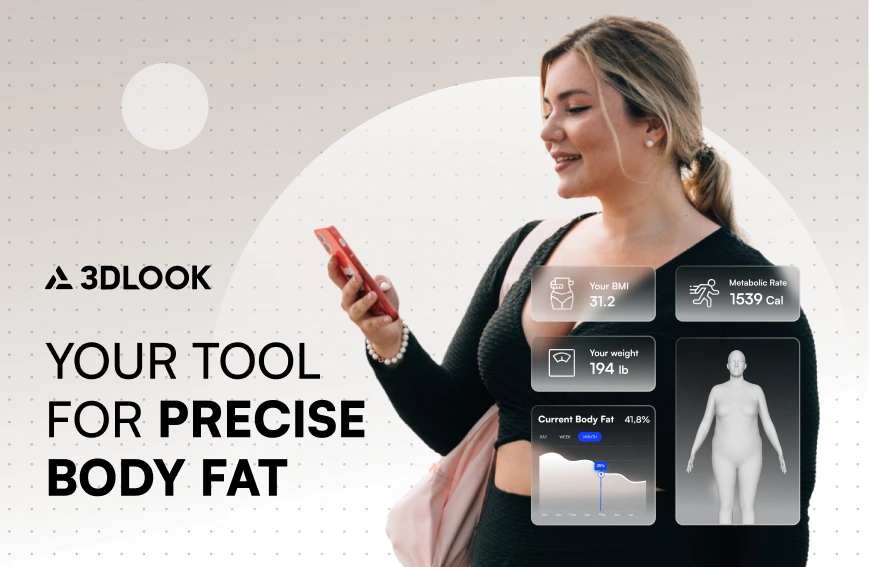
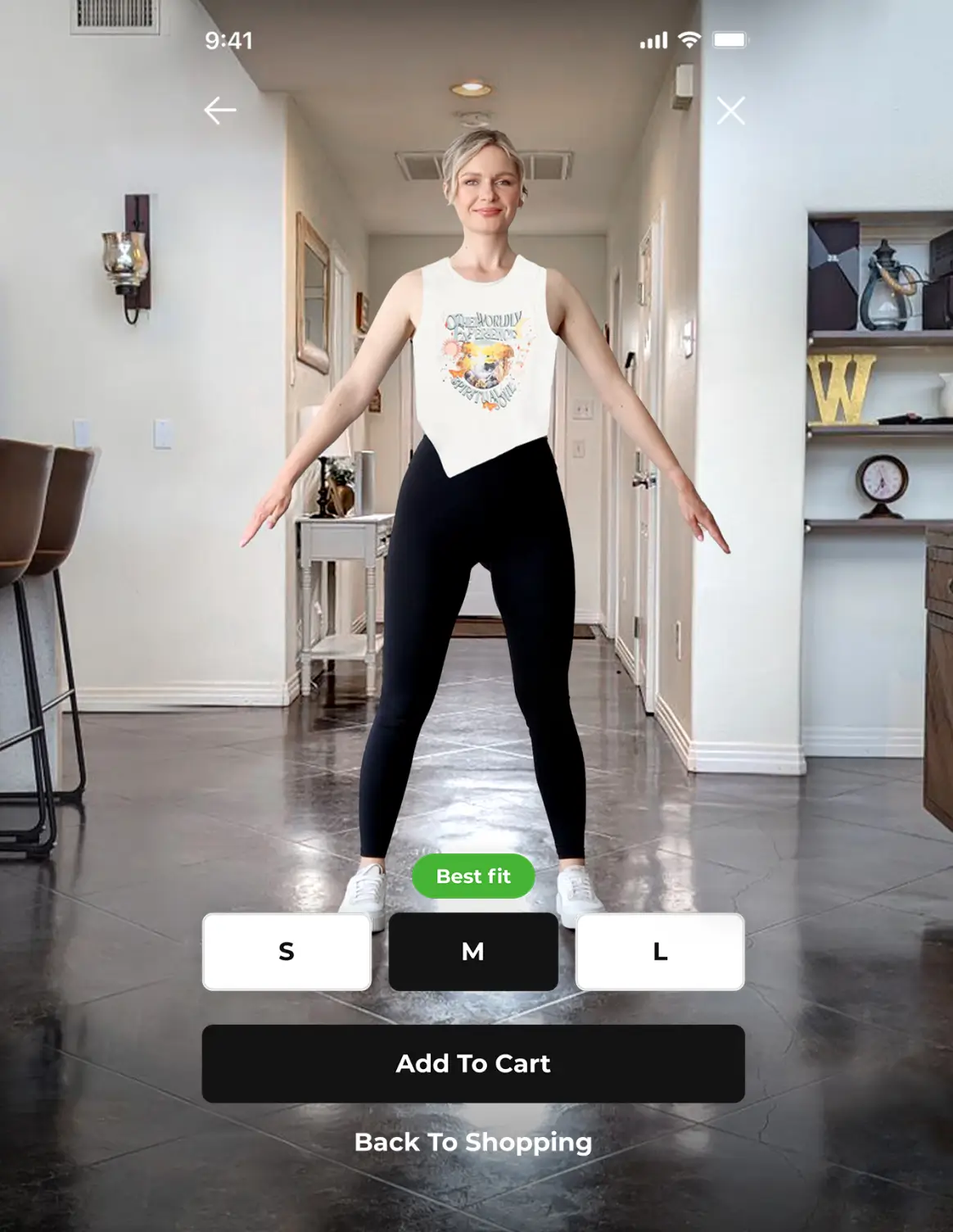
The challenge in the wellness industry of determining body fat percentage with clinical accuracy used to involve expensive, stationary hardware solutions or invasive physical contact. The emergence of mobile-first 3D body-scanning technology has dismantled the barrier to obtaining high-fidelity metabolic data and the vital metrics it enables. Industry professionals can integrate data collection into any environment, eliminating the overhead of traditional hardware while maintaining professional-grade accuracy — whether in an app, a boutique gym in the megapolis, or a remote wellness clinic.
Clients are more likely to check body fat percentage when the process is non-invasive and takes less than a minute. This consistent data stream provides a more robust comparison of body fat percentage than uneven home scale results or sporadic body fat percentage photos that can be manipulated by lighting or posture. AI-driven 3D body scans validate actual physiological changes, and high-frequency tracking enables businesses to demonstrate the efficacy of their programs, ensuring every client stays within a normal body fat percentage range or makes documented progress toward their specific composition goals.
Implementing AI 3D Body Scanning in a Professional Setting
Integrating AI-powered 3D body scanning into professional services fundamentally transforms the operational landscape for fitness and medical service providers’ workflows. Adopting a mobile-first approach eliminates the logistical disadvantages of dedicated assessment rooms and high-maintenance hardware, enabling staff to focus on interpreting data rather than managing equipment.
The actual return on investment is in the transition from data collection to long-term engagement. Utilizing personalized visual body fat percentage charts within a branded app interface is a powerful retention tool, providing proof of value and keeping clients committed to their programs. Trainers can offer a concrete body fat percentage comparison that documents changes in muscle and fat distribution over time. By demonstrating exactly how a client is moving toward a healthy body fat percentage, professionals can justify premium pricing and foster a data-driven culture that significantly reduces churn.
Conclusion: Setting Smarter Goals with AI-powered body data
Ultimately, setting smarter composition goals requires moving past the guesswork of the past and embracing the data-rich future of AI-driven 3D body scanning. By utilizing mobile technology, professionals can now provide a definitive answer, far beyond the reach of a traditional scale, to what the healthy body fat percentage is for each client. This method enables precise comparisons of body fat percentage for unique body types, profoundly transforming how success is calculated. Aligning visual expectations with clinical reality empowers men and women to achieve an ideal, sustainable body fat percentage.
As the wellness industry continues to evolve, the ability to offer sophisticated, mobile-first visual body fat percentage charts could be a key differentiator for successful service providers. If you are ready to elevate your service standards and provide a more accurate definition of health, now is the time to integrate AI into your workflow. Book a demo today to see our mobile 3D body scanning in action.