Healthcare has spent the last decade focused on precision medicine — tailoring treatments to individual patients based on unique characteristics. But there’s another kind of precision that matters just as much to the businesses delivering that care: accurately confirming patient eligibility.
In digital health, this means understanding exactly who your patients are, what they need, and whether they qualify for treatment — without ambiguity or compliance risk. The difference between approximate and verified patient data isn’t just clinical. It’s financial. And for telehealth providers operating at scale, it’s quickly becoming a key driver of cost-per-patient efficiency.
The Hidden Costs of Inaccuracy in Digital Health
Most virtual clinics share a common problem: they rely on what patients report, rather than what they can verify.
A patient types their height and weight into a form. The system calculates BMI. A clinician — or algorithm — uses that estimate for eligibility, dosing, or treatment planning. It’s fast, frictionless, and frequently wrong.
Research from the National Health and Nutrition Examination Survey shows that self-reported height is typically overestimated by about 1 cm. Meanwhile, weight is underestimated by 0.75 kg, creating BMI values that are, on average, 0.6 units too low.
Additional studies published in PLOS confirm similar trends, finding 10–20% misclassification rates for treatment eligibility based on self-reported data. Moreover, surveys indicate that approximately 40% of adults lack access to scales at home, making even baseline measurements unreliable.
These discrepancies create three costly ripple effects:
- Patient churn from onboarding friction. Manual verification processes, such as photo uploads, medical records, or video calls, can cause drop-offs. Every abandoned signup wastes acquisition spend and erodes lifetime value.
- Increased staff workload. Reviewing and documenting verification adds bottlenecks that limit daily consultation volume and inflate labor costs.
- Regulatory exposure. Patients can manipulate photos or falsify data to meet eligibility thresholds, creating compliance and insurance risks. Regulatory bodies now demand objective, documented verification — not self-reported estimates.
Data Accuracy That Pays Off
Replacing self-reported inputs with verified body data transforms operations in three measurable ways.
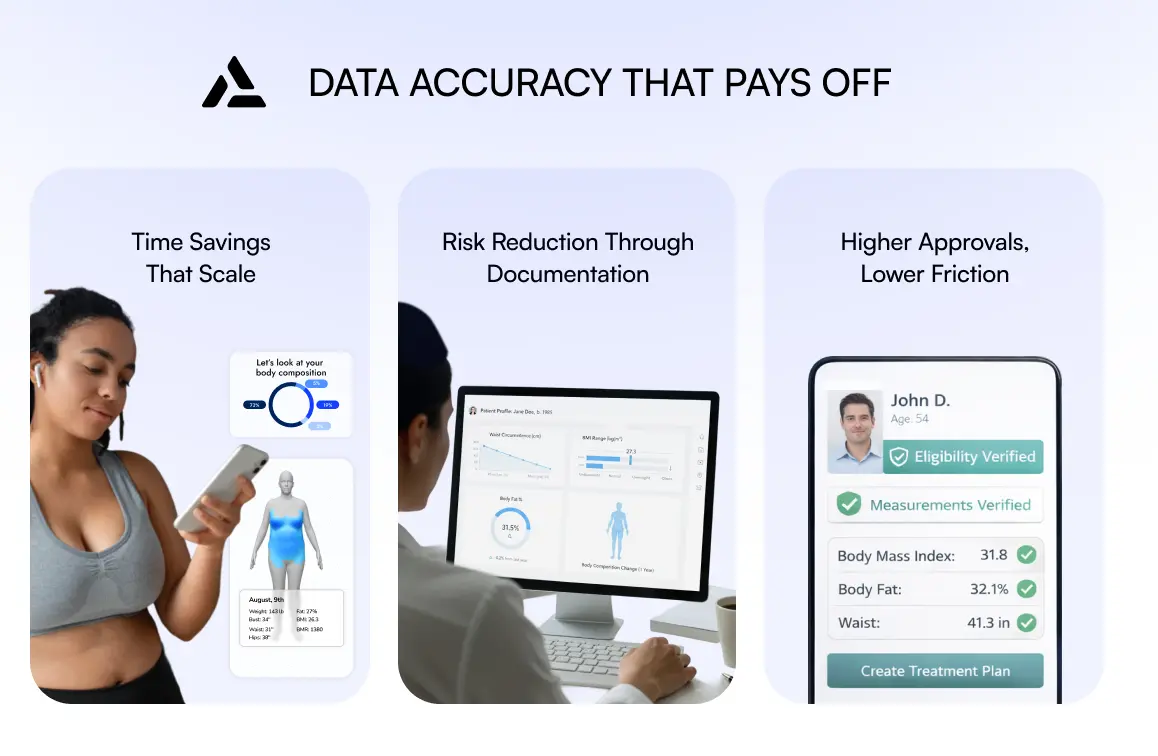
1. Time Savings That Scale
Manual verification drains both time and clinical capacity. Internal reviews from telehealth providers suggest that measurement validation can add up to ten minutes per patient, limiting throughput and reducing time available for direct care.
AI-powered body scanning reduces that process to under 45 seconds. Patients use mobile scanning, and measurements are validated instantly; data flows directly into clinical workflows.
For a clinic handling 100 patients daily, that’s the difference between 16 hours of verification work and 1.25 hours — a 93% reduction. That efficiency can lift consultation capacity by up to 20% without adding staff.
2. Risk Reduction Through Documentation
In telehealth today, compliance goes beyond procedures — it depends on the reliability of the data behind every decision.
When regulators or insurers question a decision, “the patient told us” is indefensible. “We have timestamped, validated body scans” provides robust documentation that withstands scrutiny.
Reliable data doesn’t just prevent fines; it simplifies compliance itself. Documentation becomes automatic, audits are faster, and chart reviews are more streamlined. Verified measurements make compliance a natural part of everyday workflow.
3. Higher Approvals, Lower Friction
Validated body data simultaneously improves conversion and compliance — two goals that typically conflict.
FitXpress, 3DLOOK’s AI-powered body scanning platform, guides users through precise photo capture, featuring real-time pose validation and clothing detection, which results in fewer resubmissions, fewer drop-offs, and faster onboarding.
Beyond Cost Savings: Data Quality as a Growth Driver
While verified body data delivers immediate cost benefits, its impact extends far beyond operational efficiency. Accurate data strengthens patient relationships and supports sustainable revenue growth.
From Trust to Retention
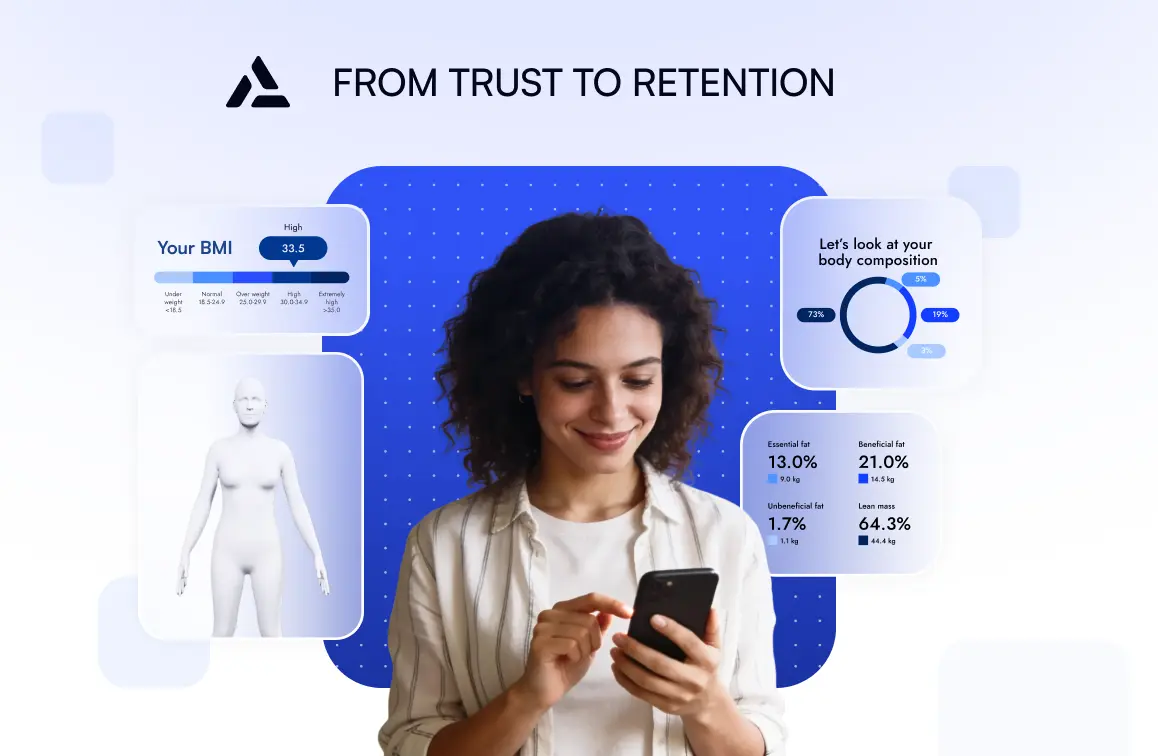
Patients value precision in their measurements. Seeing progress based on verified scans, not estimates, builds lasting credibility.
FitXpress eliminates weight discrepancies by cross-verifying self-reported values with AI-derived data, allowing patients to visualize realistic 3D models of progress over time.
That confidence directly supports retention. A patient who sees measured fat loss and muscle preservation is more likely to continue through plateaus.
In subscription models, the retention rate has a dramatic impact on lifetime value. Improving monthly retention from 80% to 90% means patients stay an average of 10 months instead of 5 months, nearly doubling their lifetime value. For a 10,000-patient clinic at $100 per month, that 10-point retention improvement translates to roughly $5–6 million in additional recurring revenue — without increasing acquisition costs.
Personalization Built on Reality
True personalization requires precise data.
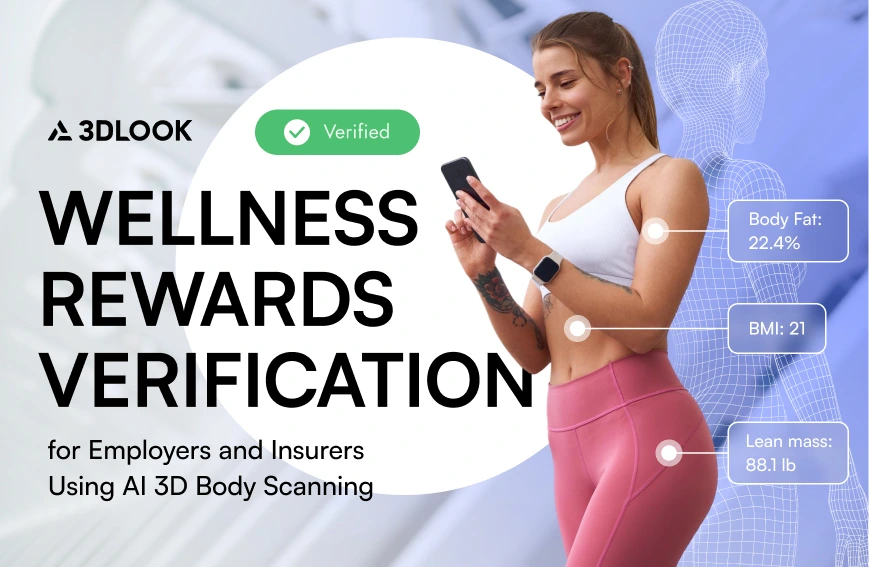
FitXpress captures over 80 precise body metrics — including circumference, linear dimensions, BMI, fat percentage, and lean mass — enabling clinicians to:
- Dose medications accurately.
- Tailor nutrition and exercise plans to metabolic needs.
- Track progress with medical-grade precision.
- Adjust interventions dynamically.
When personalization is built on verified data, outcomes — and satisfaction — rise together.
Deploying FitXpress Without Operational Disruption
Verified data is only valuable if it’s practical to deploy.
FitXpress delivers scalable precision without added hardware or workflow friction:
- Speed and simplicity: Patients take two photos; AI delivers medical-grade measurements in under 45 seconds — no staff intervention required.
- Accuracy and consistency: The technology achieves 96–97% accuracy compared to manual measurement, with a variance of less than 1 cm across scans. IEEE-certified standards (internationally recognized medical measurement benchmarks) meet the requirements of pharmacy and insurer documentation.
- Scalability: Works on any smartphone, allowing users to remain fully clothed — no specialized equipment required. Scaling from 1,000 to 100,000 patients requires no new infrastructure.
- Fraud prevention: AI flags loose clothing and prevents altered photos, ensuring trustworthy data.
- Privacy and security: HIPAA- and GDPR-compliant, with end-to-end encryption and automatic photo deletion after model generation.
- Easy integration: API and SDK options for iOS, Android, and React enable deployment in weeks, not months.
For digital health providers, FitXpress delivers the benefits of in-house R&D — without the cost, delay, or compliance overhead.
Proven Use Cases
FitXpress transforms accurate body measurements into tangible business value, strengthening compliance, enhancing patient engagement, and improving operational efficiency for digital health providers.
BMI Verification for Treatment Eligibility
FitXpress cross-checks AI-derived weight with self-reported data, flagging discrepancies to ensure only eligible patients receive medication. This automation minimizes compliance risk and enhances decision accuracy.
Visual Progress Tracking for Retention
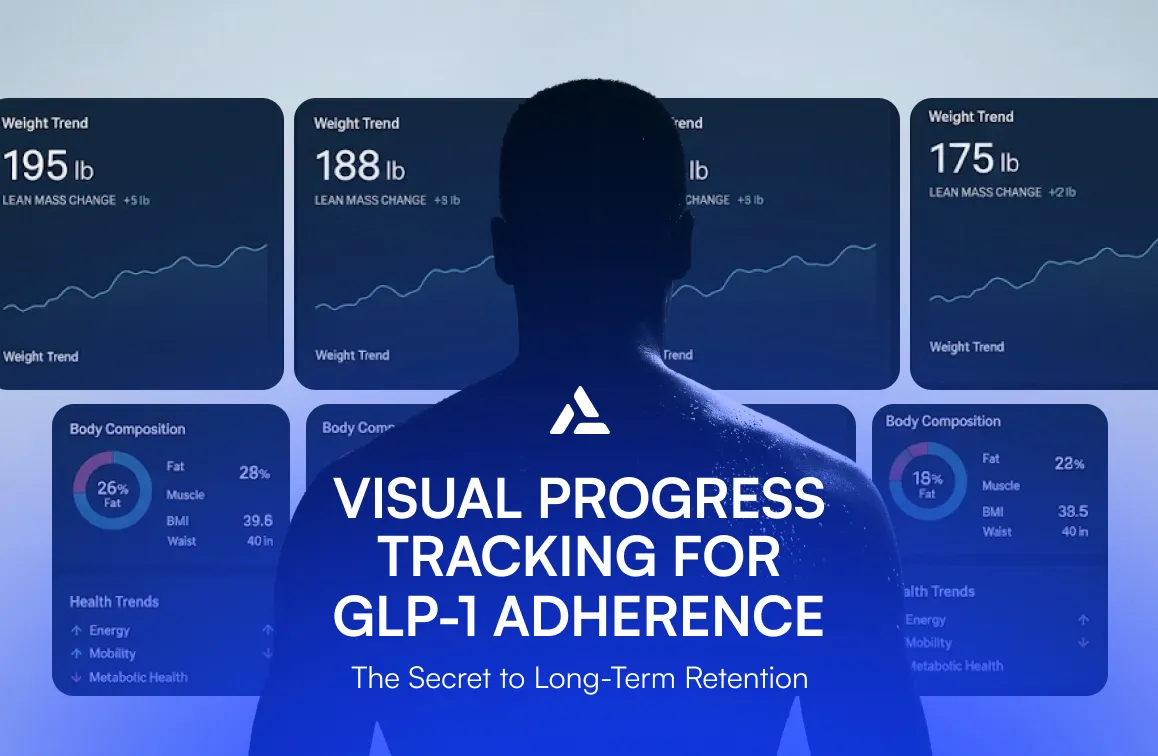
Patients can compare verified scans over time to observe measurable changes in their body composition. Transparent, data-backed progress builds trust and long-term engagement.
Personalized Health Programs
Verified body metrics power personalized nutrition plans, adaptive workouts, and connected communities built around shared health goals.
Discover how AI-powered body intelligence is reshaping GLP-1 programs, telehealth, and digital health, from accurate remote assessments to safer and more engaging patient journeys.
The Path Forward
Verified data is helping build a more transparent and dependable future for digital health. By prioritizing accuracy, providers can deliver care that feels more personalized, efficient, and consistent for every patient.
At its core, it’s not just about technology — it’s about giving both patients and clinicians confidence in the information guiding their decisions.
For organizations ready to eliminate guesswork from patient data, FitXpress offers a proven path forward: faster onboarding, stronger compliance, better retention, and measurably improved outcomes.
Ready to transform your patient data accuracy? Schedule a demo to see FitXpress in action or learn how it integrates with your platform.