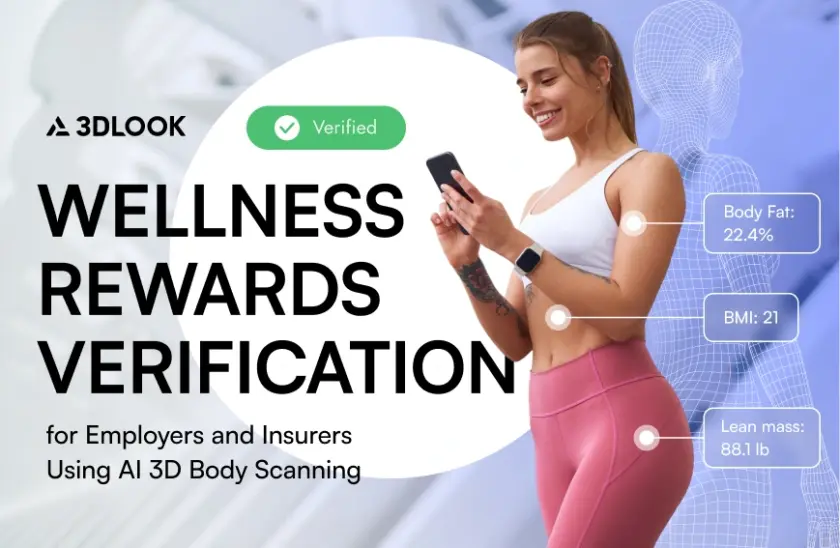
Employer-sponsored insurance covering 154 million people under 65 in the United States makes verification a non-negotiable operational issue. AI-driven 3D body scanning can help verify eligibility and progress in a wellness rewards program.
Many wellness programs still rely on methods that slow reward decisions, add manual work, and weaken trust in the outcome, such as self-reporting, paperwork, or in-person checks. AI-powered mobile 3D body scanning offers more practical, standardized body-related checks by creating a remote, measurable, and lower-friction verification workflow that doesn’t require every participant to visit a clinic or attend an on-site event.
Who This Use Case Is Best For
- Employers
This use case fits companies already running employee wellness initiatives. It is especially relevant for organizations with distributed workforces and benefits leaders looking to modernize verification. - Insurers and health plans
Offering wellness incentives in health insurance, especially those that need scalable digital verification across large member populations. - Vendors and wellness program operators
More structured verification model supports cleaner administration, more consistent reporting, and stronger program credibility.
The Challenge of Verifying Wellness Rewards

Why traditional programs struggle with verification
Traditional employer wellness programs often rely on weak or difficult-to-manage proof sources:
- Self-reported data. According to the U.S. Centers for Disease Control and Prevention (CDC), people often underreport weight and overreport height: self-reported data underestimated the prevalence of severe obesity by 40% compared with bias-corrected estimates.
- In-person assessments. Though they can improve consistency, they do not scale well across modern workforces. 83% of larger firms offer a program in at least one of the following areas: smoking cessation, weight management, or behavioral or lifestyle coaching. Managing fixed appointments to coordinate these programs becomes challenging when spanning offices, remote staff, and repeat verification cycles.
- Manual review. Confirming completion, verifying documents, and manually applying reward rules add more friction, and the burden increases further when incentives are tied to screening or assessment milestones.
Poor verification undermines trust and devalues the reward: employers and insurers may doubt the quality of self-reported or manually checked data, while employees may question whether standards are applied fairly.
Common issues of weak verification in employer and insurer reward models
- Misreporting. Bad inputs can lead to bad decisions even without deliberate fraud.
- Friction reduces participation. Most studies reporting participation rates showed average participation below 50%.
- Low participation prompts greater incentives. 53% of large firms offering health risk assessments use incentives or penalties, and each additional rule increases review work, exception handling, and program complexity.
- Access remains uneven. About half of the U.S. workforce are remote-capable workers, among them, 52% are hybrid, and 26% are fully remote. Thus, location-bound verification poorly fits that reality.
What AI 3D Body Scanning Adds to a Biometric Verification System
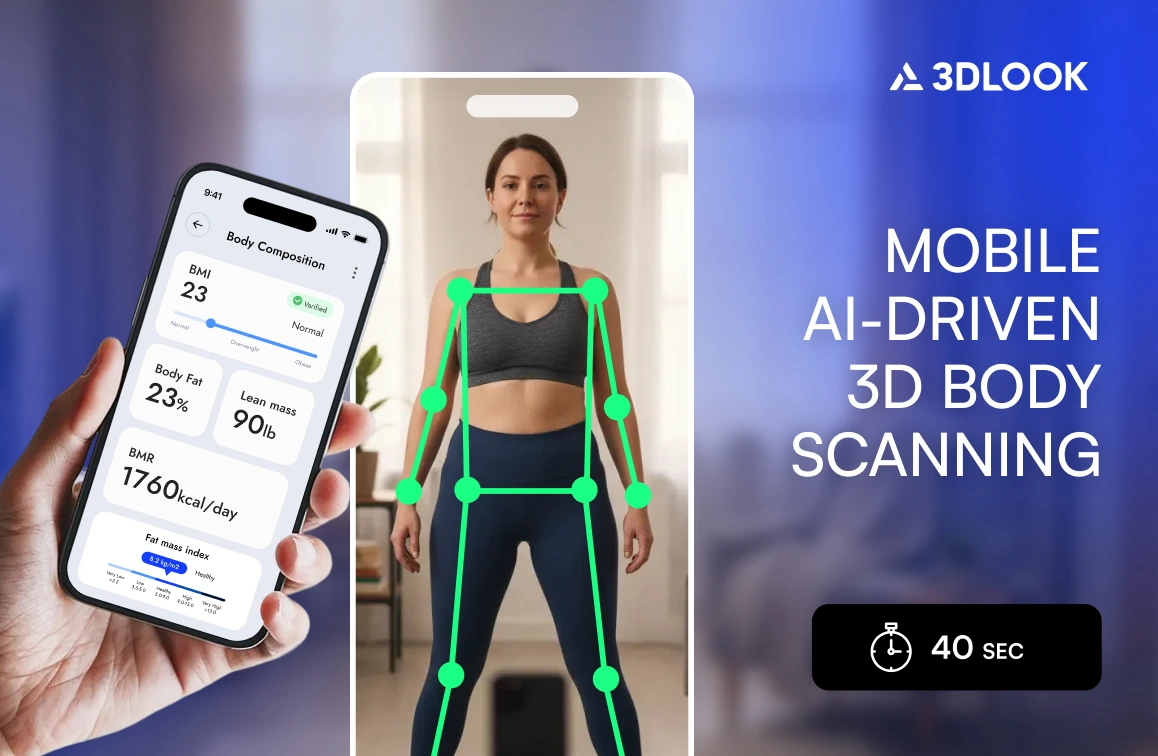
How mobile AI-driven 3D body scanning works
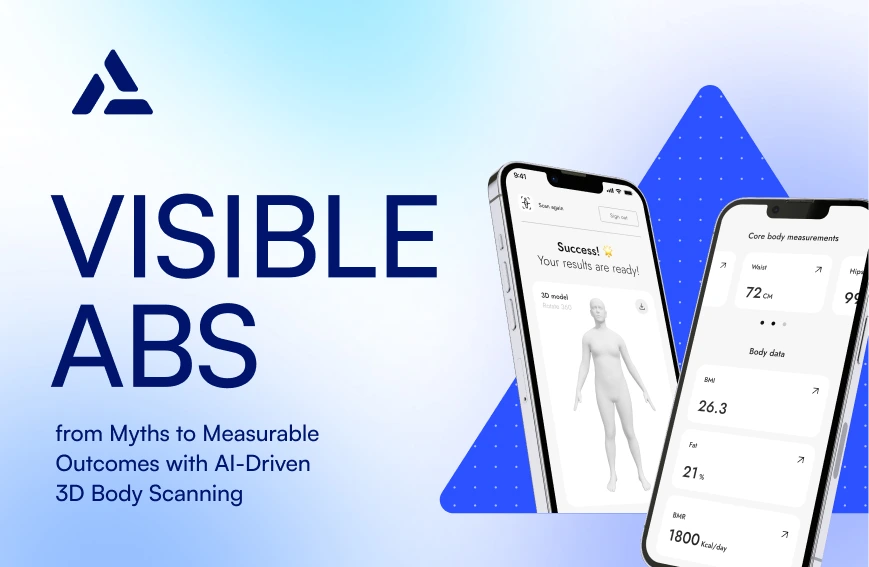
3D body-scanning solutions, such as 3DLOOK’s FitXpress, enable users to take a short series of images at home, and AI-powered software builds a digital body model and automatically extracts measurements. That automation supports a more standardized workflow: the technology is equipped with posture guiding, image capture, and processing in the same sequence each time.
Why does AI-driven 3D body scanning fit wellness rewards verification?
The main elements for the success of wellness rewards verification are objective, repeatable, and easy-to-collect inputs. AI-powered mobile 3D body scanning fits that model well:
- Represents remote verification that works across locations without onsite appointments;
- Produces body-related data that can support milestone-based reward logic;
- Scans are repeatable over time, which makes them particularly useful for progress-based rewards;
- Easier to audit compared to informal reporting. A structured digital workflow creates a clear record of what was captured and when, giving employers and insurers a firmer basis for reward decisions.
| Method | Remote | Standartization | Repeatable | Audit trail | Scaling |
| Self-report | Yes | No | Low | Low | High |
| In-person assessments | No | Medium/High | Medium | Medium | Low |
| Manual review | Sometimes | Low | Low | Medium | Low |
| AI 3D body scanning | Yes | High | High | High | High |
Use Cases for Employers
Verifying participation in employer wellness programs
Verification helps employer wellness programs move from intent to measurable action. Employers often need proof that workers completed a health milestone, not just enrolled. At the same time, verification is a practical operational issue for many employer programs, as 43% of larger firms offering health benefits provide biometric screening. A stronger verification flow also supports the distribution of incentives, whereas rewards carry more weight when they follow documented completion. One study found that financial incentives increased screening completion by 12.4 percentage points in the first year, with a total effect of 21.3 percentage points over two years. Thus, a clear record of completion is valuable to both program owners and employees.
Structured verification benefits teams by reducing work for HR, such as chasing forms, confirming results, and resolving exceptions by hand, which creates inconsistency across locations and slows reward delivery.
Supporting employer health and wellness programs at scale
Employer wellness programs need a model that works beyond a single office and a single screening day. That is especially valid for multi-site organizations and distributed teams. For instance, 43% of firms with 5,000 or more workers covered GLP‑1 agonists for weight loss purposes in 2025. To receive this coverage, 34% of firms require enrollees to meet with a dietitian, case manager, or therapist, or to participate in a lifestyle program. AI-driven 3D body scanning improves that model by supporting a more consistent verification process without requiring the program to be built around onsite events.
Enabling fairer wellness incentives for employees
To encourage completion, 62% of large firms with biometric screening use incentives or penalties. In that environment, vague criteria undermine trust quickly. Fair incentives start with measurable criteria, so employees should be familiar with the criteria, and employers should be able to apply the unique standards.
The 2025 State of the Workplace Research Report found that 33% of U.S. workers named employee experience as their top priority. A fairer system also improves the employee experience, and when verification is clear and consistent, rewards feel more legitimate and less arbitrary.
Discover how AI-powered body intelligence is reshaping GLP-1 programs, telehealth, and digital health, from accurate remote assessments to safer and more engaging patient journeys.
Use Cases for Insurers and Health Plans
Verifying eligibility for health insurance wellness incentives
Insurers need eligibility checks, and insurer incentives already depend on documented member actions. For example, in 2023, 62% of Medicare Advantage enrollees were in contracts that offered rewards for completing a health risk assessment.
In 2023, the U.S. Centers for Disease Control and Prevention (CDC) reported that 76.4% of U.S. adults had at least one chronic condition, and 51.4% had multiple chronic conditions. Plans also require reward models that reflect real clinical need, and standardized verification helps plans apply the same milestones across members with uneven starting points.
Making health rewards programs more scalable
Enrollment into the Medicare Advantage program as a share of the eligible Medicare population has jumped from 19% in 2007 to 54% in 2025. At that scale, clinic-based verification becomes slow, uneven, and expensive across plan populations, and making a health rewards program scalable is mostly an operations problem. Mobile verification reduces dependence on clinics and onsite screening. Members can complete a guided workflow remotely, using smartphones.
Strengthening trust in healthcare rewards models
Medicare Advantage plans typically offer rewards of $10 to $100 for completing a health risk assessment. Healthcare rewards influence real behavior, and when money or benefits are involved, trust matters, and, thus, data verification must be defensible.
AI-driven 3D body scanning strengthens trust by creating a clearer evidence trail. Each scan follows the same workflow and produces comparable records over time. That improves program integrity and makes it easier to justify decisions.
According to the National Health Care Anti-Fraud Association (NHCAA), a conservative estimate of the financial losses due to health care fraud is 3% of total health care expenditures. In comparison, some government and law enforcement agencies estimate the loss at 10% of annual health outlays, which could exceed $300 billion. The need for defensible records is real, and though better records will not eliminate abuse, they do make it easier to review and audit reward decisions.
How the Verification Workflow Works
The workflow is straightforward:
- The participant completes a guided mobile scan from home or another convenient location.
- The platform extracts body measurements or required progress indicators from the scan.
- The system compares those outputs with predefined program rules.
- Employers, insurers, or wellness administrators review the result in a structured workflow.
- Once approved, the participant receives the applicable reward or program credit.
This process replaces fragmented forms and manual follow-up with a clearer verification path.
Benefits for Employers and Insurers
- Administrative efficiency
Administrative efficiency improves when capture, measurement, and review are integrated into a single workflow. Teams spend less time chasing forms, checking documents, and resolving exceptions. That matters because reward-linked verification already touches large parts of wellness administration. AI-driven 3D body scanning simplifies that work by producing standardized outputs that are easier to review. - Better program participation
Participation improves when the process is easier to complete. Remote scans reduce travel, scheduling barriers, and dependence on onsite staffing. That matters for hybrid workers, shift workers, multi-site employers, and dispersed insurer populations. Easier completion also supports stronger engagement with incentives. - More credible wellness program rewards
Rewards become more credible when they are based on standardized verification rather than informal reporting. Clearer inputs improve reporting, support more consistent decisions, and strengthen program integrity. Credibility matters for employers, and participants who want confidence that standards are being applied fairly. - Scalable program design
A scalable verification model must work across large populations and different incentive structures. AI-driven 3D body scanning can support employer-sponsored wellness programs, insurer-led rewards programs, and hybrid models involving both. Verification models are especially relevant in employer-insurer partnerships, as 37% of covered workers in firms with 10 to 199 workers are covered by a level‑funded plan, which limits the employer’s liability and transfers a substantial share of risk to insurers. - Fraud prevention
AI-driven 3D body scanning helps reduce fraud in employer and insurer wellness rewards programs by making photo manipulation almost impossible. The scan flow excludes the photo upload and captures a structured set of guided inputs, checks pose and image quality, and analyzes body geometry for consistency across the full capture sequence. That gives the system more signals to validate, making it easier to detect mismatched angles, altered proportions, reused images, or other signs of tampering. Because the workflow is standardized and repeatable, it also creates a clearer evidence trail over time, helping employers and insurers compare scans and flag suspicious submissions.
Example Scenarios
Employer example
A national employer runs a wellness rewards program for a hybrid workforce. Employees earn incentives after completing scheduled scans and showing measurable progress against program thresholds. The employer uses AI-driven 3D body scanning at baseline and again after 12 weeks. That creates a consistent verification process without requiring office visits or manual document checks. HR teams can confirm participation, track progress, and issue rewards more quickly.
Insurer example
A Medicare Advantage plan runs a health rewards program across several states. Members earn rewards after completing guided mobile scans and meeting progress checkpoints. The plan uses mobile 3D scanning to verify those milestones remotely. That reduces dependence on clinics and creates a clearer record across dispersed member populations.
Hybrid example
A self-insured employer works with a health partner to run one wellness rewards program across a distributed workforce. Both parties use the same verification flow, rules, and evidence trail. That reduces operational friction and supports more consistent reward decisions across locations and work schedules.
Why AI 3D Body Scanning Is Better Than Traditional Verification Methods
- Compared with self-reporting
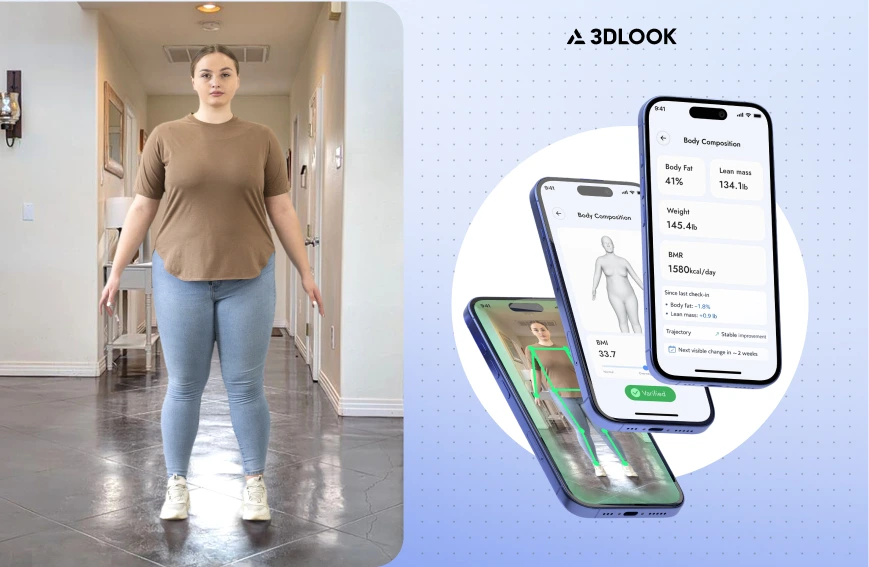
Self-reporting is convenient, but it introduces bias and subjectivity. AI-driven 3D body scanning creates more consistent inputs by capturing body data through a standardized digital process. That makes it better suited to reward models that depend on measured change or repeat verification. - Compared with manual or in-person checks
Manual and in-person checks require more coordination, more staff time, and more scheduling effort. Mobile scanning is easier to scale and easier to complete. It also fits everyday access patterns better than clinic-based models, especially for distributed workforces and dispersed plan populations. - Compared with one-time health assessments
One-time assessments capture a single moment, while many reward models require ongoing progress verification over a longer participation window.
Key Considerations for AI-Powered 3D Body Scanning Integrated Wellness Rewards Program Design
Eligibility rules and reward logic
Programs should state exactly what qualifies for a reward. That may mean completing a 3D body scan, milestone participation, measured improvement, or maintenance against a baseline. Thresholds should reflect measurement repeatability rather than one-off variation. Clear rules make incentives easier to administer and easier to defend.
Privacy and data governance
U.S. Department of Health and Human Services (HHS) reported that in 2023 alone, more than 167 million individuals were affected by large health data breaches, and the number of breaches rose 102% from 2018 to 2023. Privacy should start with explicit consent, so employees and members should know what data is collected, why it is collected, and how it will be used.
Limited data access, specifically, minimum necessary data access, is equally important. The HIPAA Security Rule requires administrative, physical, and technical safeguards for electronic protected health information.
3DLOOK wellness-focused body-scanning solutions are built to meet HIPAA’s core security and privacy principles, giving regulated clients the infrastructure confidence they need.
In our workflow, images are blurred, used solely to generate scan results, and deleted after processing, as per the client’s instructions. Data is encrypted in transit and at rest, and access is controlled through role-based permissions.
User experience
Clear instructions reduce capture errors and abandonments, and support more consistent outputs. 3DLOOK FitXpress 3D body scanning solution guides users through the capture flow and supports self-scanning using the phone on a stable surface with a timed capture/remote trigger. The full scan flow takes under a minute, with processing typically under 40 seconds.
Scan frequency should match the reward logic without creating an unnecessary burden. Participation-based programs may need occasional check-ins, whereas progress-based programs may need scheduled follow-up scans that can be easily conducted and compared with historical data.
Employer wellness programs and health rewards programs operate at full capacity when users can conduct the process without travel, fixed appointments, or technical confusion, and mobile 3D body scanning fully supports remote completion.
Integration with wellness administration workflows
Verification only creates value when it triggers the next workflow. According to ASTP/ONC’s 2026 standards bulletin, expanding standardized health data is one of the commitments towards reducing administrative burden in healthcare.
A biometric verification system works best when data is directly imported into the tools teams already use to manage wellness incentives. FitXpress ensures results are returned to the client’s platform via the API in real time once photo processing is complete. That matters because wellness teams need one place to track completion status, exceptions, and reward eligibility. Clean integration reduces burden and speeds approvals. FitXpress scan outputs flow into claims systems, reward systems, reporting tools, and program dashboards without manual re-entry.
Conclusion
Verifying wellness rewards should not depend on inconsistent self-reports, slow manual reviews, or hard-to-scale in-person checks. Employers and insurers need a method that is easier to manage and more trustworthy. AI-driven 3D body scanning provides that method. It enables remote, repeatable, and measurable verification within a single streamlined workflow. That helps employers support fairer employee incentives and helps insurers scale reward programs across broader member populations.
As wellness programs grow, verification becomes a core operational requirement. AI-powered mobile 3D body scanning gives organizations a clearer way to confirm participation, measure progress, and issue rewards with more confidence. Request a demo to check how 3DLOOK can help modernize wellness rewards verification and find the right workflow for your program.
FAQ
They can use a guided mobile workflow that captures standardized body-related data and applies predefined reward rules.
It is a system that uses measurable participant data to validate eligibility, completion, or progress.
Yes. It can support remote verification in programs that depend on body-related milestones or progress checks.
It makes verification easier to complete, easier to review, and easier to defend.
Yes. It is well-suited to programs that need remote verification across distributed or multi-site workforces.
It reduces scheduling barriers, lowers administrative friction, and supports more repeatable verification over time.